The power of brainmaxxing: how to train your brain, backed by science
Brainmaxxing is internet slang for deliberately improving your brain, borrowed from the "-maxxing" trend that started with looksmaxxing. The science behind it is real, but the best levers are not pills or brain games. Brain-training games mostly make you better at the games, and most supplement stacks lack good evidence. What works is less flashy: sleep seven or more hours, do regular aerobic exercise, study with self-testing and spaced review, protect your attention from your phone, keep learning hard new skills, and stay socially connected. Your brain changes with what you do every day, so small daily habits matter more than any single hack. Wondering makes the learning part a daily habit with 3-minute lessons on any topic, practice after each lesson, and spaced review. It is free to start.
| Lever | What to do | What the evidence says |
|---|---|---|
| Sleep | Aim for 7 or more hours, at regular times | Sleep helps the brain store what you learned during the day |
| Aerobic exercise | Brisk walking or similar, most days of the week | A year of walking grew the hippocampus in older adults |
| Self-testing and spacing | Recall from memory, review over days and weeks | Rated among the most useful study techniques in a major review |
| Attention | Keep your phone out of reach while you focus | Constant switching makes focused work slower and sloppier |
| Hard new skills | Learn something that stretches you for months | Learning demanding skills improved memory in older adults |
| Social connection | See people, talk, and keep hearing and vision checked | Isolation is a known risk factor for dementia |
| Brain games and supplement stacks | Treat them as optional, not as the plan | Weak or no transfer to everyday thinking in most studies |
What brainmaxxing means
The suffix "-maxxing" comes from gaming slang, where to max something is to push it as high as it goes. It spread across the internet through looksmaxxing, the trend of trying to maximize your appearance, and then attached itself to everything: sleepmaxxing, moneymaxxing, and brainmaxxing.
Brainmaxxing means deliberately improving how your brain works: memory, focus, learning speed, and long-term brain health. Some of what you see under the tag is solid advice. Some of it is a sales pitch for supplements and apps.
This guide sorts the two. The good news is that the evidence-backed version is cheap, mostly free, and works on the same principle: your brain adapts to what you ask it to do, again and again, over time.
Where the science comes from
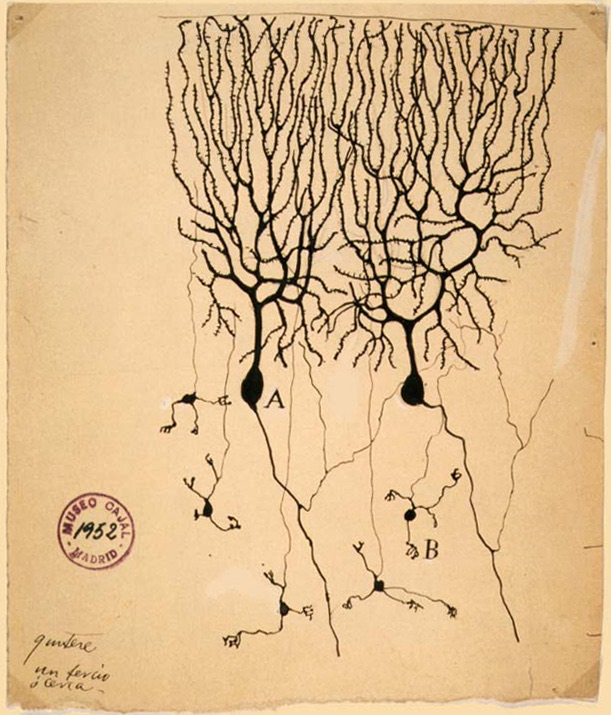
The idea that you can shape your own mind is old, but the evidence is fairly recent. In 1885 the German psychologist Hermann Ebbinghaus measured his own forgetting and showed that memory fades in a predictable way. Around 1900, the Spanish scientist Santiago Ramón y Cajal argued that the brain is made of separate cells, neurons, and suggested that learning might change the connections between them.
Brain scans later let researchers watch these changes in living people. Over the last 25 years, studies of taxi drivers, walkers, and older adults learning new hobbies have shown that adult brains keep changing. At the same time, scientists and regulators started pushing back on products that overpromised.
Key moments in brain training science
- 1885: Forgetting curve: Hermann Ebbinghaus publishes Memory, the first careful measurements of how fast we forget.
- 1906: Neuron doctrine: Santiago Ramón y Cajal shares the Nobel Prize for his work on the structure of the nervous system.
- 2000: Taxi drivers: London taxi drivers are found to have a larger rear hippocampus, the region linked to navigation.
- 2011: Walking study: A year of walking increases hippocampus size in older adults in a randomized trial.
- 2014: Scientists push back: About 70 scientists sign a statement saying brain game marketing overstates the evidence.
- 2016: Lumosity fined: Lumosity pays $2 million to settle US government charges of deceptive brain training claims.
- 2024: Dementia risk report: The Lancet Commission names 14 changeable risk factors linked to nearly half of dementia cases.
Hype versus evidence: brain games and nootropic stacks
Brain-training games promise that a few minutes of puzzles a day will make you sharper at work and in life. In 2014, the Stanford Center on Longevity and the Max Planck Institute for Human Development published a statement signed by about 70 scientists. It said people get better at the games they practice, but there was little evidence that the gains carry over to everyday thinking. In 2016, the US Federal Trade Commission charged Lumosity with deceptive advertising, and the company agreed to pay $2 million.
There is one notable exception worth knowing. In the ACTIVE trial, a large US study of older adults, one type of speed training was later linked to a lower rate of dementia diagnoses. Researchers still debate why, and it does not support the claims most brain apps make.
Nootropic stacks, mixes of supplements sold to boost the brain, are on even weaker ground. Caffeine does make people more alert, especially when tired. But many popular ingredients have little good evidence in healthy people. Ginkgo biloba, for example, did not lower dementia rates in a large trial of over 3,000 older adults. Prescription stimulants are drugs with real risks, not study aids.
Hype versus evidence
| Brain games | Nootropic stacks | Daily habits | |
|---|---|---|---|
| The promise | Sharper mind in minutes a day | Focus and memory in a pill | Slow, steady change |
| The evidence | You get better at the games | Mostly weak or missing | Sleep, exercise, study, people |
| Verdict | Fun, not a plan | Skip, or ask a doctor | The real brainmaxxing |
Neuroplasticity: why brainmaxxing is possible at all
Neuroplasticity is the brain's ability to change its structure and connections with experience. When you practice something, the connections between the neurons involved get stronger and more efficient. When you stop, unused connections weaken.
The best-known example is London taxi drivers, who must memorize thousands of streets to pass a test called the Knowledge. In 2000, Eleanor Maguire and colleagues found that drivers had a larger rear part of the hippocampus, a region linked to navigation, than people who did not drive taxis. The longer they had driven, the larger it was.
A single snapshot cannot prove the job caused the difference. So Katherine Woollett and Maguire later followed trainee drivers over several years. The trainees who passed showed growth in the same region, and those who failed or quit did not. Learning hard things changes the brain, even in adults.

Lever 1: Sleep is when learning gets saved
Sleep is not downtime for the brain. During deep sleep, the brain replays and strengthens what you learned during the day, and research reviews link sleep to better memory for both facts and skills. Pulling an all-nighter before an exam trades the memories you need for a few extra hours of cramming.
Adults need seven or more hours a night, according to US sleep guidelines. Keep a regular bedtime and wake time, keep screens out of bed, and if you learn something important, sleep on it before you test yourself.
Lever 2: Aerobic exercise grows the memory center
In a 2011 study led by Kirk Erickson, 120 older adults were randomly assigned to a year of walking or a year of stretching and toning. The walkers' hippocampus grew by about 2 percent, while the stretching group lost volume, as is normal with age. Among the walkers, more hippocampus growth went with bigger gains on a spatial memory test.
You do not need a marathon. The walking group built up to about 40 minutes, three days a week. General health guidelines recommend at least 150 minutes of moderate activity a week, and a brisk walk counts.
Lever 3: Study the way memory actually works
Ebbinghaus found that forgetting is steep at first and then slows down. A few hours after learning a list, he had already lost much of it, but what survived the first day faded slowly after that. Every review resets the curve and makes the next drop gentler.
Three techniques use this. Retrieval practice means testing yourself instead of rereading: close the book and recall the main points. Spacing means reviewing over days and weeks instead of cramming. Interleaving means mixing different types of problems, so you learn to choose the right method, not just repeat one. In a 2013 review of ten study techniques, John Dunlosky and colleagues rated practice testing and spaced practice as the two most useful.
The common mistake is choosing what feels productive. Rereading and highlighting feel smooth, so they feel like learning. Testing feels hard, which is exactly why it works. For more on judging your own learning, see our guide to improving metacognition.
Ebbinghaus forgetting curve
| Time since learning | Savings |
|---|---|
| 20 min | 58.2% |
| 1 hr | 44.2% |
| 8.8 hr | 35.8% |
| 1 day | 33.7% |
| 2 days | 27.8% |
| 6 days | 25.4% |
| 31 days | 21.1% |
Read: how to improve metacognition
Lever 4: Protect your attention from your phone
Every switch between tasks has a cost. When a notification pulls you away, it takes time to get back into what you were doing, and you make more mistakes along the way. Heavy multitasking feels efficient but usually makes each task slower.
You may have heard that just having your phone on the desk drains your brainpower. That idea comes from a 2017 study by Adrian Ward and colleagues, but careful repeat studies have mostly not found the effect, so do not count on it. The clearer problem is the interruptions themselves. The fix costs nothing: silence notifications and put the phone in another room for your focused work.
Lever 5: Learn hard new skills
Doing crosswords you already find easy is comfortable, but comfort is not what drives change. In the Synapse Project, published in 2014, Denise Park and colleagues assigned older adults to spend about 15 hours a week for three months learning digital photography, quilting, or both. Others did social or low-effort activities.
The groups that learned demanding new skills improved on memory tests, and the photography learners improved most. The social and easy-activity groups did not show the same gains. The lesson is to keep a skill on the go that is hard for you: a language, an instrument, coding, a new field of study.
Lever 6: Stay connected, and keep your senses sharp
Conversation is a workout. You listen, remember, predict, and respond in real time. The 2024 Lancet Commission on dementia listed social isolation among 14 changeable risk factors that together are linked to about 45 percent of dementia cases worldwide. Physical inactivity, untreated hearing loss, and untreated vision loss are on the same list.
These numbers are estimates for whole populations, not promises for one person. Still, the advice is easy to follow: see friends, join a class or club, talk about what you are learning, and get your hearing and eyes checked.
A weekly brainmaxxing routine
Every day: sleep seven or more hours, spend 10 to 15 minutes learning something new, and test yourself on what you learned yesterday. Do one block of focused work with your phone in another room.
Three to five days a week: 30 to 40 minutes of brisk walking, cycling, or swimming. Two or three days a week: an hour on a hard skill you are building, such as a language or an instrument. Once a week: a real conversation with friends, ideally about something you are learning, plus a short review of the week's topics.
Start with one habit, not all six. Most routines fail because people try to change everything on Monday. Add the next habit when the first one feels automatic.
The daily brainmaxxing loop
- Learn one new thing: 10 to 15 minutes on a topic that is new or hard for you.
- Test yourself: Recall what you learned yesterday before looking at it again.
- Move your body: A brisk walk or other aerobic exercise, most days of the week.
- Focus, phone away: One block of deep work with the phone in another room.
- Sleep 7+ hours: Sleep saves what you learned and gets you ready for tomorrow.
Make learning the daily habit with Wondering
The hardest part of the routine is learning something new every day, because it needs material, a plan, and a way to review. Wondering turns any topic into a course of 3-minute lessons you can read, watch, or listen to. Each lesson ends with practice questions, so you test yourself instead of rereading.
Spaced review brings back what you learned just before you are likely to forget it, which is the forgetting curve put to work. You can also talk through a lesson with the voice tutor. A good first course for brainmaxxing is one on neuroplasticity itself. Wondering is free to start.
Wondering also makes polished courses and polished lessons, so on days you do not want to pick a topic, you can open a ready-made course with clear writing, visuals, and practice. It is one place for the whole learning part of the routine: brain science, your other interests, and the skills that make you better at your work.
Try a free lesson: Neuroplasticity, how the brain changes
Common brainmaxxing mistakes
Chasing hacks instead of habits is the big one. A new supplement feels like progress, while a regular bedtime does not, but the bedtime will do more. Another is measuring the wrong thing: a higher score in a brain game shows you got better at the game, not at your job or your studies.
The last mistake is treating it as a sprint. The studies above ran for months or years. Brainmaxxing works the way fitness does: steady, a little every day, for a long time. If you want a lighter angle on the same idea, read our post on curiositymaxxing.
Questions
What does brainmaxxing mean?
Brainmaxxing is internet slang for deliberately improving your brain, such as your memory, focus, and ability to learn. It comes from the "-maxxing" trend that started with looksmaxxing.
Do brain-training games make you smarter?
Mostly no. People get better at the games they practice, but in 2014 about 70 scientists said there was little evidence the gains carry over to everyday thinking. In 2016, Lumosity paid $2 million to settle US government charges of deceptive claims.
Do nootropics work?
Caffeine improves alertness, but most supplement stacks lack good evidence in healthy people. Ginkgo biloba, for example, did not prevent dementia in a large trial. Talk to a doctor before taking anything for your brain.
What is the fastest way to improve memory?
Test yourself instead of rereading, and spread your reviews over days and weeks. Sleeping well after you study also helps the brain store what you learned.
Can adults still grow their brains?
Yes. Adult brains keep changing with experience. London taxi drivers grew the part of the hippocampus used for navigation as they learned the city, and older adults who walked for a year grew their hippocampus by about 2 percent.
References
- Ebbinghaus, H. (1885). Memory: A Contribution to Experimental Psychology. Translated by H. A. Ruger and C. E. Bussenius (1913).
- Murre, J. M. J., and Dros, J. (2015). Replication and analysis of Ebbinghaus' forgetting curve. PLOS ONE, 10(7), e0120644.
- Maguire, E. A., Gadian, D. G., Johnsrude, I. S., Good, C. D., Ashburner, J., Frackowiak, R. S. J., and Frith, C. D. (2000). Navigation-related structural change in the hippocampi of taxi drivers. PNAS, 97(8), 4398-4403.
- Erickson, K. I., et al. (2011). Exercise training increases size of hippocampus and improves memory. PNAS, 108(7), 3017-3022.
- Dunlosky, J., Rawson, K. A., Marsh, E. J., Nathan, M. J., and Willingham, D. T. (2013). Improving students' learning with effective learning techniques. Psychological Science in the Public Interest, 14(1), 4-58.
- Park, D. C., et al. (2014). The impact of sustained engagement on cognitive function in older adults: The Synapse Project. Psychological Science, 25(1), 103-112.
- Stanford Center on Longevity and Max Planck Institute for Human Development (2014). A consensus on the brain training industry from the scientific community.
- US Federal Trade Commission (2016). Lumosity to pay $2 million to settle FTC deceptive advertising charges for its "brain training" program.
- Livingston, G., et al. (2024). Dementia prevention, intervention, and care: 2024 report of the Lancet standing Commission. The Lancet, 404(10452), 572-628.
- Diekelmann, S., and Born, J. (2010). The memory function of sleep. Nature Reviews Neuroscience, 11(2), 114-126.