How to improve metacognition: 8 ways that work
Metacognition is thinking about your own thinking: knowing what you understand, noticing what you do not, and changing how you study. To improve it, plan what you want to learn before you start, rate your confidence before you check an answer, test yourself instead of rereading, explain ideas in your own words, space out your review, ask questions as you learn, and reflect after each session. Wondering builds these habits into 3-minute lessons, with practice after every lesson, spaced repetition, and a voice tutor that checks your understanding out loud. It is free to start.
| Way | What to do | Why it helps |
|---|---|---|
| Plan before you start | Write what you want to be able to do by the end | Gives you a target to check yourself against |
| Rate your confidence | Guess how sure you are before you check | Shows where you are over- or underconfident |
| Test yourself | Recall from memory instead of rereading | Reveals what you actually know, not what looks familiar |
| Explain it in your own words | Teach the idea out loud or in writing | Exposes gaps you did not know you had |
| Space out your review | Come back after a day, then a few days, then a week | Shows what you still remember once it is no longer fresh |
| Use Wondering | Take 3-minute lessons with practice and spaced review | Does the testing, explaining, and spacing for you |
| Ask questions as you learn | Stop to ask why, how, and what connects | Keeps you checking your understanding while you read |
| Reflect after each session | Note what worked, what was hard, and what to change | Turns each session into a better plan for the next |
What metacognition is, and why it is worth improving
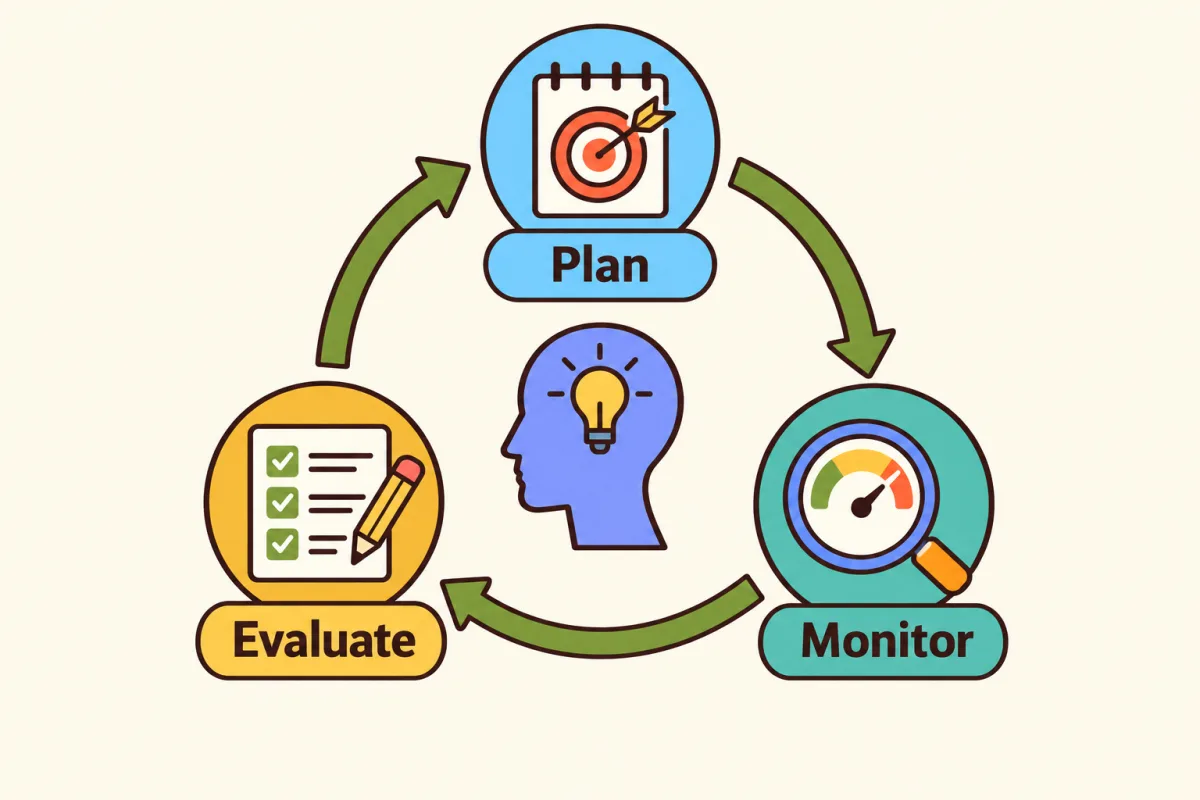
Metacognition means knowing about and steering your own learning. The psychologist John Flavell named it in the 1970s. It runs in a loop: you plan how to learn something, monitor whether it is working, and evaluate what to do differently next time.
It is a skill you can practice, not a fixed trait. The Education Endowment Foundation, which reviews education research in England, rates teaching metacognition and self-regulation as high impact for very low cost, worth about seven months of extra progress for pupils on average.
1. Plan before you start
Before a study session, write one sentence about what you want to be able to do when it ends, such as "explain how vaccines train the immune system." Then decide how you will check it. A clear target turns a vague "I studied" into something you can test yourself against.
2. Rate your confidence before you check
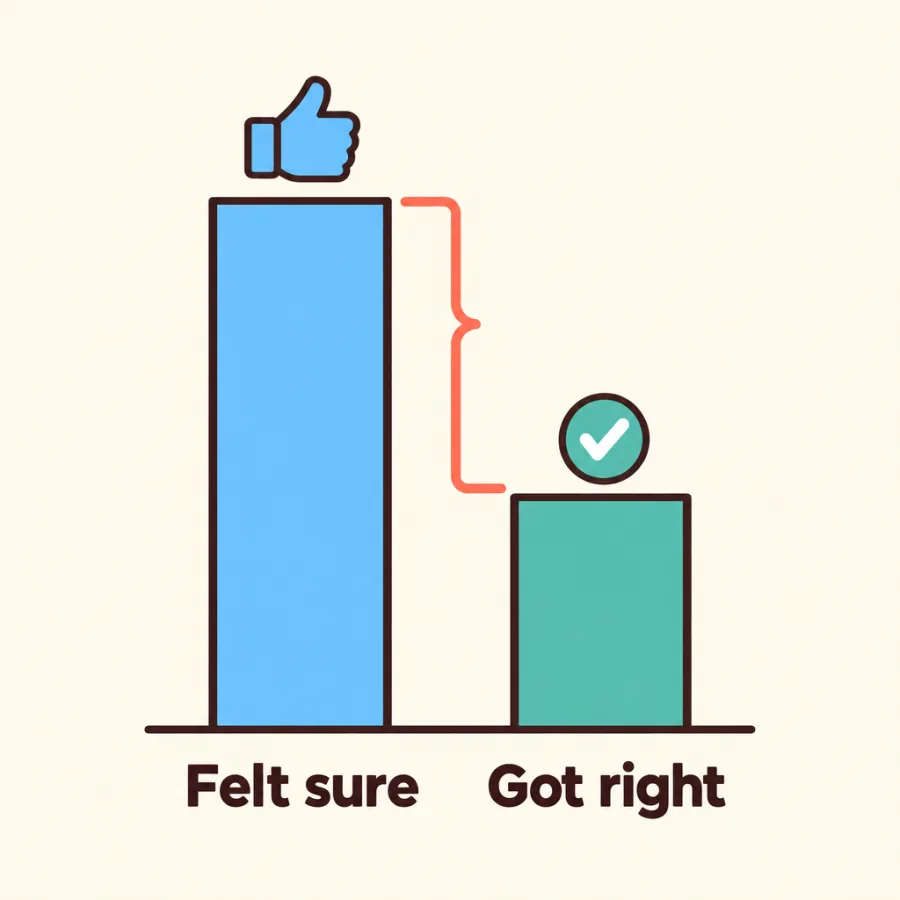
Before you look at an answer, guess how sure you are, from "no idea" to "certain." Over time you will see where your confidence runs ahead of your knowledge. Those are the topics to spend more time on, because they are the ones you would otherwise skip. In a study by Dunlosky and Rawson, students who judged their answers as better than they were stopped studying sooner and remembered less.
3. Test yourself instead of rereading
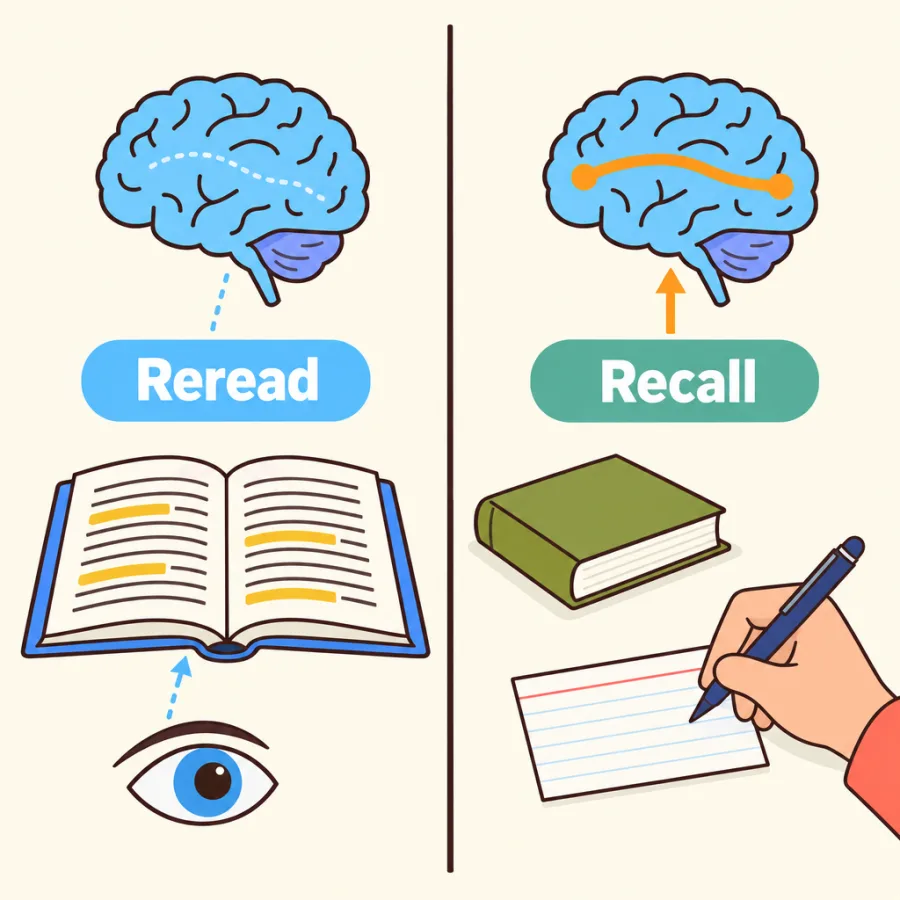
Rereading makes material feel familiar, and familiar is easy to mistake for understood. Close the page and try to recall the main points, or answer practice questions. In a 2013 review of ten study techniques, Dunlosky and colleagues rated practice testing as one of the two most useful, and rereading and highlighting among the least.
How useful each study technique is
| Practice testing | Spaced practice | Self-explanation | Interleaved practice | Highlighting | Rereading | |
|---|---|---|---|---|---|---|
| Usefulness | High | High | Moderate | Moderate | Low | Low |
4. Explain it in your own words
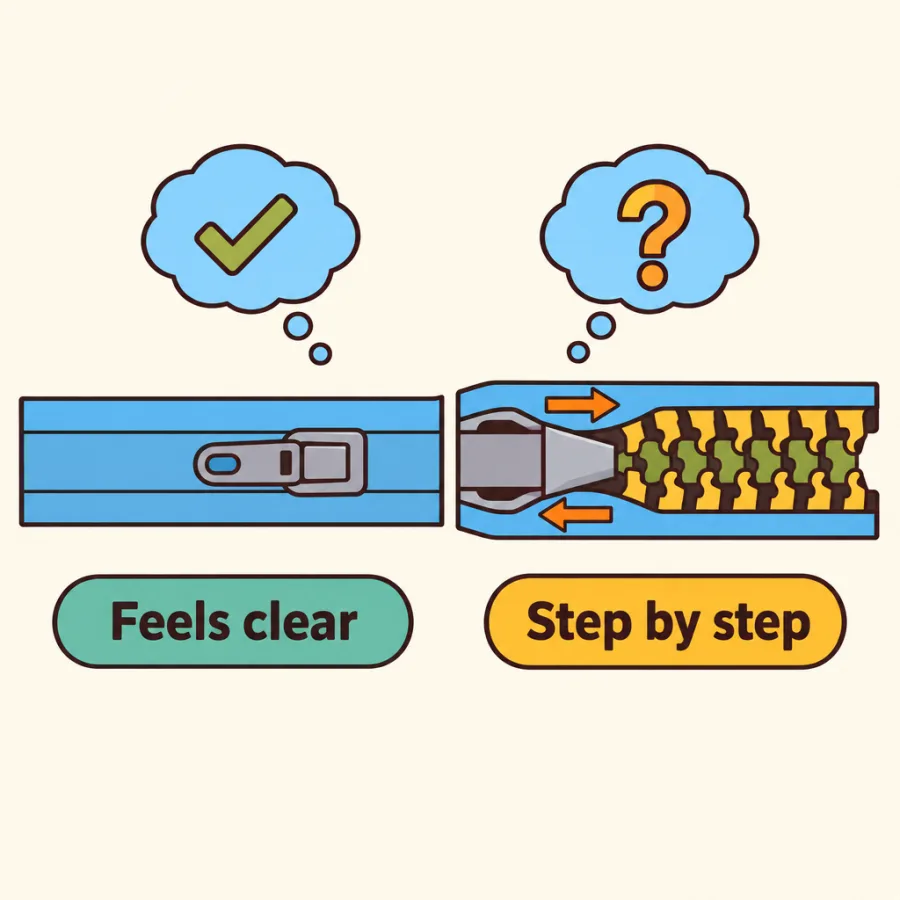
Try to explain the idea to someone who has never heard of it, out loud or in writing. People often feel they understand how something works until they have to explain it step by step, a gap Rozenblit and Keil called the illusion of explanatory depth. The places where you stall are exactly the gaps to fill.
5. Space out your review
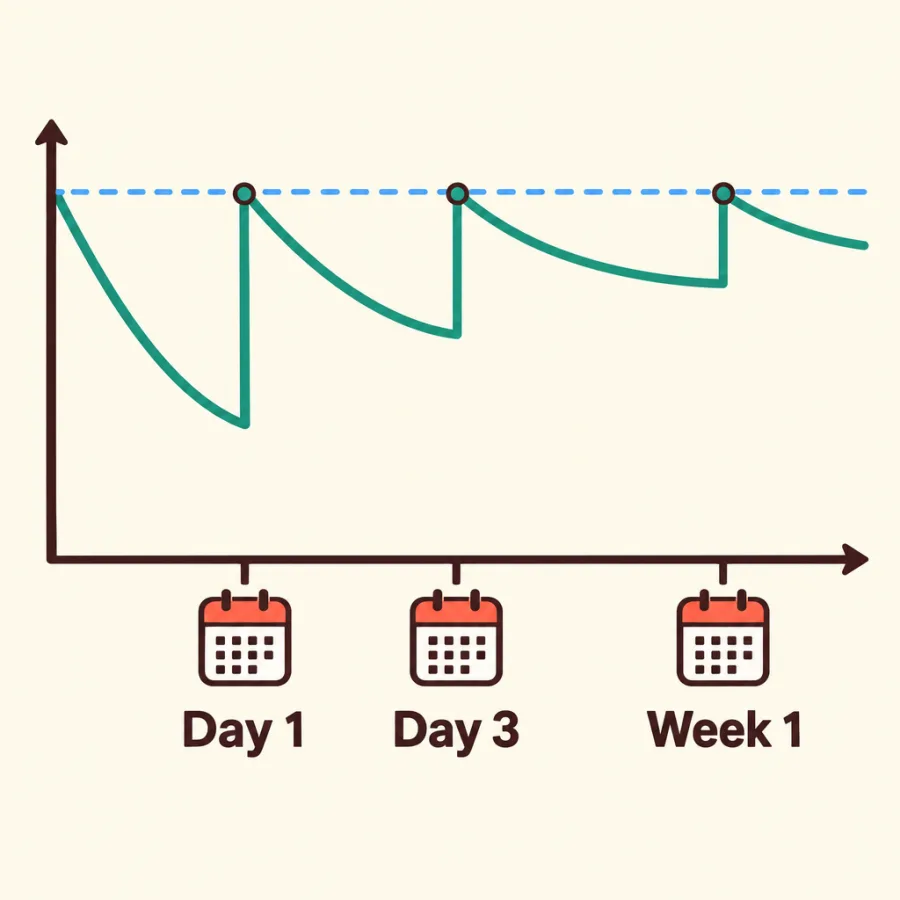
Come back to what you learned after a day, then a few days, then a week. Each return shows what you still know once it is no longer fresh, which is a more honest test than checking right after you study. The same 2013 review rated spaced practice as highly useful.
6. Use Wondering to build these habits into short lessons
Wondering turns any topic, link, or set of notes into a course of 3-minute lessons you can watch, listen to, or read. Each lesson ends with practice questions, including some where you explain an idea in your own words and get feedback, so you find out what you really understood instead of guessing.
Spaced repetition brings back questions just before you are likely to forget them. You can also check your understanding out loud with the voice tutor, which quizzes you on the lesson, and if a sentence confuses you, select it and tap Explain or Ask. Wondering runs on the web and iPhone, and you can start for free.
Wondering also makes polished courses and polished lessons: ready-made courses in its library, with clear writing, visuals, and practice, so you can start without setting anything up. It is one place to practice these habits on everything you learn, from a subject you are studying to your other interests and the skills that make you better at your work.
7. Ask questions as you learn
Stop every few paragraphs and ask yourself: what is the main idea, why is it true, and how does it connect to something I already know? If you cannot answer, that is your signal to slow down or look for another explanation before you move on.
8. Reflect after each session
Spend one minute at the end of a session on three questions: what did I learn, what was hard, and what will I do differently next time? Writing the answers down turns each session into a plan for the next one, which is the evaluate step of the metacognition loop.
Questions
What is metacognition?
Metacognition is thinking about your own thinking. It covers knowing what you understand and what you do not, planning how to learn, checking whether it is working, and changing your approach when it is not.
Can you improve metacognition?
Yes. Metacognition is a skill that improves with practice. Habits like testing yourself, rating your confidence, explaining ideas in your own words, and reflecting after study all train you to judge your own understanding more accurately.
What is an example of metacognition?
Reading a paragraph, realizing you could not explain it to a friend, and going back to reread the confusing part is metacognition. So is noticing that you always feel ready before a test and starting to quiz yourself earlier.
What is the easiest way to start?
After you read or watch something, close it and try to explain the main idea in a few sentences. If you want the habit built in, a 3-minute lesson on Wondering ends with practice questions that show you what you understood.
References
- Education Endowment Foundation. Metacognition and self-regulation. Teaching and Learning Toolkit.
- Flavell, J. H. (1979). Metacognition and cognitive monitoring: A new area of cognitive-developmental inquiry. American Psychologist, 34(10), 906-911.
- Dunlosky, J., Rawson, K. A., Marsh, E. J., Nathan, M. J., and Willingham, D. T. (2013). Improving students' learning with effective learning techniques. Psychological Science in the Public Interest, 14(1), 4-58.
- Dunlosky, J., and Rawson, K. A. (2012). Overconfidence produces underachievement: Inaccurate self evaluations undermine students' learning and retention. Learning and Instruction, 22(4), 271-280.
- Rozenblit, L., and Keil, F. (2002). The misunderstood limits of folk science: An illusion of explanatory depth. Cognitive Science, 26(5), 521-562.