Curiositymaxxing: how to become more curious, and why it pays off

Curiositymaxxing is internet slang for deliberately growing your curiosity. It works because curiosity is a state you can trigger, not only a fixed trait. Curiosity starts when you notice a gap between what you know and what you want to know. Studies show it peaks when you know a little, not nothing or everything, and that people remember answers better when they were curious first. To build it, keep a question journal, follow one rabbit hole a day, ask "why" several times, learn topics next to ones you know, guess before you look things up, explain ideas to others, and leave some room for boredom. Wondering lets you ask about anything and get a course of 3-minute lessons, with practice after each one and spaced review. It is free to start.
| Habit | What to do | Why it works |
|---|---|---|
| Question journal | Write down every question you notice during the day | Turns passing gaps into ones you can close later |
| One rabbit hole a day | Follow a single question for 15 to 20 minutes | Trains specific curiosity, the kind that goes deep |
| Ask "why" five times | Keep asking why until you reach a root cause | Each answer opens a new, smaller gap |
| Learn adjacent topics | Pick subjects next to ones you already know | Curiosity is highest when you know a little |
| Guess before you look | Commit to an answer before you search | Makes the gap visible and helps the answer stick |
| Explain it to someone | Teach what you learned in plain words | Shows what you still do not understand |
| Leave room for boredom | Put limits on the feed you reach for when idle | Boredom is where your own questions show up |
What curiositymaxxing means
The "-maxxing" suffix comes from internet slang. It started with "looksmaxxing" on online forums and spread through TikTok, where people now attach it to almost anything they want to push as far as it goes: sleepmaxxing, brainmaxxing, and so on. Curiositymaxxing means deliberately growing your curiosity.
Under the slang there is a serious idea. Curiosity is not only a personality trait you have or lack. It is also a state that rises and falls with what you notice, what you already know, and how you spend your attention. That means you can train it.
It also pays off. Curious people learn more, remember more, and enjoy it more. The rest of this guide covers what curiosity is, what researchers have found, how famously curious people worked, and the habits that make it grow.
Related: the power of brainmaxxing
What curiosity is: the information gap
In 1994 the economist and psychologist George Loewenstein published a review called "The psychology of curiosity." His idea, the information-gap theory, is that curiosity starts when you notice a gap between what you know and what you want to know.
The gap feels a little like hunger. It is mildly uncomfortable, and closing it feels good. That is why a cliffhanger, a half-finished puzzle, or a headline that holds back one detail is so hard to ignore.
The theory has a useful twist: you need some knowledge to feel a gap at all. If you know nothing about a topic, you do not know what you are missing. If you know almost everything, there is no gap left. Curiosity lives in between.
A short history of curiosity research
For a long time curiosity was treated as a vice or a distraction. Psychologists began to study it seriously in the 1950s, when Daniel Berlyne asked what makes people explore when there is no outside reward.
Since then the field has moved from theory to brain scans. Researchers now ask not only why we get curious, but what curiosity does to memory and how it differs from person to person.
- 1954: Berlyne: a theory of curiosity: Daniel Berlyne separates curiosity about things you see from curiosity about knowledge.
- 1960: Diversive vs specific: In Conflict, Arousal, and Curiosity, Berlyne splits wandering curiosity from focused curiosity.
- 1994: The information gap: George Loewenstein argues curiosity starts when you notice a gap in what you know.
- 2009: Curiosity peaks midway: Kang and colleagues find curiosity is highest at middle confidence and predicts better recall.
- 2014: Curiosity boosts memory: Gruber, Gelman, and Ranganath link curious states to the brain’s reward circuit and the hippocampus.
- 2018: Five dimensions: Todd Kashdan and colleagues describe five distinct ways people are curious.
Curiosity peaks when you know a little
In 2009, Min Jeong Kang, Colin Camerer, George Loewenstein, and colleagues tested the information-gap idea with trivia questions. People read each question, rated how curious they were about the answer, and rated how confident they were that they already knew it.
Curiosity formed an inverted U. It was low when people had no idea and low when they were sure, and it was highest when they were about half sure. Higher curiosity also predicted better recall of surprising answers one to two weeks later.
Brain scans showed that curiosity went with activity in the caudate, a region linked to expecting a reward. People were also willing to spend scarce tokens or wait longer to see the answers they were curious about.
The practical lesson: to feel curious about a topic, first learn just enough to know what you are missing.
| Confidence you know the answer | Curiosity (illustrative) |
|---|---|
| 0% | 1 |
| 10% | 4.2 |
| 20% | 6.8 |
| 30% | 8.6 |
| 40% | 9.6 |
| 50% | 10 |
| 60% | 9.6 |
| 70% | 8.6 |
| 80% | 6.8 |
| 90% | 4.2 |
| 100% | 1 |
Curiosity helps you remember, even nearby details
In 2014, Matthias Gruber, Bernard Gelman, and Charan Ranganath at UC Davis published a study in Neuron that took the idea further. People rated their curiosity about trivia questions, then waited a few seconds for the answer. During the wait, an unrelated face appeared on screen.
As expected, people remembered answers they were curious about better. The surprise was the faces. People also remembered faces better when they appeared during a high-curiosity wait, even though the faces had nothing to do with the question. The effect showed up right away and again a day later.
Brain scans showed that curious states raised activity in the midbrain and the nucleus accumbens, parts of the dopamine-driven reward circuit. People who got the biggest memory boost for the faces also showed stronger links between the midbrain and the hippocampus, a region central to forming new memories.
In plain terms, curiosity seems to put the brain into a state that is better at learning in general, not only learning the thing you are curious about.
Two kinds of curiosity: diversive and specific
Berlyne described two ways curiosity shows up. Diversive curiosity is the restless urge for anything new, often driven by boredom. Specific curiosity is the drive to answer one particular question.
Both are useful. Diversive curiosity finds new topics, and specific curiosity turns them into real knowledge. The trouble is that a phone feed feeds diversive curiosity endlessly while rarely letting specific curiosity finish anything.
| Diversive | Specific | |
|---|---|---|
| Trigger | Boredom | A gap you notice |
| Aim | Anything new | One answer |
| Example | Scrolling, browsing | Why is the sky blue? |
| Risk | Stays shallow | Narrow if alone |
Both feel rewarding · Both can be trained · You need both to learn well
Five ways people are curious
In 2018 the psychologist Todd Kashdan and colleagues published the five-dimensional curiosity scale. They found that curiosity is not one thing but at least five.
Joyous exploration is the pleasure of finding new ideas. Deprivation sensitivity is the itch of a problem you cannot stop thinking about until you solve it. Stress tolerance is your willingness to sit with confusion and doubt when something is new. Social curiosity is interest in what other people think and do. Thrill seeking is a willingness to take risks for new experiences.
This helps explain why someone can be endlessly curious about people but bored by physics, or the reverse. It also points to a weak spot for many learners: stress tolerance. If confusion feels bad, you avoid the topics where curiosity would pay off most.
Lessons from Leonardo da Vinci
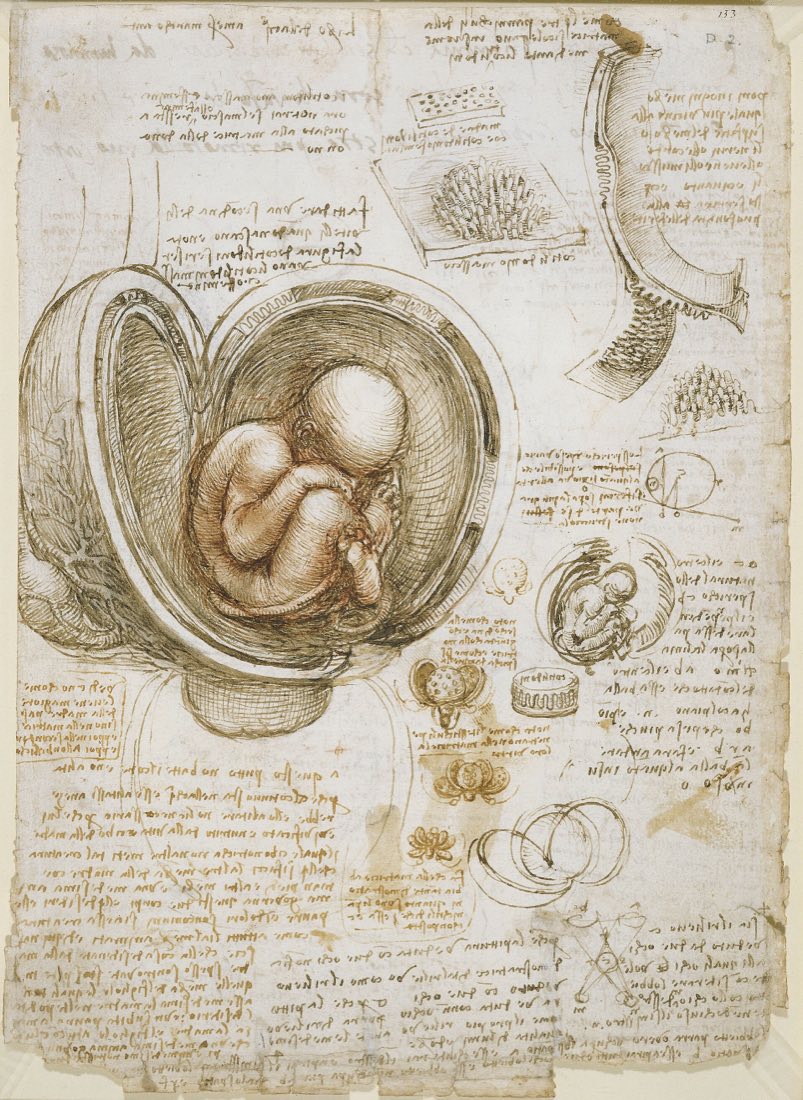
Leonardo da Vinci left thousands of notebook pages, and some of them hold to-do lists. They include entries like "Describe the tongue of the woodpecker" and a reminder to ask Benedetto Portinari how people in Flanders walk on ice. Walter Isaacson built his 2017 biography of Leonardo around lists like these.
Two habits stand out. First, he wrote his questions down instead of letting them pass. Second, he followed questions across fields: anatomy, water, flight, optics, and painting all fed each other. His interest in how light falls on a face led him to study optics and the eye.

How to curiositymaxx: the curiosity loop
Curiosity grows when you run a simple loop over and over. Notice something you do not understand. Turn it into a clear question. Guess the answer. Look it up. Then connect what you found to something you already know, which usually raises a new question.
The guess step matters more than it looks. In 2009, Nate Kornell, Matthew Hays, and Robert Bjork found that trying to answer a question before you are shown the answer helps you remember it, even when your guess is wrong. A guess makes the gap visible, and a visible gap is what curiosity needs.
- Notice: Catch something odd, new, or unexplained.
- Ask: Turn it into one clear question.
- Guess: Commit to an answer before you search.
- Look up: Find a good explanation and check your guess.
- Connect: Link it to something you already know.
Seven daily habits that make you more curious
Keep a question journal. Use a notes app or a small notebook and write down every question you notice: why bread goes stale, how a bill becomes law, what a word means. Most questions vanish within minutes. Writing them down keeps the gap open until you have time to close it.
Follow one rabbit hole a day. Pick one question from your journal and give it 15 to 20 minutes. Go as deep as you can on that one thing instead of skimming ten. This trains specific curiosity, the kind that builds real knowledge.
Ask "why" five times. The "five whys" method comes from Toyota, where engineers used it to find the root cause of a problem. It works for learning too. Why do leaves change color? Because the green pigment breaks down. Why does it break down? Keep going, and each answer opens a smaller, sharper gap.
Learn adjacent topics. Because curiosity peaks when you know a little, the easiest topics to get curious about sit next to what you already know. If you like cooking, try food chemistry. If you like history, try the economics of one period.
Guess before you look things up. Before you search, say your answer out loud or write it down. It takes five seconds and turns a passive search into a small test.
Explain it to someone else. After you learn something, explain it to a friend in plain words. You will find the parts you do not really understand, and those become your next questions.
Leave room for boredom. A short walk or a wait in line without your phone gives your own questions a chance to show up.
Lessons from Richard Feynman
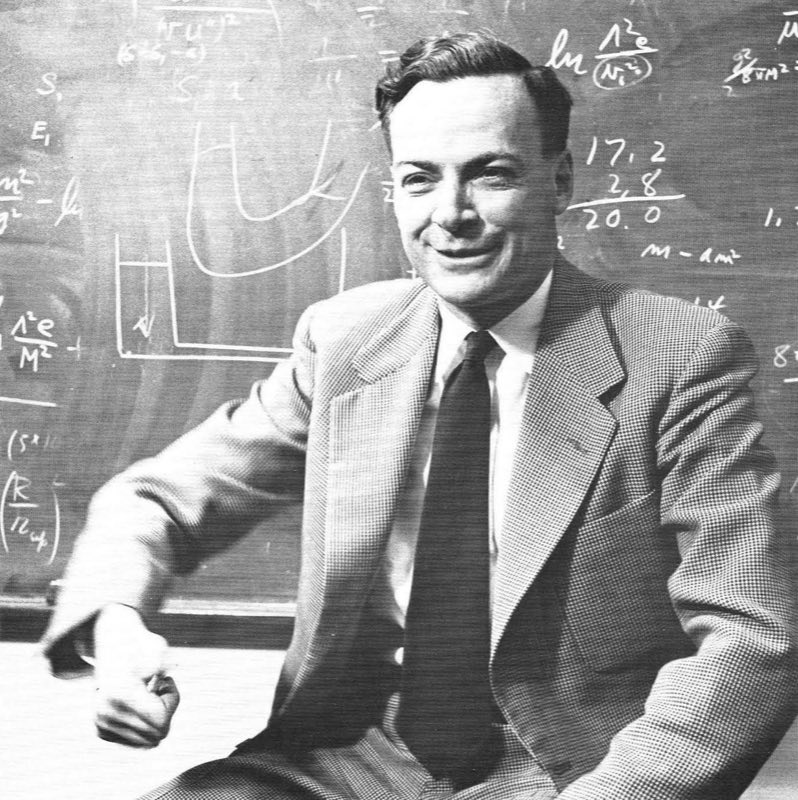
The physicist Richard Feynman, who shared the 1965 Nobel Prize in Physics, was famous for curiosity well outside physics. He learned to pick locks, played bongo drums, and spent time on biology and painting.
When he died in 1988, his blackboard at Caltech still held the line "What I cannot create, I do not understand." The idea is that you only really understand something when you can rebuild it yourself. For learners, that means explaining, deriving, or making the thing, not only reading about it.

Common mistakes, and the feed that kills boredom
The biggest mistake is confusing scrolling with curiosity. A feed gives you a new thing every few seconds, which satisfies diversive curiosity without ever letting a specific question form. You end the hour with many things seen and few things learned.
People find empty time harder than they expect. In a 2014 study in Science, Timothy Wilson and colleagues asked people to sit alone with their thoughts for about 15 minutes. Many found it unpleasant, and in one version about two thirds of the men and a quarter of the women gave themselves a mild electric shock rather than just sit there.
Other common mistakes: waiting until you feel curious before you start, when a little knowledge is what sparks curiosity; picking topics far from anything you know; and looking up every answer instantly, which closes the gap before it can do its work.
Related: things to do instead of doomscrolling
Use Wondering to follow your questions
Wondering is built for curiosity. You can ask about anything, from black holes to the history of a word, and get a short course of 3-minute lessons on it. That turns a question from your journal into something you can actually finish.
Each lesson ends with practice, so you test yourself instead of only reading. Spaced review brings ideas back before you forget them, and a voice tutor lets you talk through what you learned out loud. It is free to start. A good first rabbit hole is how the brain changes when you learn.
Wondering also makes polished courses and polished lessons, ready-made in its library, for the days you want to browse instead of ask. It is one place for every question you follow, from a passing curiosity to a subject you want to master to the skills that make you better at work.
Try a free lesson on neuroplasticity
Where to start this week
Start small. Today, write down three questions you notice. Tomorrow, pick one and give it 15 minutes, guessing before you look anything up. At the end of the week, explain the most interesting thing you learned to someone else.
That is the whole practice. Curiosity is less a gift some people are born with and more a loop you can run every day. The more you know, the more gaps you can see, and the more there is to be curious about.
Questions
What does curiositymaxxing mean?
Curiositymaxxing is internet slang, from the "-maxxing" trend, for deliberately growing your curiosity. In practice it means building habits like keeping a question journal, following one question deeply each day, and guessing before you look things up.
Can you become more curious?
Yes. Curiosity is partly a trait, but it is also a state triggered by noticing gaps in what you know. Learning a little about a topic, asking more questions, and leaving room for boredom all make that state more likely.
Why does curiosity help you remember?
Studies by Kang and colleagues (2009) and Gruber, Gelman, and Ranganath (2014) found that people remember answers better when they were curious first. Curious states engage the brain’s reward circuit and its links to the hippocampus, which helps form new memories.
What is the difference between diversive and specific curiosity?
Diversive curiosity is a general urge for anything new, often driven by boredom. Specific curiosity is the drive to answer one particular question. The psychologist Daniel Berlyne described both, and good learning needs the two together.
What is the information-gap theory of curiosity?
It is George Loewenstein’s 1994 idea that curiosity starts when you notice a gap between what you know and what you want to know. The gap feels mildly uncomfortable, and closing it feels rewarding.
References
- Loewenstein, G. (1994). The psychology of curiosity: A review and reinterpretation. Psychological Bulletin, 116(1), 75-98.
- Kang, M. J., Hsu, M., Krajbich, I. M., Loewenstein, G., McClure, S. M., Wang, J. T., & Camerer, C. F. (2009). The wick in the candle of learning: Epistemic curiosity activates reward circuitry and enhances memory. Psychological Science, 20(8), 963-973.
- Gruber, M. J., Gelman, B. D., & Ranganath, C. (2014). States of curiosity modulate hippocampus-dependent learning via the dopaminergic circuit. Neuron, 84(2), 486-496.
- Berlyne, D. E. (1954). A theory of human curiosity. British Journal of Psychology, 45(3), 180-191.
- Kashdan, T. B., Stiksma, M. C., Disabato, D. J., McKnight, P. E., Bekier, J., Kaji, J., & Lazarus, R. (2018). The five-dimensional curiosity scale: Capturing the bandwidth of curiosity and identifying four unique subgroups of curious people. Journal of Research in Personality, 73, 130-149.
- Kornell, N., Hays, M. J., & Bjork, R. A. (2009). Unsuccessful retrieval attempts enhance subsequent learning. Journal of Experimental Psychology: Learning, Memory, and Cognition, 35(4), 989-998.
- Wilson, T. D., Reinhard, D. A., Westgate, E. C., Gilbert, D. T., Ellerbeck, N., Hahn, C., Brown, C. L., & Shaked, A. (2014). Just think: The challenges of the disengaged mind. Science, 345(6192), 75-77.