15 things to do instead of doomscrolling
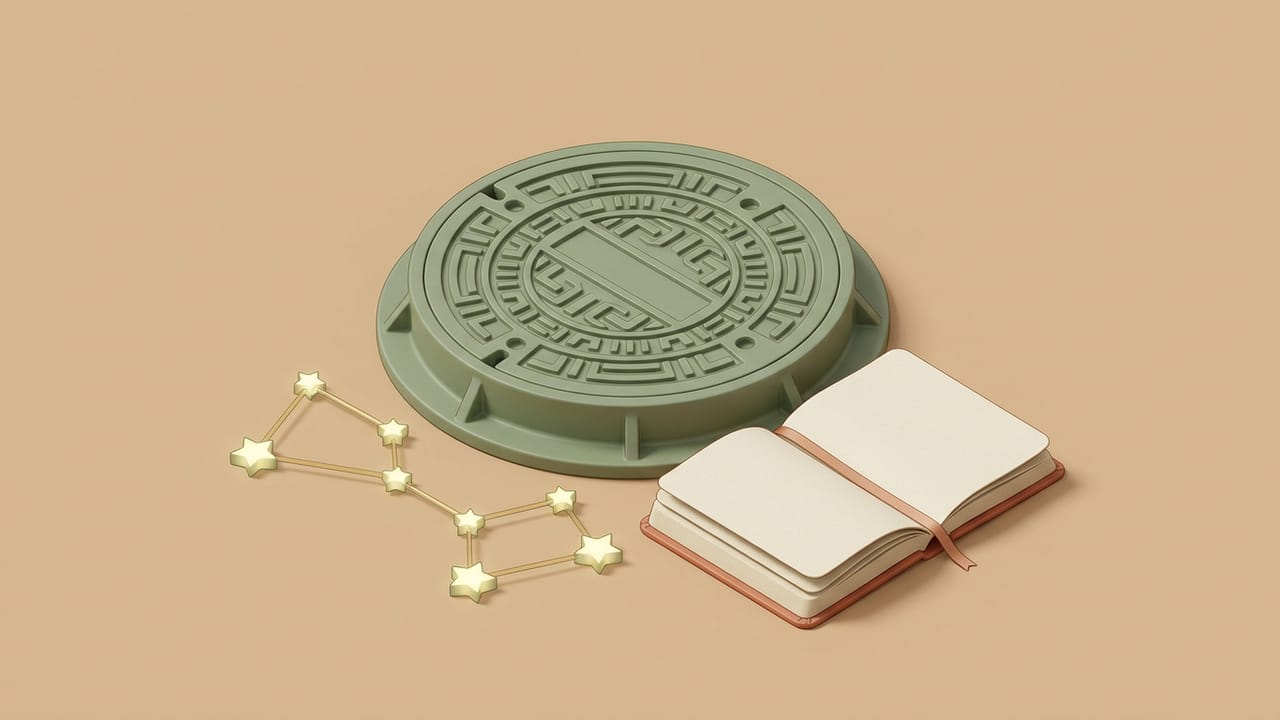
Instead of doomscrolling, do something just as easy to start but with an end: take a 3-minute lesson on Wondering, go on a dérive (a walk with no destination), make a sound map of everything you hear, learn the names of three trees on your street, sort the clouds overhead into their types, find one constellation, do a blind contour drawing, copy a sentence into a commonplace book, learn a poem one line a day, or lie on the floor for five minutes. The trick is to pick the swap before the urge comes, so your hand has somewhere else to go.
| Idea | Time | Good for |
|---|---|---|
| Take a 3-minute lesson on Wondering | 3 minutes | Anywhere you would reach for your phone |
| Go on a dérive | 20 minutes or more | Getting outside without a plan |
| Collect one thing on a walk | 15 minutes | Seeing your street differently |
| Learn three trees on your street | 10 minutes a day | Walks you already take |
| Make a sound map | 10 minutes | Sitting still outside or at a window |
| Name the clouds | 5 minutes | A break by the window |
| Find one constellation | 20 minutes | Evenings, instead of the bedtime scroll |
| Do a blind contour drawing | 5 minutes | Waiting rooms and coffee shops |
| Keep a commonplace book | 5 minutes | After reading something good |
| Learn a poem, one line a day | 2 minutes a day | Queues and commutes |
| Lie on the floor | 10 minutes | Winding down after work |
| Learn one knot | 10 minutes | Restless hands |
| Write with your other hand | 5 minutes | A quick reset for your attention |
| Send someone a specific memory | 2 minutes | Feeling connected without a feed |
| Reset one drawer | 10 minutes | Something finished by bedtime |
Why a swap works better than willpower
A feed has no last post, so there is never a natural moment to stop. Telling yourself to scroll less leaves the urge with nowhere to go. A swap gives the same few minutes a different place to land, ideally something just as easy to start that ends on its own.
The ideas below are small on purpose. Most take under fifteen minutes, need nothing you do not already own, and leave you with something: a word you know, a page you wrote, a street you now see differently.
1. Take a 3-minute lesson on Wondering
If you are going to hold your phone anyway, let it teach you something. Wondering turns any topic into a personal course of 3-minute lessons that you can watch, listen to as a podcast, or read, each ending with a few practice questions. Ask about whatever made you curious today: why cats knead, how tides work, or what that tree outside your window is called.
A lesson has an end, which a feed never does. Streaks keep the daily habit going, and spaced repetition brings back what you are about to forget. Wondering runs on the web and iPhone and is free to start.
If you would rather not choose a topic, pick one of its polished, ready-made courses, with lessons written to be clear and visual. Wondering is one place for whatever you are curious about tonight, the subjects you have always meant to learn, and the skills that help you at work.
Read a free lesson from a course on Dopamine Nation
2. Go on a dérive
A dérive, French for "drift", is a walk with no destination, an idea from the Situationists in 1950s Paris. Leave the house and let the street choose: turn toward whatever looks interesting, follow a smell or a sound, take the alley you always pass.
To make it a game, flip a coin at each corner, or follow a rule like "turn left whenever you see something red". You end up somewhere ordinary that you have somehow never seen.
3. Collect one thing on a walk
Pick one category before you head out and notice only that. Good ones: ghost signs (old painted ads fading on brick walls), manhole covers, unusual doors, house numbers in odd fonts, or faces hiding in objects, like two windows and a door that look surprised.
Take a photo of each find, or just keep a count. Your phone stays a camera instead of a feed, and the same walk turns into a hunt.
4. Learn three trees on your street
Most of us walk past the same trees every day without knowing what they are. Choose three on your block and learn to tell them apart by their leaves, bark, and shape. Once you know them, you will start spotting them everywhere.
Pick up one fallen leaf of each and press it in a heavy book. In a month you will have a small field guide to your own neighborhood.
5. Make a sound map
Sound mapping comes from acoustic ecology, the study of how places sound. Sit outside or by an open window with a piece of paper. Put an X in the middle for yourself, then for ten minutes mark every sound you hear where it comes from: a bird up and to the left, a bus far behind you, a fridge humming close by.
You will hear layers you normally filter out, and by the end your attention will feel slower and wider.
6. Name the clouds
Meteorologists sort clouds into ten main types, from high, wispy cirrus to the heaped cumulus of a summer afternoon and the low gray sheet of stratus. Look up and try to name what is overhead, and guess what the weather will do next.
It takes a minute, works from any window, and the sky changes every time you check.
7. Find one constellation
Instead of the bedtime scroll, step outside, turn off the lights you can, and give your eyes 15 to 20 minutes to adjust to the dark. Start with one shape that is easy to find from where you live, such as the Big Dipper, Orion, or the Southern Cross, and learn it well.
Once you can find it, use it as a signpost to the next one. The patterns move with the seasons, so there is always something new by next month.
Read a free lesson on reading the night sky
8. Do a blind contour drawing
Pick an object, like your hand, a mug, or the person across the café, and draw its outline slowly without looking at the paper and without lifting your pen. The drawing will look strange, and that is the point. The exercise trains you to look closely, and it is hard to feel restless while doing it.
Art teachers have used it for decades. All you need is a pen and the back of a receipt.
9. Keep a commonplace book
A commonplace book is a notebook where you copy out passages you want to keep: a line from a book, a quote from a conversation, a recipe, a fact. Readers have kept them for centuries.
Copying by hand makes you slow down and choose. After a few months, flipping through it is like scrolling a feed made only of things you loved.
10. Learn a poem, one line a day
Pick a short poem you like, write it on a card, and learn one new line each day while you wait in line or ride the bus. Say the whole thing from the start each time.
A sonnet takes about two weeks this way. Afterward you carry it with you, and it shows up in your head at odd, good moments.
11. Lie on the floor
Lie on your back with your knees bent, feet flat, and a book or two under your head. Rest your hands on your stomach and do nothing for ten minutes. Teachers of the Alexander Technique call this constructive rest.
It is a good swap for the moment you get home and collapse onto the couch with your phone. You get the same rest without the feed.
12. Learn one knot
Grab a shoelace or a charging cable and learn one useful knot, such as the bowline, which makes a loop that will not slip. Tie it ten times, then try it with your eyes closed.
Restless hands are often what pulls you toward your phone. A knot gives them something to do, and it is a skill you will actually use when tying down a load or hanging a hammock.
13. Write with your other hand
Write a short sentence, or your name, with the hand you do not usually write with. It is slow and awkward, and it needs all of your attention, which is exactly why it works as a reset.
Try the same sentence every day for a week and compare the first and last attempts.
14. Send someone a specific memory
Instead of liking a post, message one person about a specific moment you shared: "I just walked past the place where we got caught in that storm." It takes two minutes and usually starts a better conversation than any comment.
15. Reset one drawer
Choose one drawer, empty it, throw out what you do not need, and put the rest back neatly. It is small enough to finish in ten minutes, and finishing something is the feeling scrolling promises and never quite delivers.
How to make the swap stick
Choose your swap before the urge comes. Decide, for example, that waiting in line means a line of your poem, and arriving home means ten minutes on the floor.
Write your favorite three ideas on a card and keep it where your phone usually sits. When you reach for the phone, you find the card instead.
Charge your phone outside the bedroom. The last scroll of the night and the first of the morning are the hardest to skip when the phone is within reach.
Follow your curiosity. When a walk makes you wonder about something, like a bird call or an old building, look it up as a lesson instead of a feed, so the question turns into something you know.
Start a course on anything on Wondering
Questions
What can I do instead of doomscrolling at night?
Step outside and find one constellation, lie on the floor for ten minutes, copy a sentence into a commonplace book, or listen to a short Wondering lesson as a podcast. Charging your phone outside the bedroom makes any of these easier.
What can I do instead of scrolling on a short break?
Take a 3-minute lesson on Wondering, name the clouds outside the window, do a blind contour drawing, practice a line of a poem, or send a friend a specific memory. Each takes only a few minutes and has a clear end.
What should I do on a walk instead of looking at my phone?
Try a dérive, where you walk with no destination and let the street choose your turns, or pick one thing to collect, such as ghost signs, manhole covers, or faces in objects. You can also learn the names of three trees on your route or stop to make a sound map.
Why is it so hard to stop doomscrolling?
A feed never ends, so there is no natural stopping point, and the next post is always one swipe away. Swapping in something just as easy to start, but with a clear end, works better than trying to stop by willpower.
Is there a way to use my phone that is not doomscrolling?
Yes. Use the same few minutes to learn something. Wondering turns any topic into a personal course of 3-minute lessons with practice questions, so you put the phone down knowing something new instead of feeling worse.