Free sample lesson · Dopamine Nation: Finding Balance in the Age of Indulgence
Pleasure-Pain Balance
Why does feeling amazing now often mean feeling terrible later?
Lesson 1 of the Wondering course Dopamine Nation: Finding Balance in the Age of Indulgence
The Seesaw in Your Brain
Why does feeling amazing now often mean feeling terrible later?
Picture a teeter-totter inside your brain. On one side sits pleasure. On the other side sits pain.
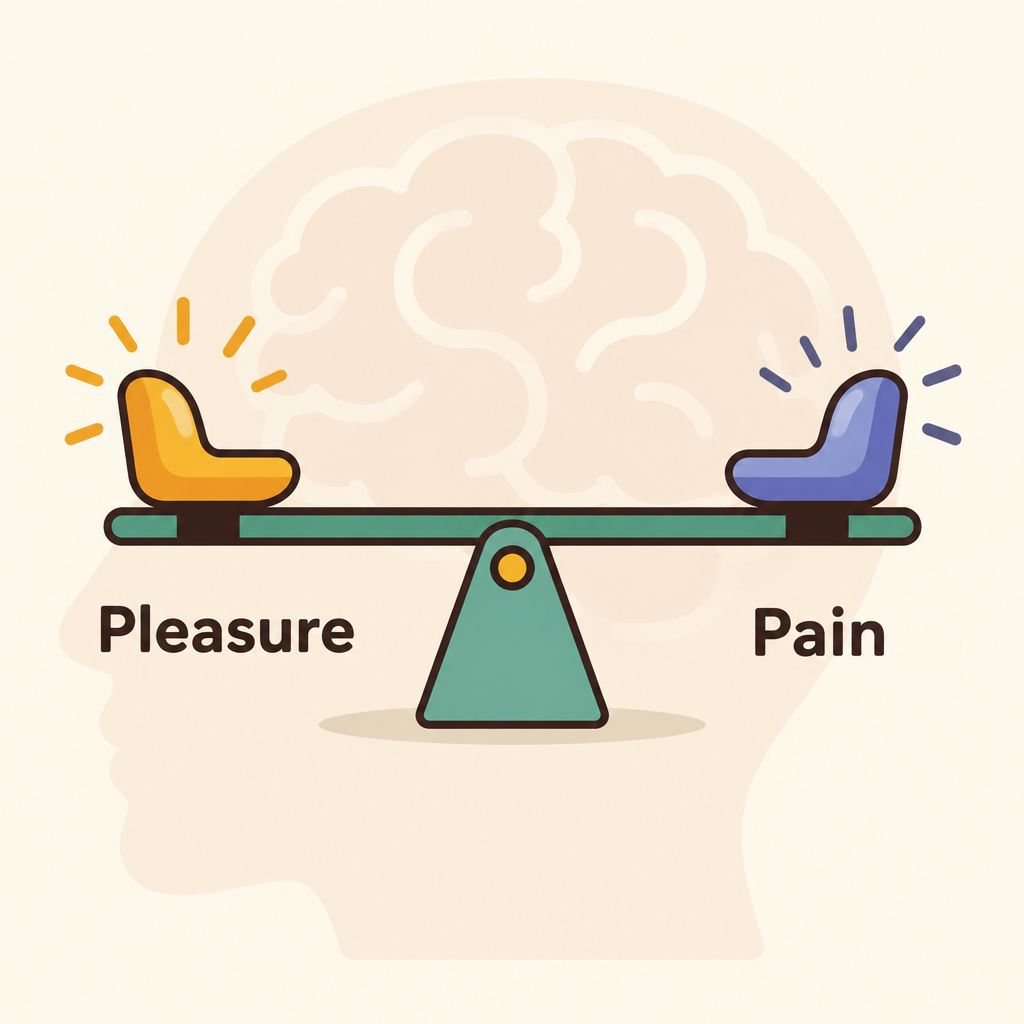
Notice that both sides sit at the same height: this level position is the balance your brain tries to keep.
Most of the time, the seesaw rests level. That level spot is balance.
Anything that feels good pushes the seesaw toward pleasure. What happens next explains a lot about cravings, highs, and the crashes that follow them.
Same Regions, Two Jobs
Here is the surprising part: the same brain regions process both pleasure and pain.
The two feelings do not run on separate tracks. They share one system, and they work in opposition to each other.
So when one side moves, the other is directly affected.
- Pleasure
- Pain
Think of it as one scale with two pans, rather than two separate scales that never touch.
What a Pleasure Spike Does
When you enjoy something, your brain releases dopamine in its reward pathway.
That dopamine release tips the balance toward pleasure. You feel good.
Think of a first bite of dessert or a big win in a game. The seesaw tilts to the pleasure side.
But the tilt does not stay put. Your brain is already getting ready to respond.
- Enjoyable event: You do something that feels good.
- Dopamine released: Dopamine floods the reward pathway.
- Tilt to pleasure: The balance tips toward pleasure.
- Brain responds: Self-regulation gets ready to push back.
The Brain Pushes Back
Your brain has powerful self-regulating mechanisms. Their job is to keep the seesaw level.
The moment pleasure tips the balance, these mechanisms kick in immediately.
To bring the balance level again, they tip it equally to the side of pain.
This is homeostatic compensation: an equal and opposite reaction to a pleasure spike, aimed at keeping equilibrium.
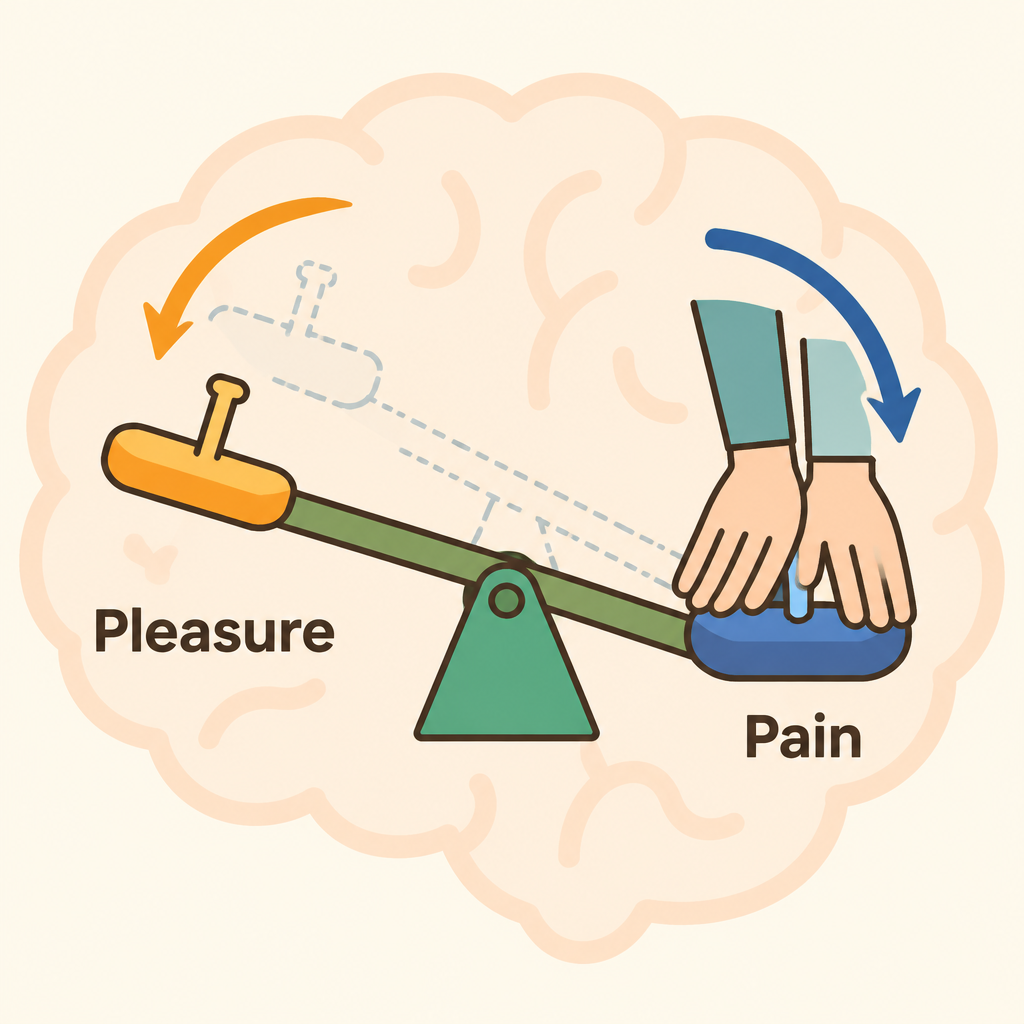
Notice the push on the pain side matches the size of the pleasure tilt: the correction is equal and opposite.
Why Chasing Highs Backfires
Now the crash makes sense. A high is followed by a matching push toward pain.
If you answer that low by chasing another high, the brain responds again by tipping toward pain.
- Chase a high: You seek something that feels good.
- Tilt to pleasure: Dopamine tips the balance up.
- Brain pushes back: Self-regulation tips it equally to pain.
- Feel the low: The pain side prompts another chase.
Round and round it goes. This is the basic shape of an addictive cycle.
Seeing the loop clearly is the foundation for breaking it.
The Low Is Built In
A common mistake is to see the low after a high as bad luck or personal weakness.
In fact, it is your brain doing its job: restoring balance.
The pain response comes from the same system that makes pleasure possible.
That shifts the question from "Why do I feel bad?" to "What tipped my balance?"
Putting It to Use
Here is what to carry with you.
Pleasure and pain share brain regions and work like a seesaw. A dopamine-driven pleasure spike tips the balance.
Self-regulating mechanisms then tip it equally toward pain to restore equilibrium.
In daily life, notice the low after a big high. Expect it, name it, and pause before chasing the next high to escape it.
Check yourself
Pleasure and pain are processed by _____ in the brain
- the same regions
- completely separate regions
Answer: the same regions
The same brain regions handle both pleasure and pain. They work in opposition, like two sides of a teeter-totter, rather than in separate systems.
When we feel pleasure, _____ is released in the brain's _____, and the balance tips toward pleasure.
Answer: When we feel pleasure, dopamine is released in the brain's reward pathway, and the balance tips toward pleasure.
Pleasure involves dopamine release in the reward pathway. This release tips the pleasure-pain balance toward the pleasure side.
After a pleasure spike tips the brain's balance, how do its self-regulating mechanisms respond?
- They tip it toward pain by an equal amount
- They boost pleasure even further
- They leave the balance tipped toward pleasure
- They tip it slightly toward pain, much less than the spike
Answer: They tip it toward pain by an equal amount
Homeostatic compensation creates an equal and opposite reaction. The balance tips toward pain by about as much as it tipped toward pleasure, in an effort to restore equilibrium.
Keep going
This is lesson 1 of 32 in Dopamine Nation: Finding Balance in the Age of Indulgence. Next up:
- Neurobiological Gravity
- Brain Adaptation
- Anhedonia
- Smartphone Dopamine
- Engineering Addiction
Wondering turns any topic into short lessons you can read, watch, or listen to, with practice questions and an AI tutor.