Free sample lesson · How Superhuman Built an Engine to Find Product-Market Fit
From Signs to Signal
Why did Superhuman's 14-person team still refuse to launch?
Lesson 1 of the Wondering course How Superhuman Built an Engine to Find Product-Market Fit
What You Will Learn
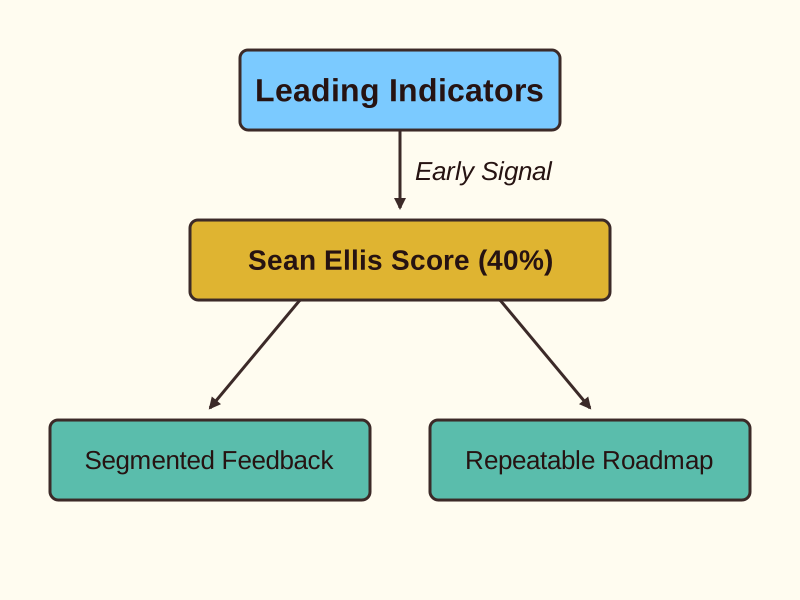
A leading indicator turns vague launch anxiety into a measurable hypothesis the team can improve before growth obscures the problem.
The Trap of Lagging Indicators
Founders often wait for revenue growth or press interest to confirm success. These are lagging indicators.
They only appear after you have already achieved traction. By then, it is too late to fix underlying issues.
- Lagging
- Leading
Superhuman had 14 employees and high investor interest. Yet, the team still did not know if the product was ready for a broad launch.
Growth can hide problems. You need a signal that appears before the noise of a big launch.
Finding a Leading Signal
A leading indicator provides early evidence you can act on immediately.
Instead of watching sales, ask your current users a specific question. How would they feel if they could no longer use your product?
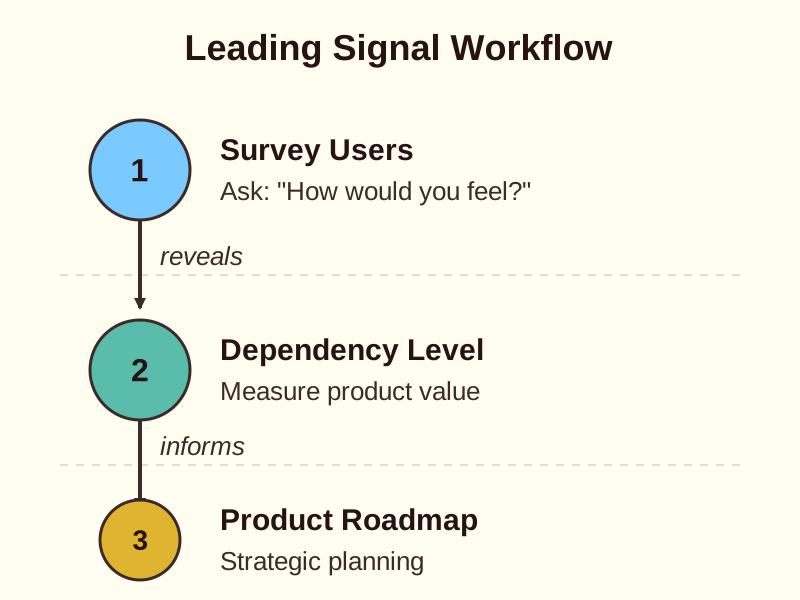
This dependency survey reveals the depth of your value. It shows if you have a solid foundation before you spend money on marketing.
Leading signals help you build a repeatable roadmap rather than guessing based on intuition.
The Sean Ellis Score
The Sean Ellis Score measures the percentage of users who say they would be "very disappointed" without your product.
Research across 100 startups suggests a benchmark of 40%. Crossing this threshold often correlates with strong growth.
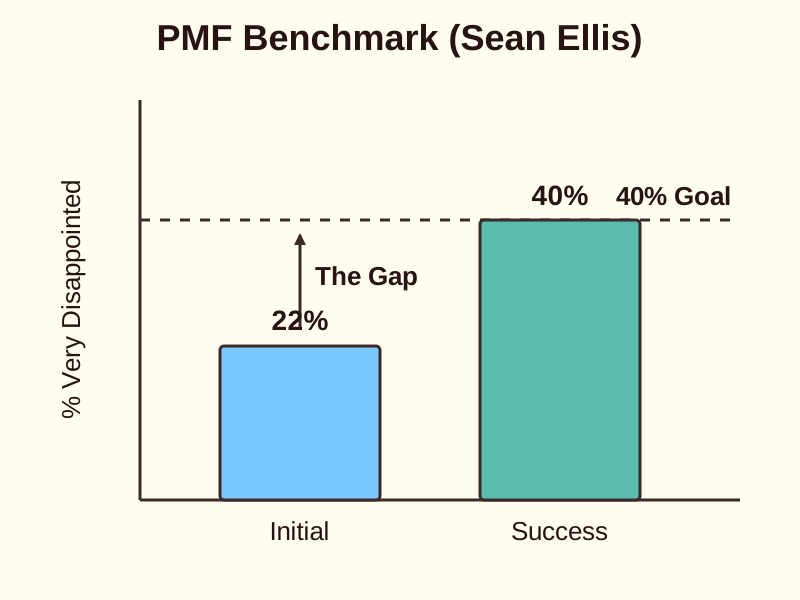
Superhuman initially scored only 22%. This was not a failure. It gave the team a concrete baseline to improve.
They used this data to identify which specific segments loved the product and which did not.
Interpreting the Results
A score above 40% is a directional signal, not a guarantee of success. It does not prove your business model is profitable.
You must also consider who is responding. A high score from the wrong audience will not help you scale.
Do not treat the survey as a binary pass or fail test. Use it to find the customers with the strongest pull.
Combine this score with actual user behavior to verify if people do what they say.
How to Apply It in Real Life
- Survey: Ask active users how they would feel if they could no longer use the product.
- Calculate: Identify the percentage of respondents who select 'Very Disappointed'.
- Segment: Filter results by persona to find the group with the highest score.
- Iterate: Double down on features that the 'Very Disappointed' group loves.
Keep going
This is lesson 1 of 8 in How Superhuman Built an Engine to Find Product-Market Fit. Next up:
- Ask the Four Questions
- Segment Around Supporters
- Define the High-Expectation Customer
- Filter Feedback by Benefit
- Split the Roadmap
Wondering turns any topic into short lessons you can read, watch, or listen to, with practice questions and an AI tutor.