Free sample lesson · First B2B SaaS Customers
Founders Make Startups Take Off
Why doesn't a good product take off by itself?
Lesson 1 of the Wondering course First B2B SaaS Customers
Overview of Founders Make Startups Take Off
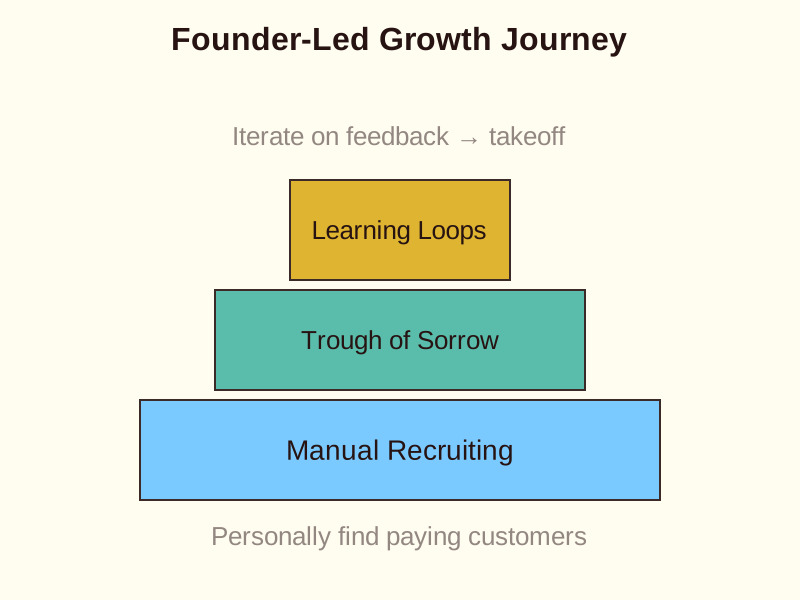
This lesson prevents the early mistake of hiding in product work when the real bottleneck is manually recruiting and learning from customers.
The Myth of Automatic Growth
Many founders believe that a great product will grow itself once it is launched. They focus on code and design while waiting for users to arrive.
In reality, products rarely take off in isolation. Launching is just the beginning of the journey.
- Myth
- Reality
Gustaf Alströmer explains that early growth is not automatic. It requires founders to step away from the screen and find users manually.
Do Things That Do Not Scale
At the start, you must personally recruit your customers. This is a core founder task, not a temporary embarrassment.
- Recruit: Personally recruit your first customers instead of waiting for passive signups.
- Engage: Meet hosts or users face-to-face to understand their needs deeply.
- Commit: Do manual work like taking professional photos to ensure users stay and pay.
Airbnb is a famous example of this approach. The founders traveled to meet hosts and take professional photos of listings.
They did not wait for an advertising button to work. They did the unscalable work required to get their first users to stay and pay.
Surviving the Trough of Sorrow
The startup curve shows that excitement often fades after the initial launch. This period is known as the trough of sorrow.
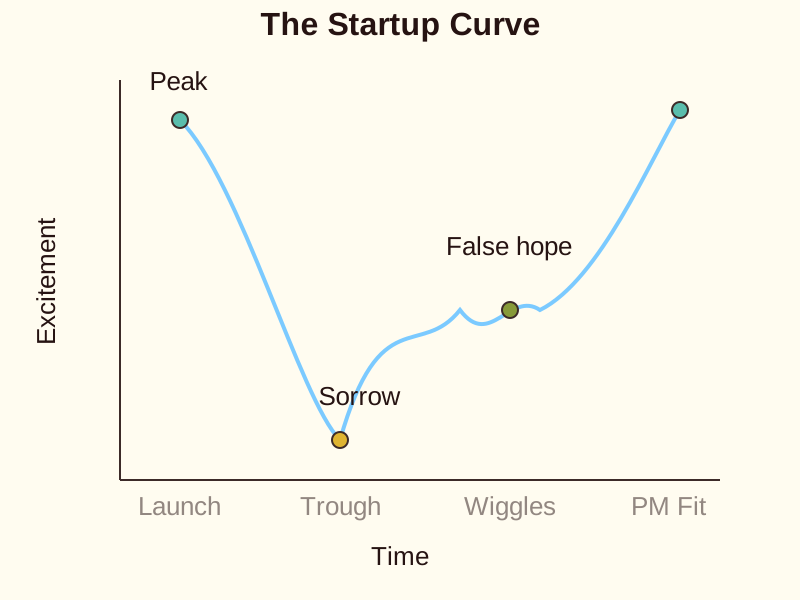
Progress might look like this over time:
- Launch excitement (Peak)
- Trough of sorrow (Low point)
- Wiggles of false hope
- Product-market fit
Founders must persist through these stages by listening to users and improving the product every day.
The Power of Learning Loops
A post-launch lull is not a sign to quit. It is a signal to start a learning loop.
Instead of building more features in secret, watch how your manual recruits use the product. Identify why they stay or leave.
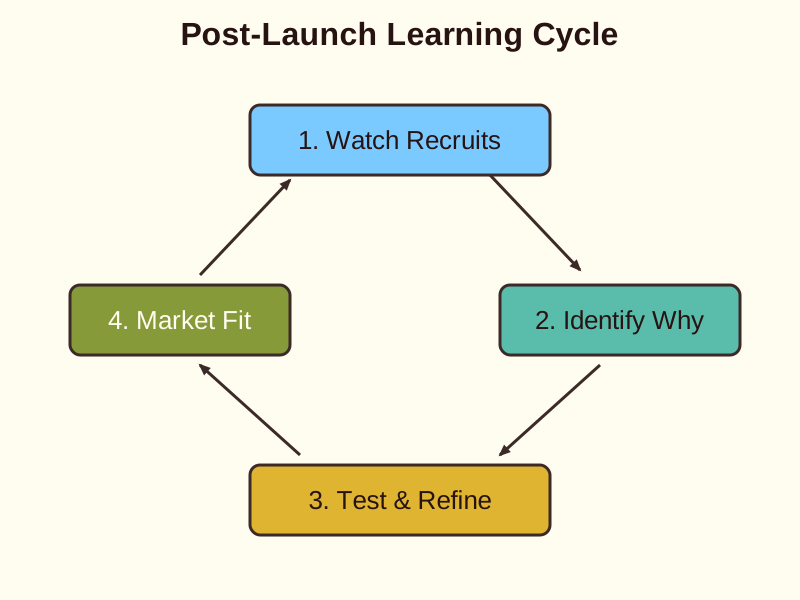
Manual recruiting provides the data you need to reach product-market fit. Use this time to test, listen, and refine your positioning until the product truly sticks.
How to Apply It in Real Life
- Step 1: Stop Hiding: Step away from writing code and identify potential users to contact directly.
- Step 2: Do Things That Don't Scale: Provide bespoke, high-touch onboarding to your very first users to secure paying customers.
- Step 3: Run Learning Loops: Analyze customer behavior during the trough of sorrow to refine your product offering.
Check yourself
At the early stage, a SaaS product usually experiences _____ after its initial launch.
- manual recruiting effort
- automatic organic growth
Answer: manual recruiting effort
Products rarely take off automatically. Growth requires active founder intervention and manual effort rather than passive, spontaneous momentum.
In early startup customer acquisition, _____ relies on founder outreach to onboarding initial users, while _____ represent scalable paid channels that rarely work before achieving fit.
Answer: In early startup customer acquisition, manual recruiting relies on founder outreach to onboarding initial users, while advertising buttons represent scalable paid channels that rarely work before achieving fit.
Founders must personally recruit early users through high-touch unscalable work instead of relying on paid ads or passive launch traffic to build sustained retention.
Why should a founder initiate learning loops during the trough of sorrow instead of building features in secret?
- To analyze user drop-off data and refine positioning with direct feedback
- To pause marketing efforts until organic word-of-mouth momentum returns
- To automate all onboarding flows before talking to additional customers
- To rewrite the codebase without disturbing existing high-value clients
Answer: To analyze user drop-off data and refine positioning with direct feedback
A post-launch lull indicates that the product needs refinement based on user behavior. Direct feedback from manually recruited users reveals friction points needed to reach product-market fit.
Keep going
This is lesson 1 of 8 in First B2B SaaS Customers. Next up:
- Founder Sales Duty
- Start With Something Useful
- Write a Short Sales Email
- Track the Whole Funnel
- Choose Easy Early Adopters
Wondering turns any topic into short lessons you can read, watch, or listen to, with practice questions and an AI tutor.