Free sample lesson · The Retail Inventory Method
Method Overview
What if you could value your entire store's stock without counting a single box?
Lesson 1 of the Wondering course The Retail Inventory Method
The Power of Estimation
Imagine valuing your entire store inventory without counting every single box on the shelf.
The retail inventory method makes this possible. It is an accounting shortcut used to estimate the value of ending inventory.
Retailers use this method to save hundreds of labor hours. It provides a quick financial snapshot without the need for a physical count.
The Cost to Retail Ratio
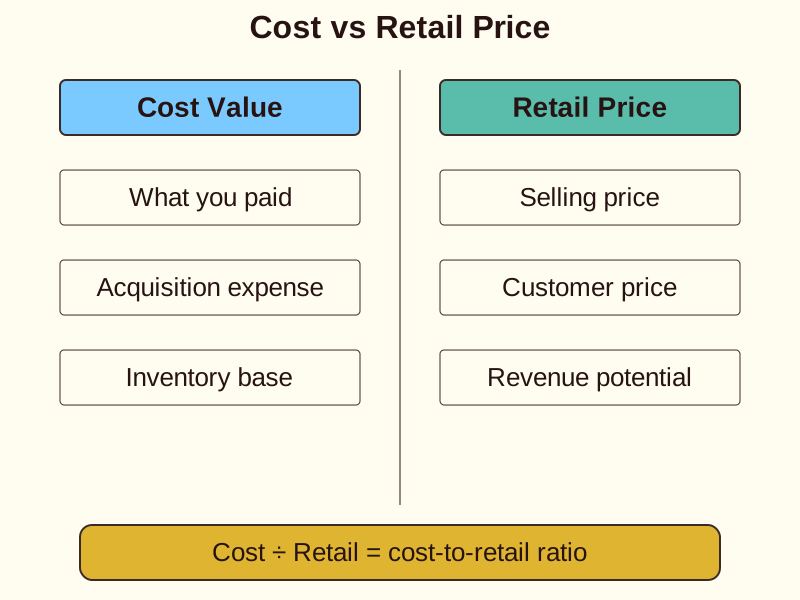
The core of this method is the relationship between what you paid for items and their selling price.
You must track two sets of numbers: the cost of goods and the retail price of those same goods.
By dividing the total cost by the total retail value, you find the cost-to-retail ratio. This percentage is the key to converting sales back into cost values.
Calculating the Final Value
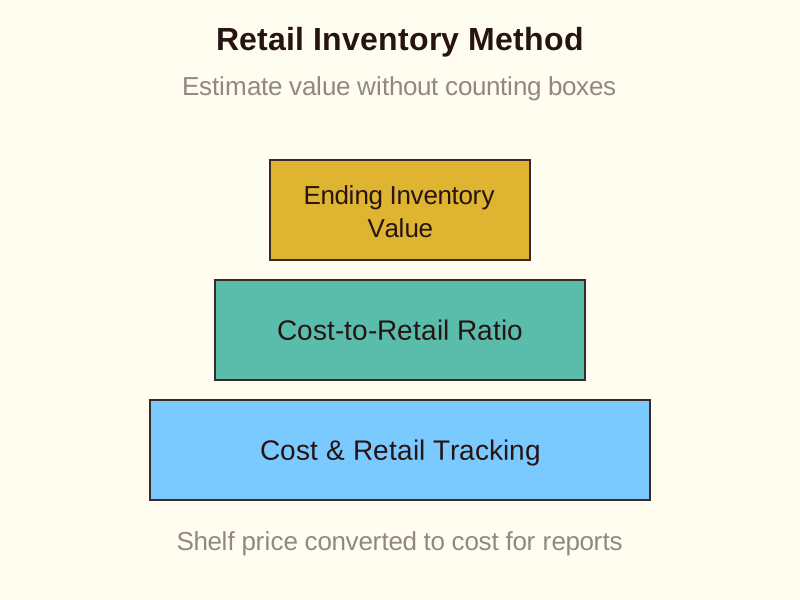
To find your ending inventory, start with the total retail value of goods available for sale.
Subtract your total sales from this retail value. This leaves you with the estimated retail value of the stock still in your store.
Finally, multiply that retail value by your cost-to-retail ratio. This converts the shelf price into the actual cost value for your financial reports.
- Get Retail Total: Start with the total retail value of all goods available for sale.
- Subtract Sales: Subtract total sales from the retail value to find remaining shelf value.
- Apply Ratio: Multiply the remaining retail value by the cost-to-retail ratio.
When to Use This Method
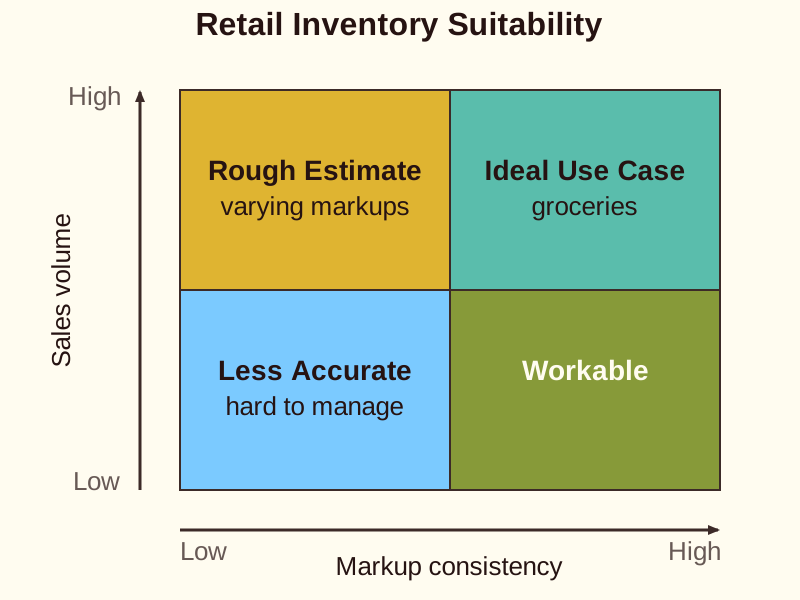
This method works best when you have a consistent markup across your products.
It is ideal for high-volume retailers like grocery or department stores. These businesses handle thousands of small items daily.
However, it is only an estimate. If markups vary wildly between departments, the calculation becomes less accurate and harder to manage.
Applying the Retail Inventory Method
- Track Totals: Gather total cost and total retail value for all available goods.
- Find Ratio: Divide total cost by total retail value to get the cost percentage.
- Calculate Ending Stock: Subtract sales from goods available at retail, then multiply by the ratio.
Check yourself
The primary purpose of the retail inventory method is to calculate an estimation of ending inventory value without conducting a physical count.
- True
- False
Answer: True
This accounting shortcut allows high-volume retailers to estimate their ending inventory value quickly without having to physically count every item on the shelves.
To find the cost-to-retail ratio, divide the total _____ of goods available by the total _____ of those goods.
Answer: To find the cost-to-retail ratio, divide the total cost of goods available by the total retail price of those goods.
The cost-to-retail ratio measures the relationship between what the retailer paid for inventory (cost) and its selling price (retail value).
Which retail setting is best suited for using the retail inventory method effectively?
- A boutique custom furniture maker with varying, custom markup across departments
- A department or grocery store with thousands of high-volume items and consistent markup
- An art gallery selling unique high-end paintings with distinct markups
- A specialized car dealership tracking high-value individual vehicle identification numbers
Answer: A department or grocery store with thousands of high-volume items and consistent markup
The retail inventory method requires a consistent markup percentage across products to remain accurate. High-volume businesses like grocery stores with uniform markups benefit most, whereas varying markups reduce accuracy.
Keep going
This is lesson 1 of 7 in The Retail Inventory Method. Next up:
- Core Concepts
- Cost Ratio
- Step Process
- Price Adjustments
- Method Benefits
Wondering turns any topic into short lessons you can read, watch, or listen to, with practice questions and an AI tutor.