Free sample lesson · The Octalysis Framework
Human-Focused Design
Why do games captivate us for hours while productive apps feel like work?
Lesson 1 of the Wondering course The Octalysis Framework
The Limits of Function-Focused Design
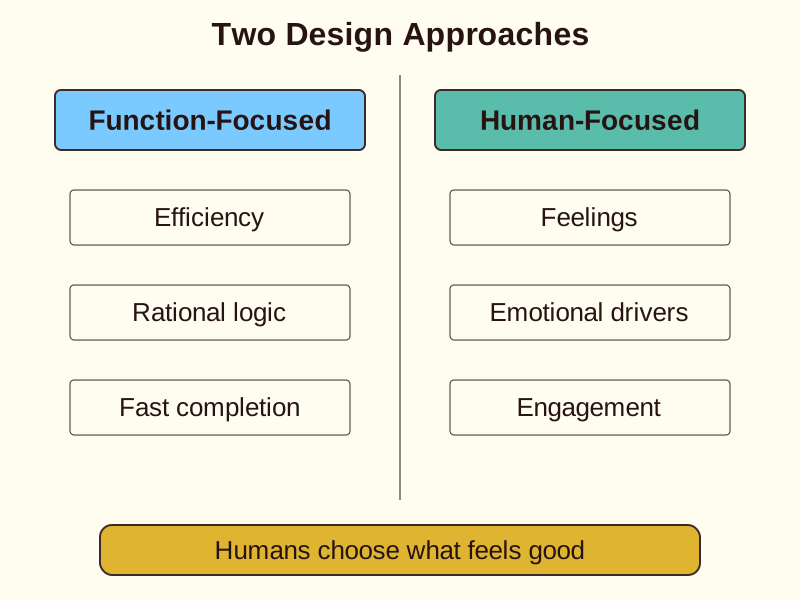
Traditional design focuses on efficiency and task completion. This is known as Function-Focused Design.
It assumes users are rational beings who act based on logic. The goal is to finish the job as quickly as possible.
However, humans are not machines. We do not always choose the most efficient path. We choose what feels good.
Designing for Human Emotion
Human-Focused Design shifts the priority to how people feel during an experience.
It recognizes that we are driven by feelings and intrinsic desires. This approach optimizes for motivation rather than just speed.
Games have perfected this art over thousands of years. They exist solely to be engaging, making them the perfect model for behavioral design.
- Shift Priority: Focus on how people feel during the experience rather than just speed.
- Acknowledge Drives: Recognize that humans are driven by feelings and intrinsic desires.
- Model Games: Study how games create engagement to inform your behavioral design.
Psychology Before Mechanics
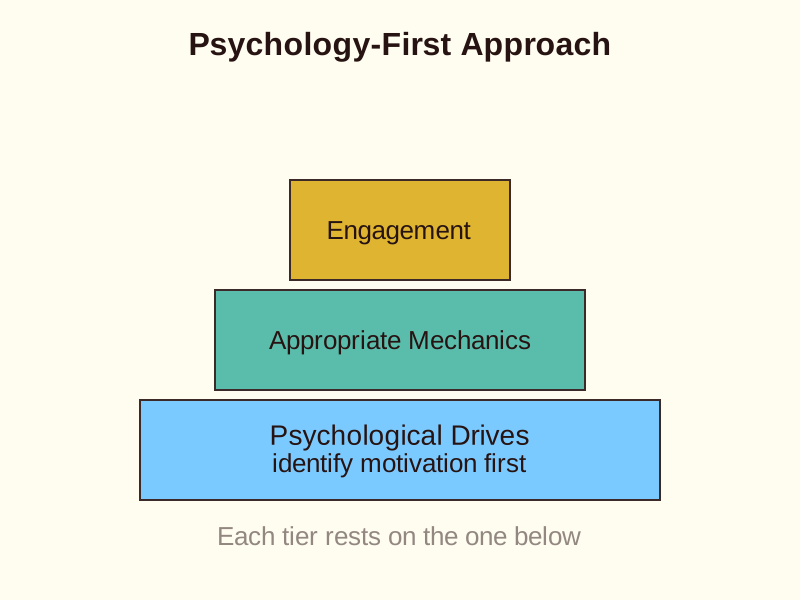
Effective gamification is not about adding points or badges to a boring task.
It starts by understanding psychological drives. You must identify what motivates a person first.
Only after understanding the drive should you select game mechanics. Adding features without a psychological foundation often fails to increase long-term engagement.
Applying the Octalysis Mindset
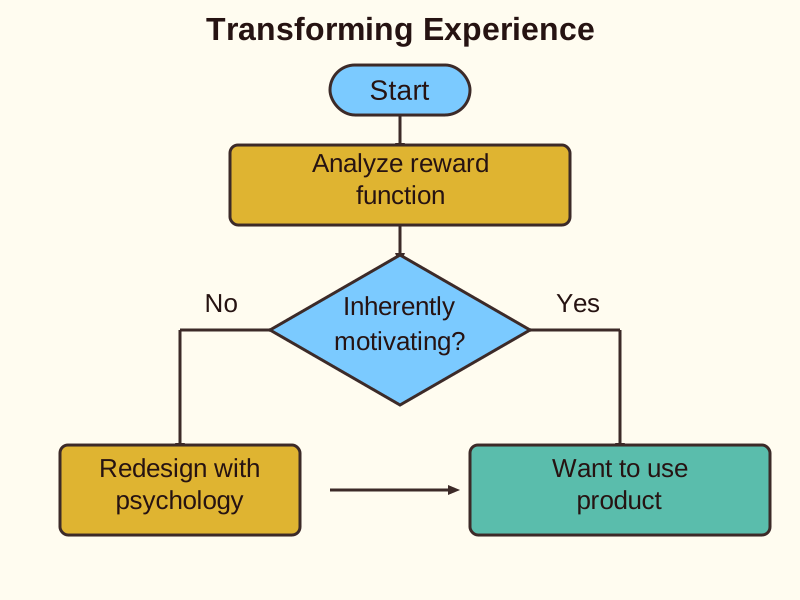
To improve your reward systems, look beyond the function of the tool.
Ask how the user feels when they earn a reward. Is it a sense of accomplishment or a fear of losing progress?
Your goal is to make activities inherently motivating. Use behavioral psychology to transform a product people need to use into one they want to use.
Applying Octalysis to Improve User Engagement
- Look Beyond Function: Examine current features to see if they only optimize task speed.
- Identify Psychological Drives: Determine what core emotional drivers are missing from the experience.
- Select Game Mechanics: Choose mechanics that directly support the identified psychological drives.
Check yourself
Function-Focused Design prioritizes completing tasks efficiently, whereas _____ optimizes for how users feel during the experience.
- Human-Focused Design
- System-Focused Design
Answer: Human-Focused Design
Human-Focused Design shifts the design goal from pure operational efficiency to addressing user feelings and psychological drives.
In effective gamification design, you must identify _____ first to understand motivation, and then choose appropriate _____.
Answer: In effective gamification design, you must identify psychological drives first to understand motivation, and then choose appropriate game mechanics.
Effective gamification starts with behavioral psychology. Game mechanics (like badges or points) should only be selected after establishing what psychological drive is being targeted.
When designing new reward features for a software product, why is it ineffective to add points and badges without analyzing user psychology?
- Game features lack a foundation in human motivation when added without understanding underlying drives.
- Points and badges slow down task completion efficiency across digital interfaces.
- Users only care about logical utility rather than emotional feedback from software.
- Game mechanics are only effective when implemented in non-digital physical products.
Answer: Game features lack a foundation in human motivation when added without understanding underlying drives.
Gamification fails when features are added without a underlying psychological drive, as mechanics alone do not create long-term intrinsic motivation.
Keep going
This is lesson 1 of 27 in The Octalysis Framework. Next up:
- Eight Core Drives
- White Hat vs Black Hat
- Higher Purpose
- Epic Meaning Design
- Psychology of Progress
Wondering turns any topic into short lessons you can read, watch, or listen to, with practice questions and an AI tutor.