Free sample lesson · The Hard Thing About Hard Things
Face the Struggle
When food loses its taste, what should a founder do next?
Lesson 1 of the Wondering course The Hard Thing About Hard Things
What You Will Learn
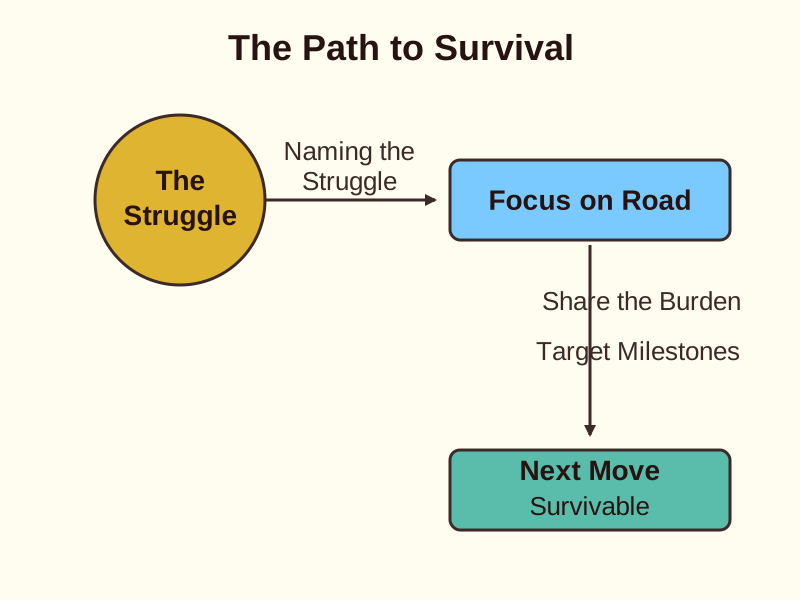
Naming the Struggle without treating it as a verdict helps a leader redirect attention from self-condemnation toward the next survivable move.
Defining The Struggle
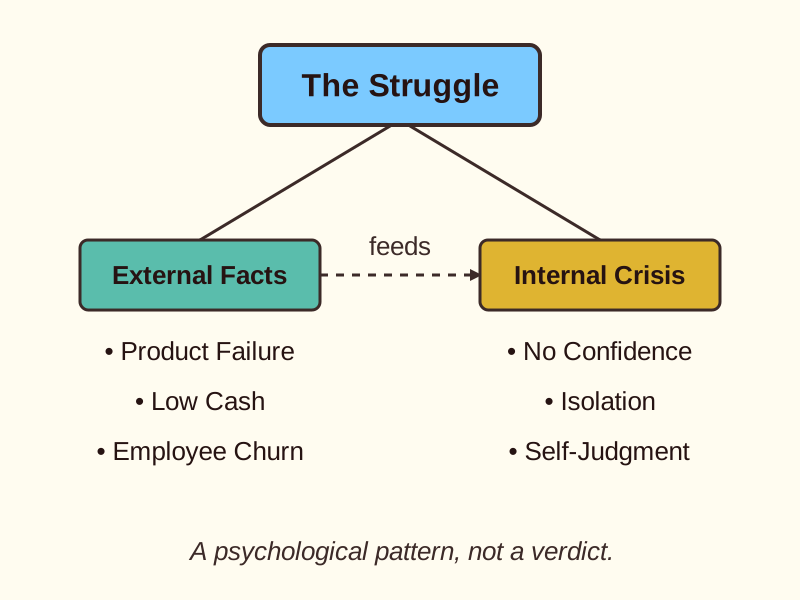
Ben Horowitz describes The Struggle as the moment when business setbacks become a personal crisis of confidence.
It happens when your product is failing, your cash is low, and your best people are leaving.
You might find that food loses its taste. Ordinary conversations disappear behind loud thoughts of failure.
This is a psychological pattern, not a final verdict on your leadership. Every great founder experiences this weight.
The Trap of Isolation
A common mistake is believing that feeling The Struggle proves you are uniquely unqualified.
Leaders often try to hide their distress. They think they must carry every burden alone to protect the team.
In reality, secrecy and self-judgment impair your decision-making. Isolation makes the crisis more dangerous than the business problems themselves.
Productive recognition of a crisis is different from self-defeating rumination.
- Self-Judgment
- Productive Recognition
Focus on the Road
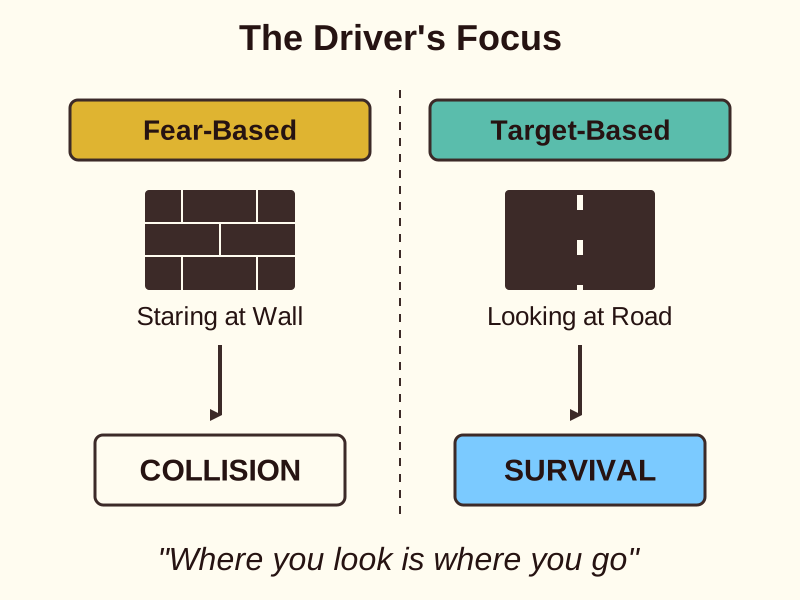
When a race-car driver enters a dangerous turn, they must look at the road, not the wall.
If you stare at the wall you fear hitting, you will drive straight into it. You must focus on where you want the car to go.
For a CEO, this means studying what must go right to survive. Do not spend all your mental energy rehearsing bankruptcy or failure.
Taking Practical Action
To move forward, share the burdens that can be shared. Tell your leadership team the truth about your runway or retention risks.
This recruits more intelligence to solve the problem. You do not need to share every private fear, but you must share the facts.
Assign owners to specific risks. Keep daily attention on the milestones that extend survival. Focus on the remaining target ahead.
How to Apply It in Real Life
- Name It: Acknowledge you are in The Struggle to stop the cycle of self-blame.
- Look at the Road: Identify the specific path to survival rather than obsessing over bankruptcy.
- Share the Burden: Lay out the objective facts to your leadership team.
- Execute Moves: Focus daily energy on the next survivable milestone.
Keep going
This is lesson 1 of 12 in The Hard Thing About Hard Things. Next up:
- Tell It Like It Is
- Fire Lead Bullets
- Lay People Off Right
- Preserve Respect in Firing
- Put People First
Wondering turns any topic into short lessons you can read, watch, or listen to, with practice questions and an AI tutor.