Free sample lesson · The Creative Act: A Way of Being
Universal Creator
What if you've been creative your whole life without even realizing it?
Lesson 1 of the Wondering course The Creative Act: A Way of Being
Creative Without Knowing It
Think about yesterday. Did you cook a meal, fix a problem, or move something around your home?
If so, you created something.
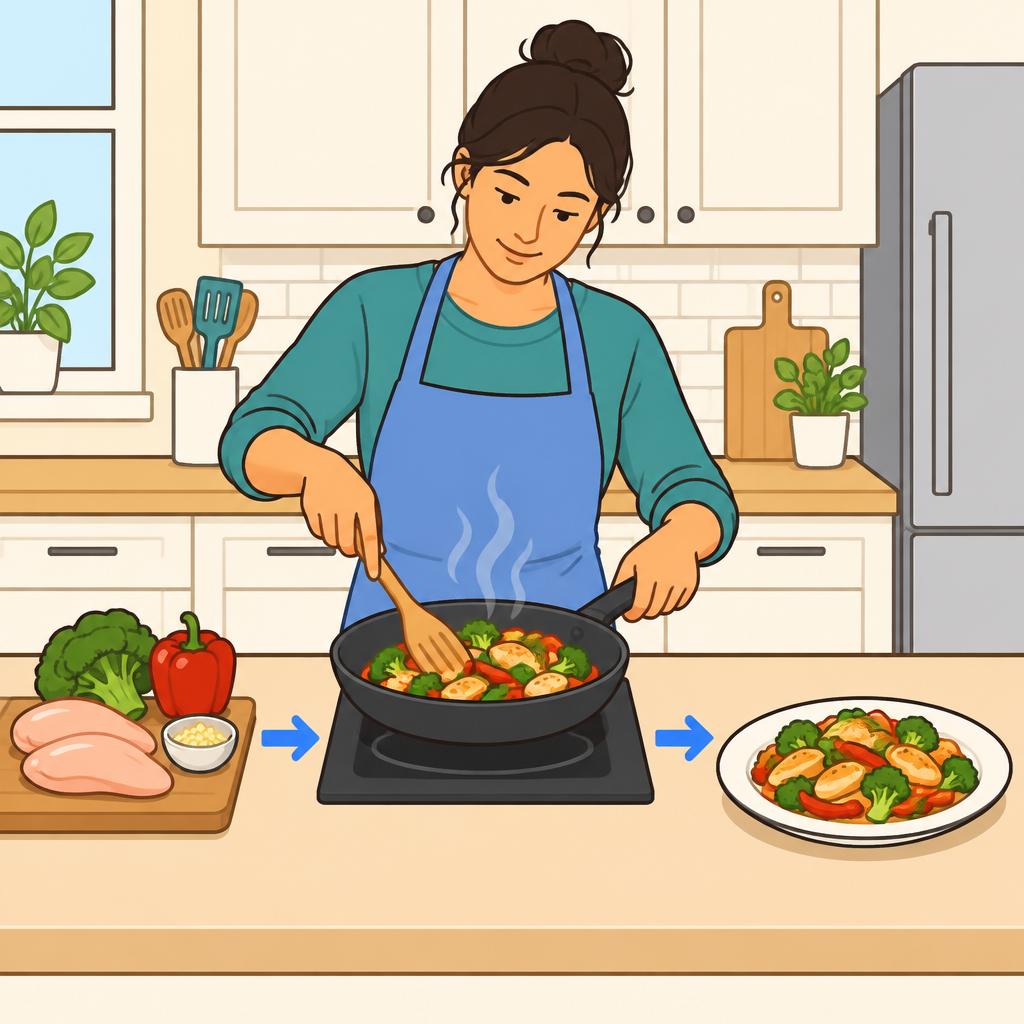
Notice there is no studio or stage here: an everyday kitchen task is where something new, a meal, comes into existence.
Author Rubin makes a bold claim: everyone is a creator. In his view, creativity belongs to all of us, including people who never paint, write, or play music.
This lesson shows you how to spot the creative work you already do every day, and why it counts.
The Myth of the Talented Few
Many people believe creativity is a special skill. Only gifted artists have it, and everyone else watches.
Rubin rejects this idea. He sees creativity as a universal human capacity that everyone shares.
- The myth
- Rubin's view
He writes that creativity is not a rare ability and that it is not difficult to access.
So the question changes. You do not need to ask whether you are creative. You only need to notice where you already create.
What It Means to Create
Rubin gives a simple definition. An artist is anyone who brings something into existence that was not there before.
Notice what is missing. There is no mention of talent, training, galleries, or payment.
The only test is newness. After you act, does something exist that did not exist before?
- You take action
- Something new exists?: Is there something now that was not there before?
- You created: No talent or training required.
- Nothing new yet
If yes, you created. If no, nothing new has appeared yet.
Everyday Creative Acts
Creative acts hide in ordinary moments. Rubin points to three familiar ones.
Cooking a meal: raw ingredients become a new dish that did not exist an hour ago.
Solving a problem at work: you produce a fix or an idea that was not there before.
Arranging furniture: the pieces you already own become a new room layout.
- Cooking
- Work problem
- Furniture
None of these needs a stage or a title. Each one passes the same test.
A Birthright, Not a Rare Gift
Rubin calls creativity our birthright. It is inherent in every human, a fundamental part of how we exist.
You do not earn it with talent. You do not lose it without training.
It may simply go unnoticed. Many people create daily and file it under chores or work.
Once you see creativity as part of being human, the label creator stops feeling like a stretch.
Seeing Yourself as a Creator
Here is how to put this idea to work.
- Recognize: Call it creative when something new appears because of you.
- Explain: Creating means bringing something new into existence, and everyone does it.
- Act: Treat your next meal, fix, or plan as creative work.
Recognize it. When something new appears because of you, call it a creative act.
Explain it. Tell a colleague that creating means bringing something new into existence, and everyone does it.
Act on it. Stop waiting to feel talented. Treat your next meal, fix, or plan as creative work.
Check yourself
Creativity is a capacity that _____.
- every human has
- only gifted people have
Answer: every human has
Creativity is described as inherent in all humans — a birthright. It is not reserved for professional artists or the talented few.
According to Rick Rubin, who counts as an artist?
- Anyone who brings something new into existence
- Anyone who earns a living from their art
- Anyone born with exceptional natural talent
- Anyone with formal training in the arts
Answer: Anyone who brings something new into existence
Rubin defines an artist as anyone who brings something into existence that wasn't there before. This definition depends on the act of creating, not on talent, training, or income.
True or false: Creativity is a rare ability that is difficult to access.
- True
- False
Answer: False
False. Rubin states that creativity is not a rare ability and is not difficult to access. It is available to everyone.
Keep going
This is lesson 1 of 60 in The Creative Act: A Way of Being. Next up:
- Permission-Free
- Source
- Tuning In
- Paying Attention
- Details
Wondering turns any topic into short lessons you can read, watch, or listen to, with practice questions and an AI tutor.