Free sample lesson · The Beginning of Infinity
Hard-to-Vary Explanations
Why can ancient myths explain seasons but teach us nothing useful?
Lesson 1 of the Wondering course The Beginning of Infinity
A Myth That Explains Too Easily
Ancient Greeks told a story about the seasons. Demeter, goddess of the harvest, grieves each year when her daughter Persephone goes to the underworld.
Her sadness brings winter. When Persephone returns, spring follows.
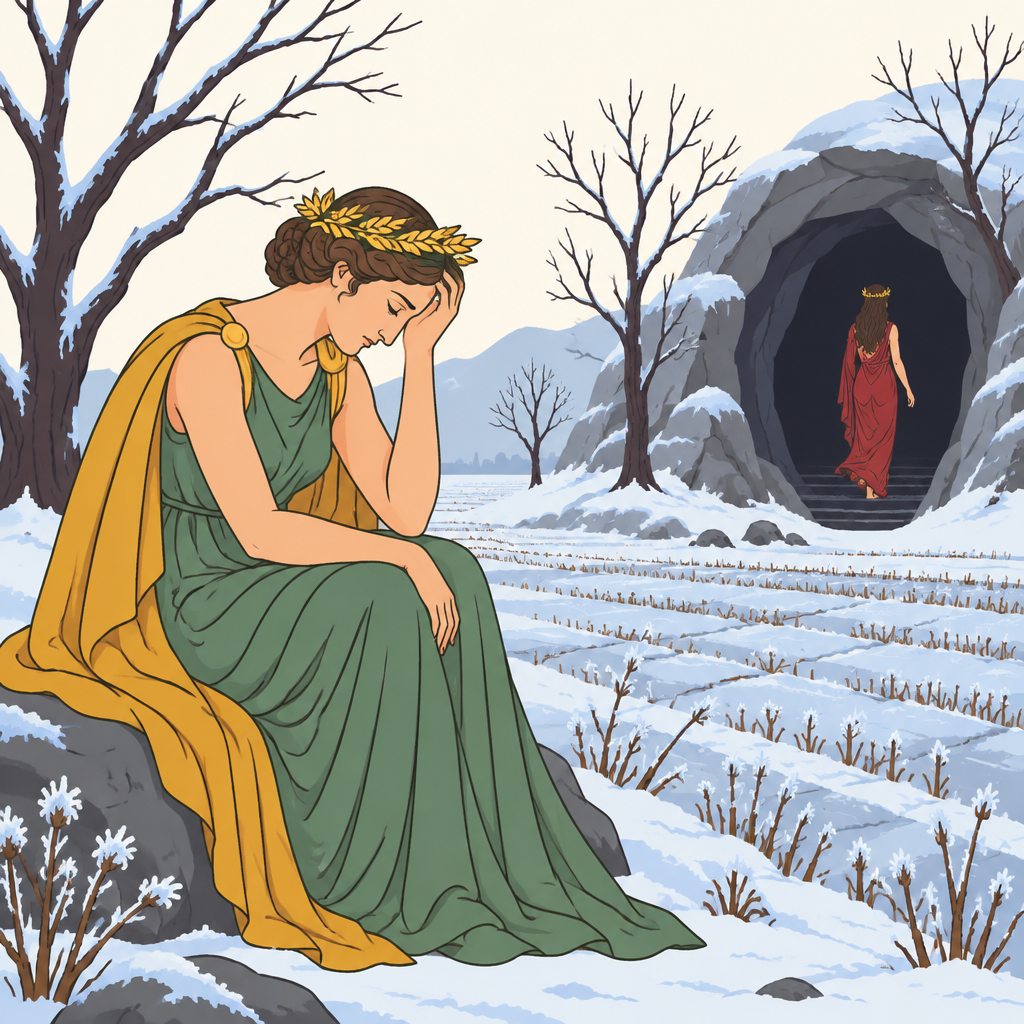
Notice that the story links winter to a goddess's feelings, a cause you could swap for almost anything else.
The story accounts for the seasons. Yet it predicts nothing new and teaches us nothing useful about how the world works.
Why? The answer lies in one property: whether an explanation is hard to vary.
What Hard to Vary Means
A good explanation is hard to vary: changing its details would ruin it.
Every part does work. Each piece is tightly constrained by what we already know and connects to predictions we can test.
A bad explanation is easy to vary. You can swap its parts freely, and it still claims to explain the same thing.
- Hard to vary
- Easy to vary
That freedom looks like strength. It is actually the weakness.
Swap the Myth's Details
Try editing the Persephone myth. Replace Demeter with another god. Change grief to anger. Swap the underworld for a far island.
Each version explains winter just as well as the original.
That is the warning sign.
If nothing in the story is pinned in place, the story is not telling you why seasons happen. It only attaches a tale to them.
The Tilt Explanation Resists Change
The modern explanation: Earth's axis is tilted. As Earth orbits the Sun, each hemisphere leans toward the Sun for part of the year, then away.
Leaning toward the Sun means more direct sunlight and summer. Leaning away means winter.
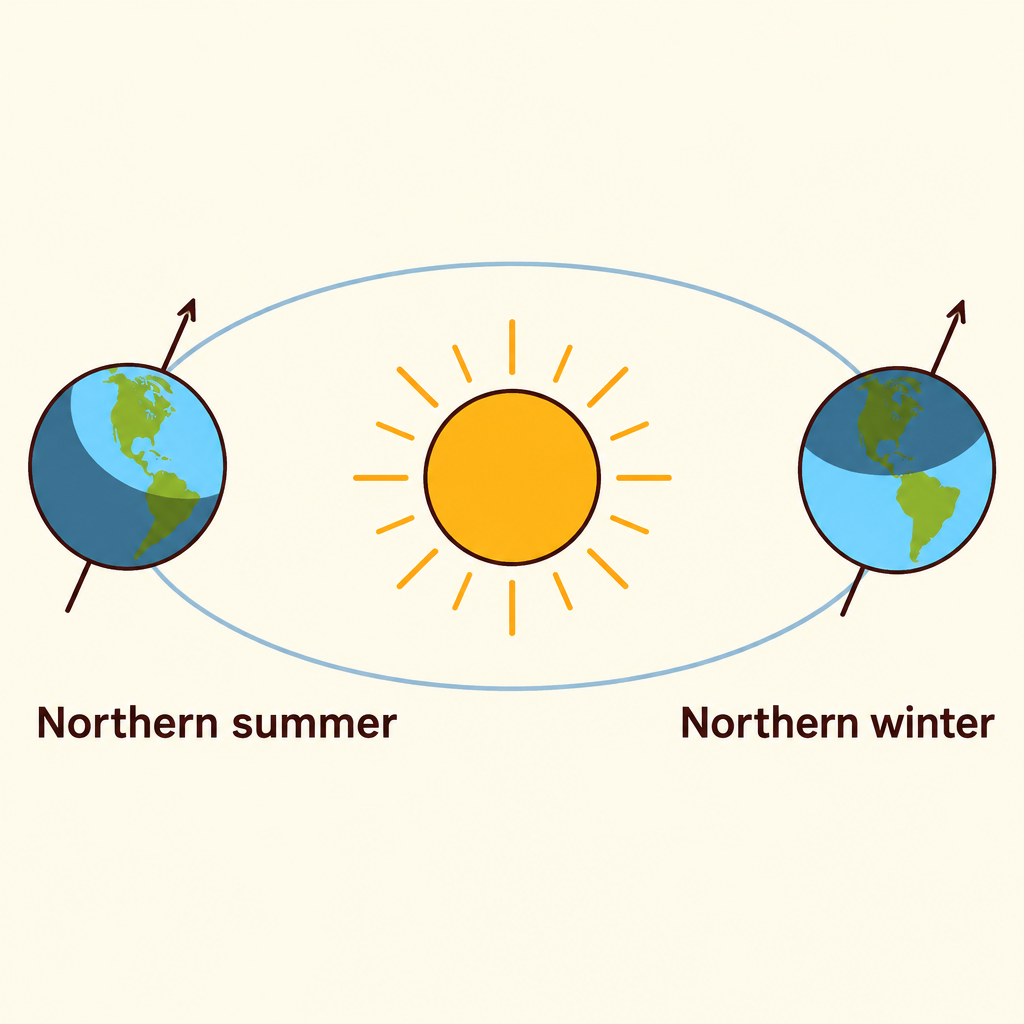
The axis points the same way all year, so the northern half leans toward the Sun on one side of the orbit and away on the other.
Now try changing a detail. Remove the tilt and the seasons vanish.
It also makes a testable prediction: when the north has summer, the south has winter.
Fits Everything, Predicts Nothing
Bad explanations can be adapted to accommodate any observation.
If the seasons suddenly flipped, the myth could add a new twist. Nothing could ever prove it wrong. That makes it unfalsifiable.
An explanation that rules nothing out tells you nothing about what to expect.
The tilt explanation takes a risk. A wrong prediction would expose it, and that risk is what makes it useful.
- Pick a detail
- Change it: Swap the part for something else.
- Still works equally?: Does it explain the observations just as well?
- Easy to vary: It can fit anything, so it predicts nothing.
- Hard to vary: Its parts are tied to testable predictions.
- Yes
- No
What Sparked the Scientific Revolution
You might guess science took off because people started running experiments, or because they trusted experts.
The decisive factor was different: a demand for explanations that are hard to vary.
Testing alone cannot rescue a bad explanation. If the story bends to fit any result, it survives every test and nothing is learned.
Authority adds no constraint either. A respected voice does not pin any details in place.
Spotting It in Your Own Work
Use this check on any explanation: a bug report, a business plan, a theory about why sales dropped.
Look for parts you could swap without losing anything. Those parts are loose.
Ask what the explanation predicts. If it would fit any outcome, it predicts nothing.
Prefer the version where every detail does work and a wrong prediction would show.
- List the parts: Write down each piece the explanation relies on.
- Swap a detail: See if a changed part works just as well.
- Check predictions: Ask which outcomes it rules out.
- Choose the tight one: Keep the version where every detail does work.
Check yourself
A good explanation is one where changing its details would _____ the explanation.
- ruin
- improve
Answer: ruin
A good explanation is 'hard to vary': its details are tightly connected, so altering them destroys its explanatory power.
A _____ explanation is tightly constrained by what we already know, while a _____ explanation can be easily adapted to fit any observation.
Answer: A good explanation is tightly constrained by what we already know, while a bad explanation can be easily adapted to fit any observation.
Good explanations are bound by existing knowledge and resist modification; bad explanations bend to accommodate anything.
Why is an explanation that can be adjusted to fit any possible observation considered weak?
- It can't be shown wrong and makes no useful predictions
- It relies too heavily on experimental testing
- It is too tightly constrained by existing knowledge
- It contains too many precise details to remember
Answer: It can't be shown wrong and makes no useful predictions
If an explanation can accommodate any outcome, no observation could ever show it wrong (it is unfalsifiable), and it cannot tell us what to expect, so it is useless for prediction.
Keep going
This is lesson 1 of 25 in The Beginning of Infinity. Next up:
- Explanatory Reach
- Theory-Laden Observation
- Instruments and Reality
- Fallibilism
- The Enlightenment
Wondering turns any topic into short lessons you can read, watch, or listen to, with practice questions and an AI tutor.