Free sample lesson · The 7 Habits of Highly Effective People
Inside-Out Change
Why does Covey start with a subway story, not a checklist?
Lesson 1 of the Wondering course The 7 Habits of Highly Effective People
What You Will Learn
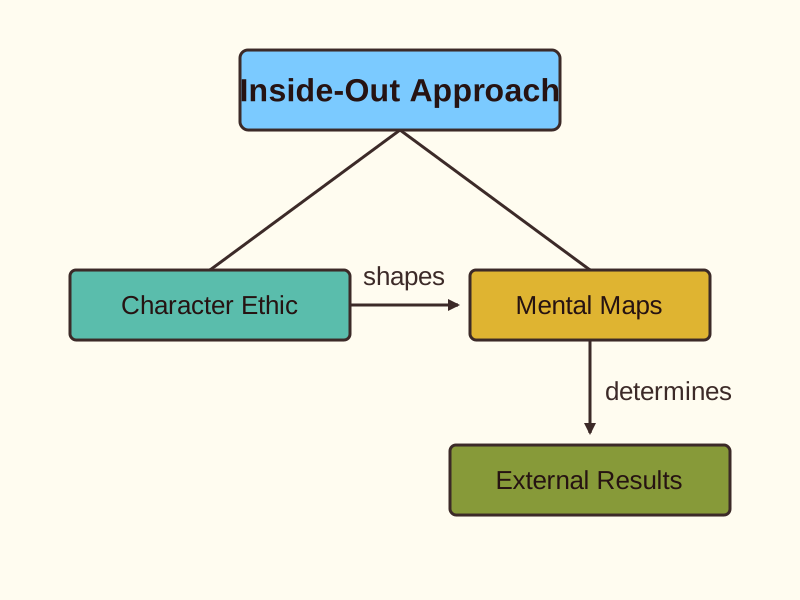
The opening chapter prevents first-time readers from mistaking The 7 Habits for surface productivity tricks.
The Power of Inside-Out
Stephen Covey begins with a story about a chaotic subway ride. He shows that how we see a situation determines how we act.
Inside-out change means durable progress starts with yourself. You focus on your own perception and character before trying to fix others.
Many people try to change external conditions first. This approach rarely lasts because it ignores the root cause: the person taking the action.
- Outside-In
- Inside-Out
Character Versus Personality
The Character Ethic focuses on deep traits like integrity, humility, and courage. These are the foundation of long-term success.
In contrast, the Personality Ethic relies on image and social techniques. These might help you be liked, but they do not build trust.
Think of a manager who uses polite language but punishes honest feedback. The technique is right, but the character flaw creates a toxic environment.
Shifting Your Mental Map
Your behavior is a result of your mental maps. If your map of a city is wrong, no amount of speed will get you to the right place.
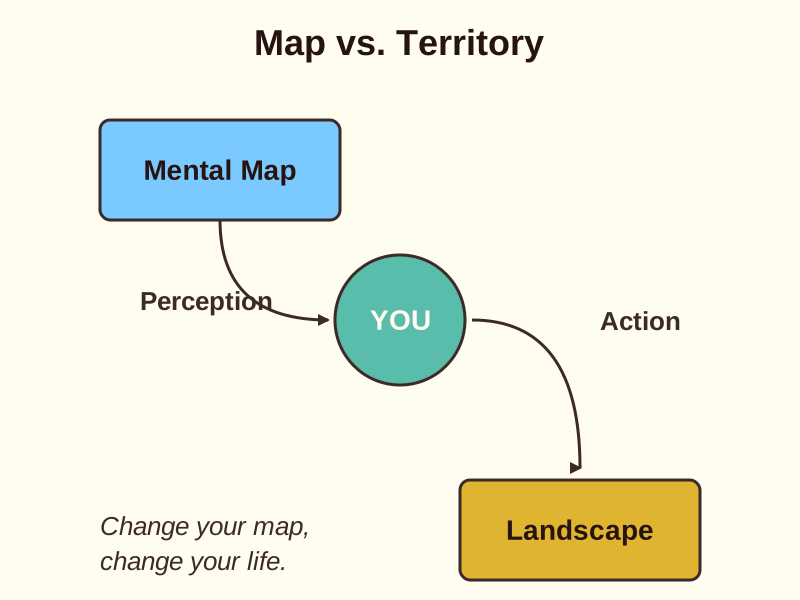
To change your life, you must change your perceptions. You must look at how you see the world before you change what you do.
This is not about blaming yourself for every problem. It is about finding the one lever you can always control: your own choices.
Putting It Into Practice
Imagine a parent who wants a teenager to be more open. An outside-in approach demands the teen talk more.
An inside-out approach asks: Have I been a person who is safe to talk to? Have I kept my promises and listened without judgment?
Real change happens when you identify the self-directed shift that must come before the external fix. Focus on being the person who deserves the result you want.
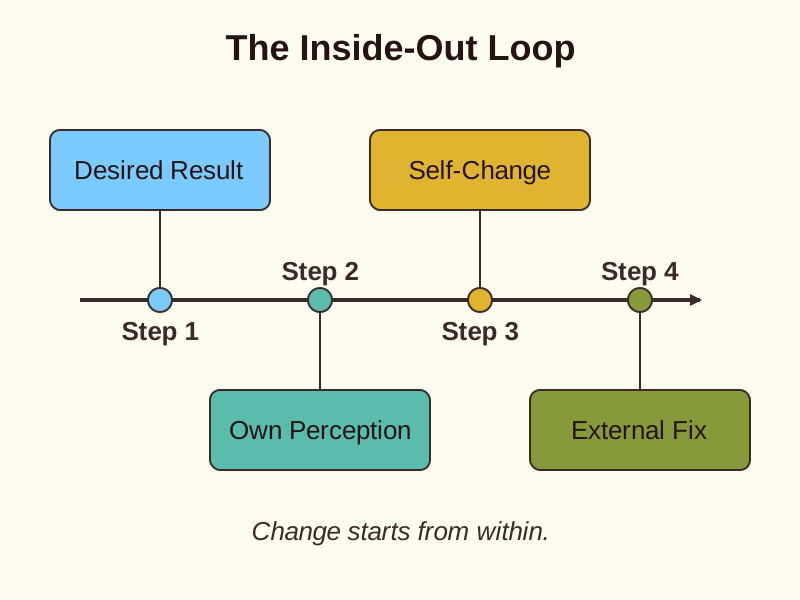
How to Apply It in Real Life
- Identify Frustration: Pinpoint the external problem you are trying to fix.
- Check Your Map: Ask how your perception of the person influences your reaction.
- Shift Inward: Identify a character trait or action you can change first.
- Model the Change: Act in a way that deserves the result you want.
Check yourself
The _____ approach focuses on image and social techniques rather than deep integrity.
- Personality Ethic
- Character Ethic
Answer: Personality Ethic
The Personality Ethic focuses on surface-level techniques and image, while the Character Ethic focuses on fundamental traits like integrity and humility.
To achieve durable change, the _____ approach suggests focusing on your own character first, whereas the _____ approach blames external conditions for problems.
Answer: To achieve durable change, the Inside-Out approach suggests focusing on your own character first, whereas the Outside-In approach blames external conditions for problems.
Inside-out change starts with self-examination and character, while outside-in change looks for external fixes or blames others.
Why does Stephen Covey use the 'map of a city' analogy to explain personal change?
- To show that speed and effort matter more than direction
- To show that our perceptions determine our results more than our effort
- To explain that everyone should follow the same life path
- To prove that external circumstances are like fixed landmarks
Answer: To show that our perceptions determine our results more than our effort
Our 'mental maps' are our perceptions. If our perception (the map) is wrong, changing our behavior (driving faster) won't lead to the right result.
Keep going
This is lesson 1 of 20 in The 7 Habits of Highly Effective People. Next up:
- The 7 Habits Map
- Principles and P/PC Balance
- Paradigms as Maps
- Habit 1: Be Proactive
- Habit 1: Circle of Influence
Wondering turns any topic into short lessons you can read, watch, or listen to, with practice questions and an AI tutor.