Free sample lesson · Stripe's Multi-Product Playbook: Why Billing Failed Before It Worked
Same Customer, Same Buyer: Why Stripe Radar Was a Natural Fit
Lesson 1 of the Wondering course Stripe's Multi-Product Playbook: Why Billing Failed Before It Worked
One Buyer, Two Products
Many companies grow by adding a second product. Some of those launches feel effortless. Others stall for years.
Stripe Radar is a clear example of the effortless kind.
Radar is Stripe's fraud detection product. It worked because it was sold to the same person who already handled Stripe payments: the developer.
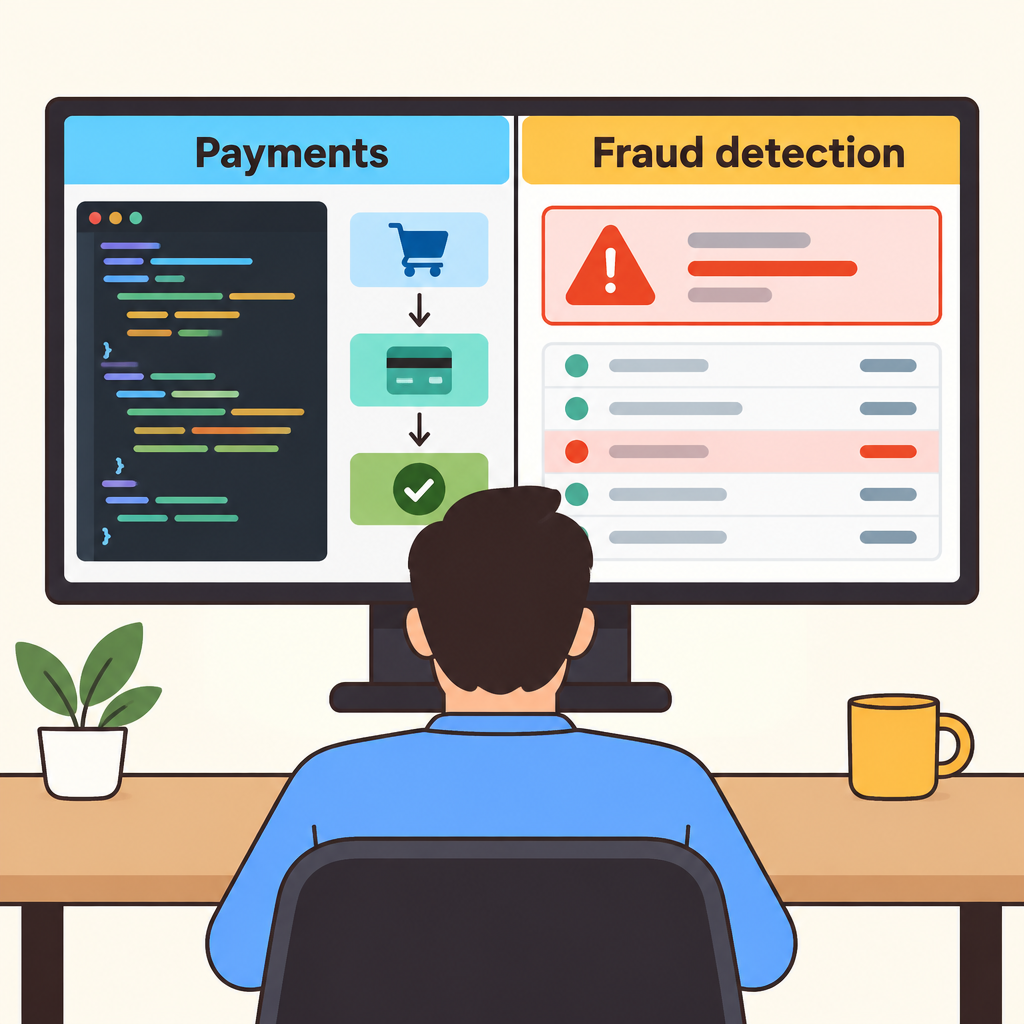
Notice that both jobs sit on one person's screen, so the second product reaches someone who is already looking at the problem.
This is the simplest multi-product pattern: same customer, same buyer, no buyer shift required.
Who Already Owned the Problem
Think about who sets up Stripe. A developer writes the code that connects a business to Stripe's payments.
That same developer also cares about fraud detection.
Fraud shows up inside the payments they built. Bad transactions are their problem to notice and fix.
So when Stripe offered Radar, the right person was already in the room.
- Payments integration: The code that connects a business to Stripe.
- Fraud detection: Spotting bad transactions inside those payments.
- Stripe Radar: Stripe's fraud detection product.
What a Buyer Shift Means
A buyer shift happens when your new product must be sold to a different person than your current product.
That person may sit in another team. You have no relationship with them yet.
- Same buyer
- Buyer shift
Radar avoided this entirely. The buyer for payments and the buyer for fraud detection were the same developer.
No new door to knock on. No new person to convince.
How Radar Fit Naturally
Follow the path from the first product to the second.
First, a developer integrates Stripe payments. Then fraud appears inside those payments, and the developer needs to deal with it.
Stripe offers Radar to that same developer. The buyer never changes.
- Integrate payments: A developer connects the business to Stripe payments.
- Fraud appears: Bad transactions show up inside those payments.
- Developer cares: The same developer needs to deal with fraud.
- Radar offered: Stripe offers fraud detection to that same developer.
That unbroken line from one product to the next is what made Radar a natural fit.
Spotting the Pattern Yourself
You can test any second product idea with one question.
Is the buyer of the new product the same person who buys the current one?
- New product idea
- Same buyer?: Does the person who buys today also buy this?
- Simplest pattern: Like Radar: sell to the person you already serve.
- Buyer shift: Plan for reaching a new person.
- Yes
- No
If yes, you are in the simplest pattern, like Radar. If no, you face a buyer shift and must plan for reaching someone new.
The Buyer Is the Point
A common misread is that Radar worked because fraud detection is related to payments.
The topics are related, yes. But the lesson here is about who buys.
Radar fit because the developer handling payments was the same person who cared about fraud. The buyer, more than the topic, made it simple.
Key Takeaways
Stripe Radar shows the simplest multi-product pattern.
The developer already handling payments integration also cared about fraud detection. No buyer shift was required.
When you plan a second product, ask who buys it first. If it is the same person, you start with a relationship already in place.
Check yourself
When Stripe launched Radar, its fraud detection product, it was sold to _____
- the same developer who integrated Stripe payments
- a separate risk team new to Stripe
Answer: the same developer who integrated Stripe payments
Radar was sold to the developer who already integrated Stripe payments. Fraud appears inside the payments they built, so they already owned the problem. No buyer shift was needed.
Radar's natural fit followed one unbroken line: first, a developer integrates Stripe _____. Then _____ appears inside those transactions. Finally, Stripe offers _____ to that same developer.
Answer: Radar's natural fit followed one unbroken line: first, a developer integrates Stripe payments. Then fraud appears inside those transactions. Finally, Stripe offers Radar to that same developer.
The sequence starts with payments integration, then fraud shows up inside those payments, and Stripe offers Radar to the same developer. The buyer never changes along the path.
A product manager says: "Radar succeeded because fraud detection is closely related to payments." What is the best correction?
- It succeeded mainly because the same developer bought both products
- It succeeded mainly because fraud tools are cheaper to build
- It succeeded mainly because it targeted a brand-new team
- It succeeded mainly because the topics overlap so heavily
Answer: It succeeded mainly because the same developer bought both products
The topics are related, but the key lesson is about who buys. Radar fit because the developer handling payments was the same person who cared about fraud. The buyer, more than the topic, made it simple.
Keep going
This is lesson 1 of 7 in Stripe's Multi-Product Playbook: Why Billing Failed Before It Worked. Next up:
- Same Customer, Different Buyer: Why Stripe Billing Initially Failed
- A New Customer Entirely: Stripe Connect and Marketplace Operators
- The 'Why Now' Test: Stripe's Patience vs. Watershed's Urgency
- Intuition Over Analytics: Why the Biggest Bets Aren't Spreadsheet Decisions
- Why Stripe Deliberately Underfunded New Products
Wondering turns any topic into short lessons you can read, watch, or listen to, with practice questions and an AI tutor.