Free sample lesson · Stripe Hiring and Operating
Hire for Replication
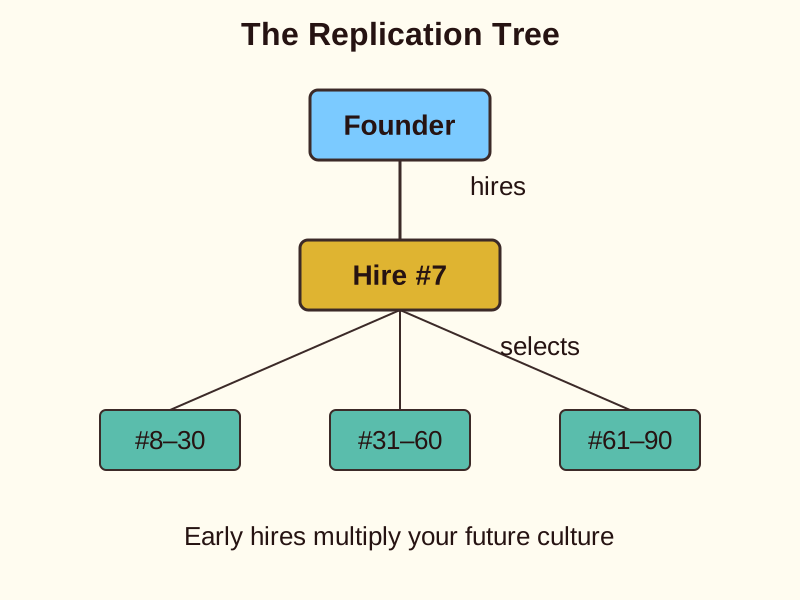
What happens when hire number seven chooses hires eight through ninety?
Lesson 1 of the Wondering course Stripe Hiring and Operating
Hire for Replication
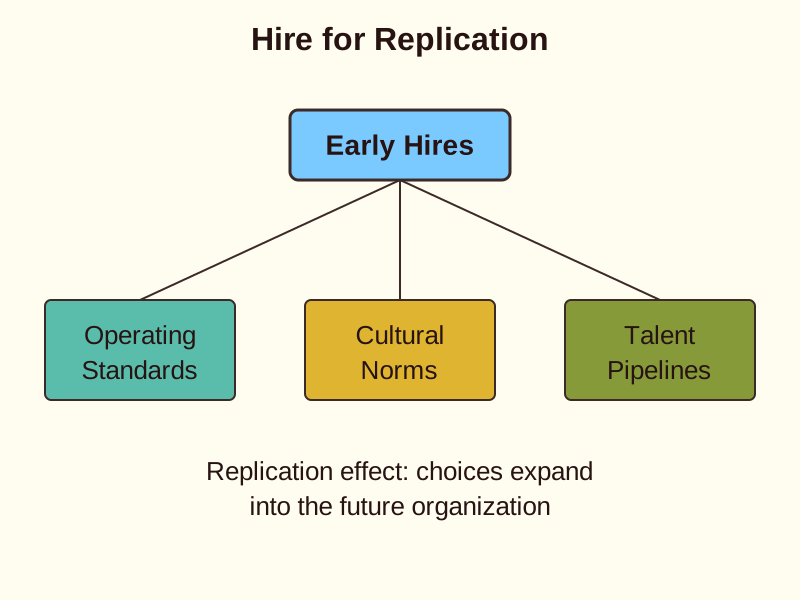
Discover how early hiring decisions shape your company's future organizational tree and long-term operating standards.
The Power of Early Replication
When you hire your seventh employee, you are not just filling one seat. You are choosing the person who will select hires eight through ninety.
Early hires act as a future branch of your organization. They set the standards for everyone who follows them.
Patrick Collison notes that the first ten Stripe employees heavily determined the next ninety people. Your early team is a multiplier for your future culture.
The Cost of a Bad Hire
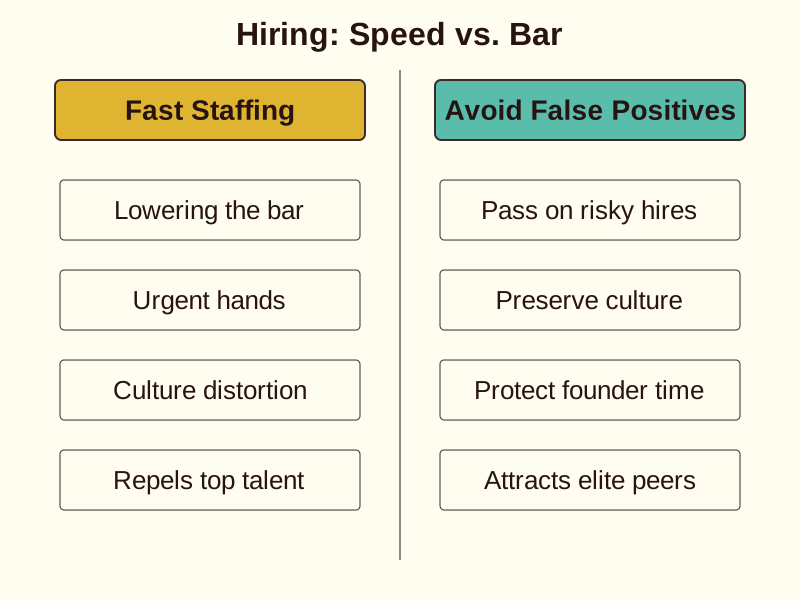
In a tiny team, a bad hire is more than a loss of productivity. One person can distort your culture and drain founder time.
Stripe founders preferred passing on a good candidate over hiring a risky one. They prioritized avoiding false positives.
Common mistakes include lowering the bar because you need hands urgently. A weak hire changes what others tolerate and makes top talent less likely to join.
Hiring as a Shared Responsibility
Early hires shape the company through their referrals and reputation. They define the code quality and ambition that becomes normal in the room.
- The current bar is explicit
Evaluate every candidate by the organization they are likely to attract. Do not just look at their individual output today.
- Assess Network: Examine the candidate's ability to bring in high-caliber referrals.
- Check Code & Ambition: Determine if their baseline sets a normal standard of excellence for the room.
- Project Growth: Evaluate the organization they are likely to attract rather than just today's output.
Setting the Future Standard
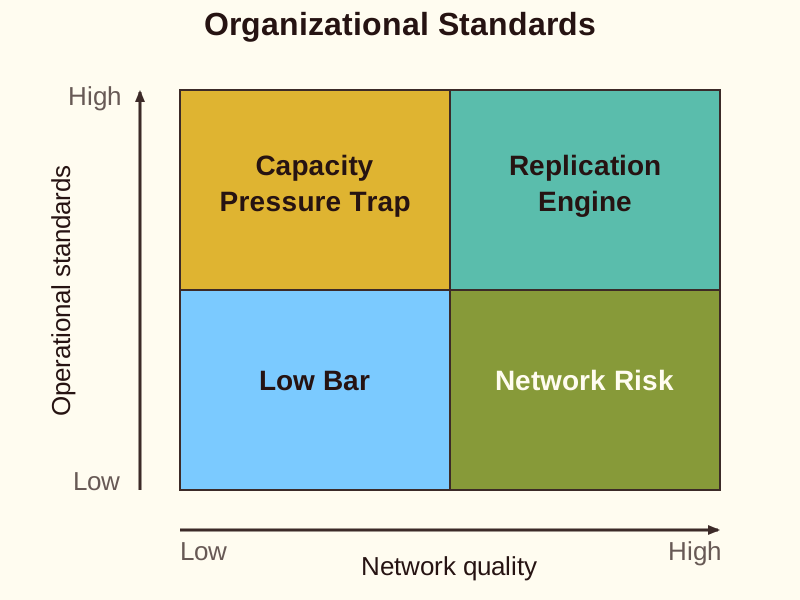
Replication does not mean hiring clones or seeking sameness. It means hiring people who carry high standards and strong networks forward.
Your first ten employees establish the interview taste for the next hundred. They decide which behaviors are acceptable.
When facing capacity pressure, remember the selection tree. Choosing the right person now protects your ability to recruit elite talent later.
Putting It All Together
- Recruiting Filter: Prioritize avoiding false positives over filling a seat quickly.
- Future Multipliers: Evaluate every candidate by the network and talent they will attract.
- Culture Protection: Guard the interview taste and behavioral norms established by the founding team.
Check yourself
The primary danger of making a bad early hire in a small startup is _____.
- diluting standards and draining founder time
- losing only that individual's immediate output
Answer: diluting standards and draining founder time
In a small team, a bad hire does far more damage than losing a single person's productivity; they distort operating norms, lower the talent bar, and drain leadership time.
When evaluating early candidates, focus on _____ to project future referrals, and examine baseline _____ to establish standard team excellence.
Answer: When evaluating early candidates, focus on network to project future referrals, and examine baseline ambition to establish standard team excellence.
Early hires set the baseline standard for performance and act as a future recruitment branch through their professional networks.
A founder is under intense engineering capacity pressure and faces a candidate who meets basic technical needs but shows questionable talent standards. What should the founder do based on early hiring principles?
- Pass on the candidate to avoid false positives that dilute future standards.
- Hire the candidate temporarily to solve immediate capacity bottlenecks.
- Lower the hiring bar for this seat while raising it for future seats.
- Offer the candidate a non-hiring contractor role without an interview.
Answer: Pass on the candidate to avoid false positives that dilute future standards.
Passing on an uncertain candidate prevents the replication tree effect from diluting the company's long-term talent bar and culture.
Keep going
This is lesson 1 of 11 in Stripe Hiring and Operating. Next up:
- Test the Real Work
- Recruit Before They Want You
- Close with Ownership
- Write for Local Judgment
- Make Culture Explicit
Wondering turns any topic into short lessons you can read, watch, or listen to, with practice questions and an AI tutor.