Free sample lesson · SPIN Selling
What SPIN Means
What do Situation, Problem, Implication, and Need-payoff mean?
Lesson 1 of the Wondering course SPIN Selling
What You Will Learn
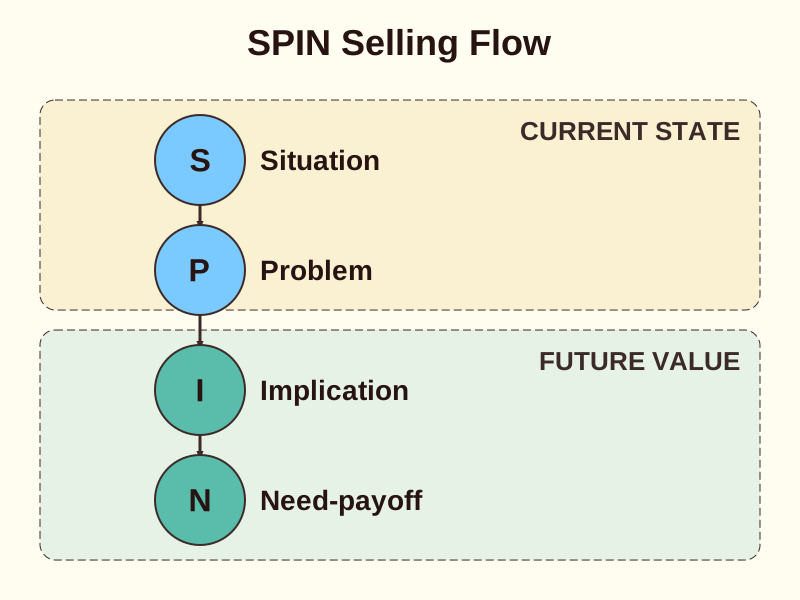
Defining SPIN first gives beginners a simple map for how sales questions move from facts to value.
The Four Types of Questions
SPIN is an acronym for four types of questions: Situation, Problem, Implication, and Need-payoff.
Neil Rackham developed this model to help sellers move conversations from basic facts to real value.
It is a logic for developing needs. It is not a rigid script to recite word for word or a personality style.
Starting with Facts and Problems
Situation questions gather data about the current state. For example, you might ask which system a buyer uses to track renewals.
Problem questions uncover difficulties or dissatisfaction. You might ask where the current process breaks down.
- Situation
- Problem
These questions help you understand the buyer's world before you try to offer a solution.
Exploring the Consequences
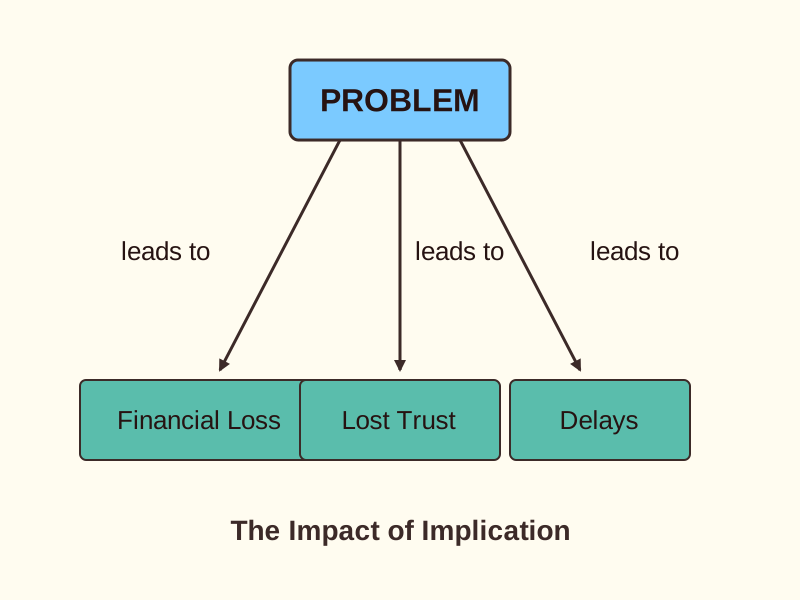
Implication questions explore the effects of a problem. They help the buyer see the cost of doing nothing.
If a renewal process is broken, you might ask how late warnings affect executive trust or customer churn.
Beginners often skip this step. However, understanding the consequences makes the problem feel large enough to justify a purchase.
Focusing on the Payoff
Need-payoff questions ask about the value of a solution. They encourage the buyer to explain how a fix would help them.
You might ask how sixty-day risk visibility would help managers act sooner.
This shifts the focus to the benefit. It ensures the buyer understands the payoff before you start a product demonstration.

The Flow of a Sale
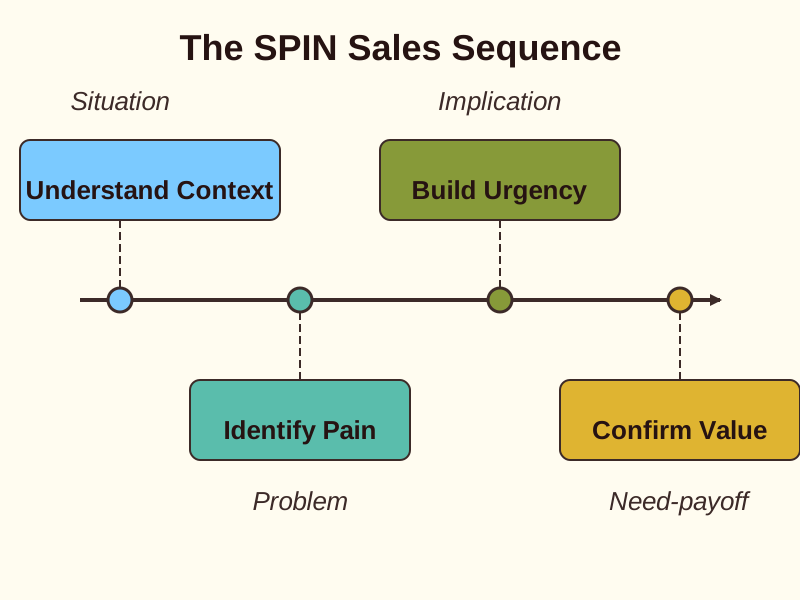
The SPIN flow moves from facts to problems, then to consequences, and finally to value.
Do not jump straight from a problem to a solution. Major-sale buyers need to feel the weight of the problem first.
Using this sequence helps you build a strong case for your product by letting the buyer define the value themselves.
How to Apply It in Real Life
- Situation: Ask about their current tools and team structure.
- Problem: Identify specific frustrations with the current setup.
- Implication: Make the buyer feel the cost of those problems.
- Need-payoff: Get the buyer to state the benefit of your solution.
Keep going
This is lesson 1 of 23 in SPIN Selling. Next up:
- Small Sales and Major Sales
- The Four Call Stages
- Why Closing Techniques Backfire
- Orders, Advances, and Continuations
- Earn the Next Step
Wondering turns any topic into short lessons you can read, watch, or listen to, with practice questions and an AI tutor.