Free sample lesson · Should you start a startup?
Ignore the Founder Stereotype
What if Zuckerberg and Jobs are the wrong founder test?
Lesson 1 of the Wondering course Should you start a startup?
What You Will Learn
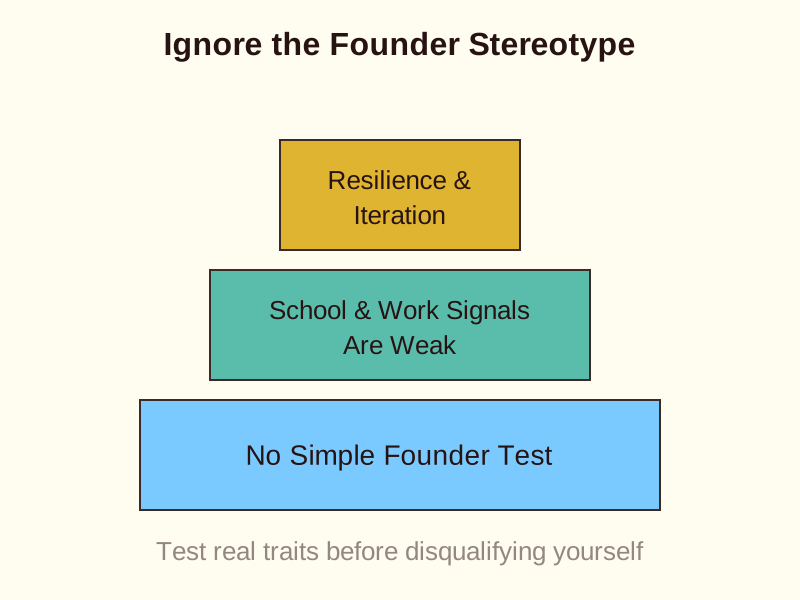
Rejecting founder stereotypes keeps learners from disqualifying themselves before testing the traits startup work actually demands.
The Myth of the Perfect Founder
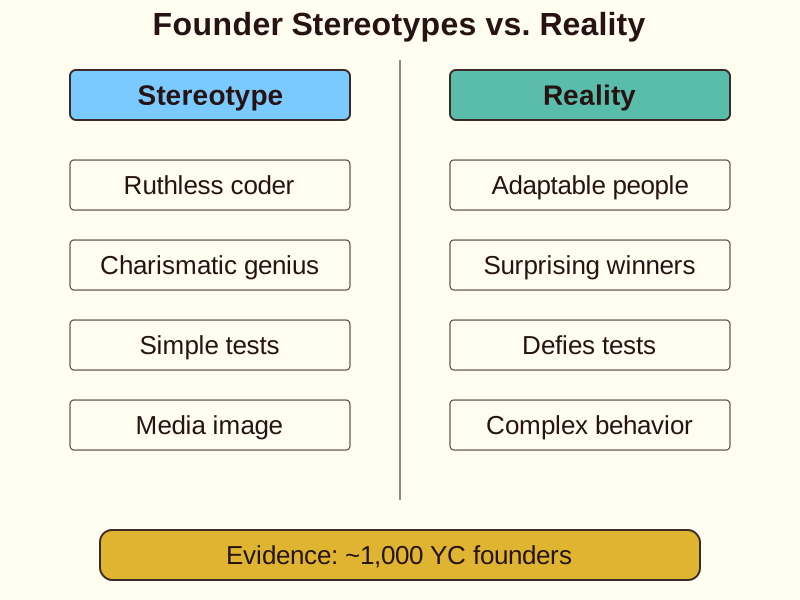
Many people believe that successful founders must look like Mark Zuckerberg or Steve Jobs. They imagine a ruthless programmer or a charismatic genius.
Harj Taggar has worked with almost 1,000 founders at Y Combinator. He says he is still surprised by who actually succeeds.
There is no simple test to predict who will adapt well to startup life. Real-world evidence often contradicts the popular media stereotypes.
Why Credentials Can Be Deceiving
Traditional success in school or at work does not always translate to startup success. Taggar found that these signals are weaker than he expected.
A strong employee record shows you can thrive within a system. However, startups have no institutional buffer to protect you.
High achievers may struggle when they face total uncertainty. Conventional credentials can easily underpredict or overpredict how someone will handle the pressure of a new company.
- System Success: A strong employee record shows you can thrive within a pre-existing system.
- No Buffer: Startups have no institutional buffer or safety net to protect you.
- Uncertainty: High achievers may struggle when facing total ambiguity and pressure.
The Reality of Startup Work
Startup life demands specific behaviors that a resume cannot show. You must handle constant rejection and find your own users.
For example, a quiet engineer might seem unlikely to lead. Yet, if that engineer shows resilience when things break, they may become a top-tier founder.
Polished professionals sometimes fail because they cannot personally convince the first ten users to care. Startup fit is about action, not just brilliance or charisma.
- Resume Profile
- Startup Reality
Testing Your Own Potential
Do not disqualify yourself based on a stereotype. Skills like programming and ambition are helpful, but they are not the only requirements.
Focus on direct evidence of startup behavior. Can you adapt when a plan fails? Are you willing to do the unglamorous work of finding customers?
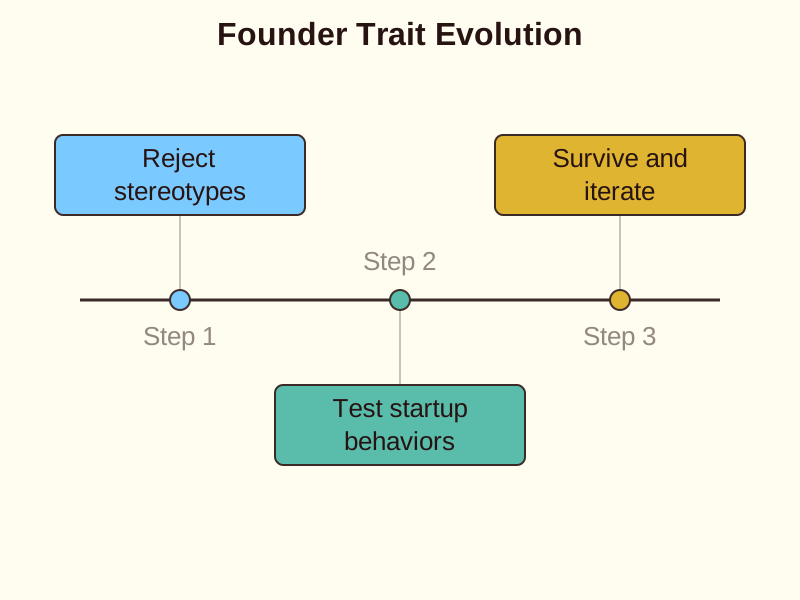
Rejecting the founder myth allows you to test your traits against what the work actually demands. Your ability to survive and iterate matters most.
How to Apply It in Real Life
- Audit Biases: Identify and dismiss any preconceived notions of what a founder should look like.
- Test Resilience: Evaluate how you handle real ambiguity, setbacks, and rejection.
- Focus on Action: Measure your willingness to do unglamorous, direct customer acquisition.
Check yourself
According to Y Combinator's observations, the most successful founders _____ fit the popular media stereotype of a 'charismatic genius'.
- rarely
- always
Answer: rarely
Harj Taggar notes that even after working with 1,000 founders, he is still surprised by who succeeds; real-world evidence often contradicts the 'ruthless programmer' or 'charismatic genius' myths.
Traditional signals can be deceiving: a strong _____ shows you can thrive within a system, while _____ is a weak predictor of how you will handle total startup uncertainty.
Answer: Traditional signals can be deceiving: a strong employee record shows you can thrive within a system, while school success is a weak predictor of how you will handle total startup uncertainty.
Credentials often overpredict success because they measure performance within institutional buffers, which do not exist in the high-pressure environment of a startup.
Why might a 'polished professional' with a great resume fail as a founder where a 'quiet engineer' succeeds?
- They may lack the ability to personally convince the first users to care.
- They are usually less intelligent than technical engineers.
- They have too much experience working in small teams.
- They are overqualified for the technical demands of a startup.
Answer: They may lack the ability to personally convince the first users to care.
Startup fit is about the ability to take unglamorous action—like personally finding and convincing users—rather than relying on a polished background or institutional status.
Keep going
This is lesson 1 of 10 in Should you start a startup?. Next up:
- Resilience Beats Confidence
- Motivations Can Change
- Calculate the Worst Case
- Count the Learning Upside
- Find Ideas with People
Wondering turns any topic into short lessons you can read, watch, or listen to, with practice questions and an AI tutor.