Free sample lesson · Seeking Wisdom: From Darwin to Munger
Avoid the Errors That Really Hurt
Why write a whole book because you "were dumb and wanted to be less dumb"?
Lesson 1 of the Wondering course Seeking Wisdom: From Darwin to Munger
A Book Born From Mistakes
Why would anyone write a whole book because they felt dumb?
Peter Bevelin did. He said, "I was dumb and wanted to be less dumb."[[2]](https://fs.blog/peter-bevelin-seeking-wisdom/)
He wrote Seeking Wisdom as a memorandum to himself, hoping to pass the essentials to his children.[[2]](https://fs.blog/peter-bevelin-seeking-wisdom/)
The book grew from his own mistakes, mistakes he saw others make, and the philosophy of Charlie Munger.[[1]](https://www.poorcharliesalmanack.com/seeking_wisdom.php) So Bevelin wrote it, not Munger.
It opens with Confucius: "A man who has committed a mistake and doesn't correct it, is committing another mistake."[[1]](https://www.poorcharliesalmanack.com/seeking_wisdom.php)
Find Where You Would Die
Charlie Munger liked to tell the story of a rustic who said: "I wish I knew where I was going to die, and then I'd never go there." Munger's own shorter version is: "All I want to know is where I'm going to die so I'll never go there."[[1]](https://www.poorcharliesalmanack.com/seeking_wisdom.php)

Notice that the traveler does not search for the perfect road; he only marks the one deadly spot and walks away from it.
That joke is the book's guiding idea. We cannot eliminate mistakes, but we can prevent the ones that really hurt.[[1]](https://www.poorcharliesalmanack.com/seeking_wisdom.php)
Why look at the bad side? Because "sorrow feels worse than happiness feels good", Bevelin studied what to avoid.[[3]](https://www.valueinvestingworld.com/2007/10/interview-with-peter-bevelin-author-of.html)
This is a strategy, not timidity. A few unrecoverable errors can outweigh many small wins.
Avoidance Rule vs Brilliance Goal
Here are two goals an investor could set.
Option A: "Find the best stock this year." To succeed, you must be right about many unknowns at once.
Option B: "Never buy something merely because it is cheap." One rule removes an error Bevelin names as his own.[[3]](https://www.valueinvestingworld.com/2007/10/interview-with-peter-bevelin-author-of.html)
- Brilliance goal
- Avoidance rule
Option B is the book's approach. It needs no genius, only a rule you keep.
It also does not mean refusing all risk. You can still buy; you just drop one bad reason for buying.
Save Scrutiny for What Hurts
Does choosing lunch deserve the same analysis as choosing whom to trust with your money?
Bevelin treats decision-making as avoiding terrible decisions, with attention on the consequential ones.[[2]](https://fs.blog/peter-bevelin-seeking-wisdom/) Trivial choices do not need heavy analysis.
His own costly errors included trusting people who should not be trusted.[[3]](https://www.valueinvestingworld.com/2007/10/interview-with-peter-bevelin-author-of.html) That kind of mistake can be hard to undo.
So ask two questions. Would this error really hurt? Could I undo it, that is, reverse the damage afterward? Harm you cannot reverse means slow down. To scrutinize carefully is to check the decision closely before you commit, instead of fixing it later.
The chart below turns those two questions into a path. Start at "New decision." If an error would not really hurt, decide quickly. If it would hurt but you could undo it, decide, then correct the mistake fast if it happens. If it would hurt and you could not undo it, scrutinize carefully.
- New decision
- Would an error hurt?: Ask whether a mistake here would really hurt.
- Could I undo it?: Ask whether the error could be reversed.
- Decide quickly: Trivial choices do not need heavy analysis.
- Decide, then correct: Fix the mistake fast if it happens.
- Scrutinize carefully: Lasting harm means slow down.
- No
- Yes
- Yes
- No
The Ant Carried Out Alive
Biologist E.O. Wilson painted the pheromone of a dead ant onto a live ant.
Its nest mates dragged it out of the nest while it kicked.[[4]](https://fs.blog/great-talks/psychology-human-misjudgment/)
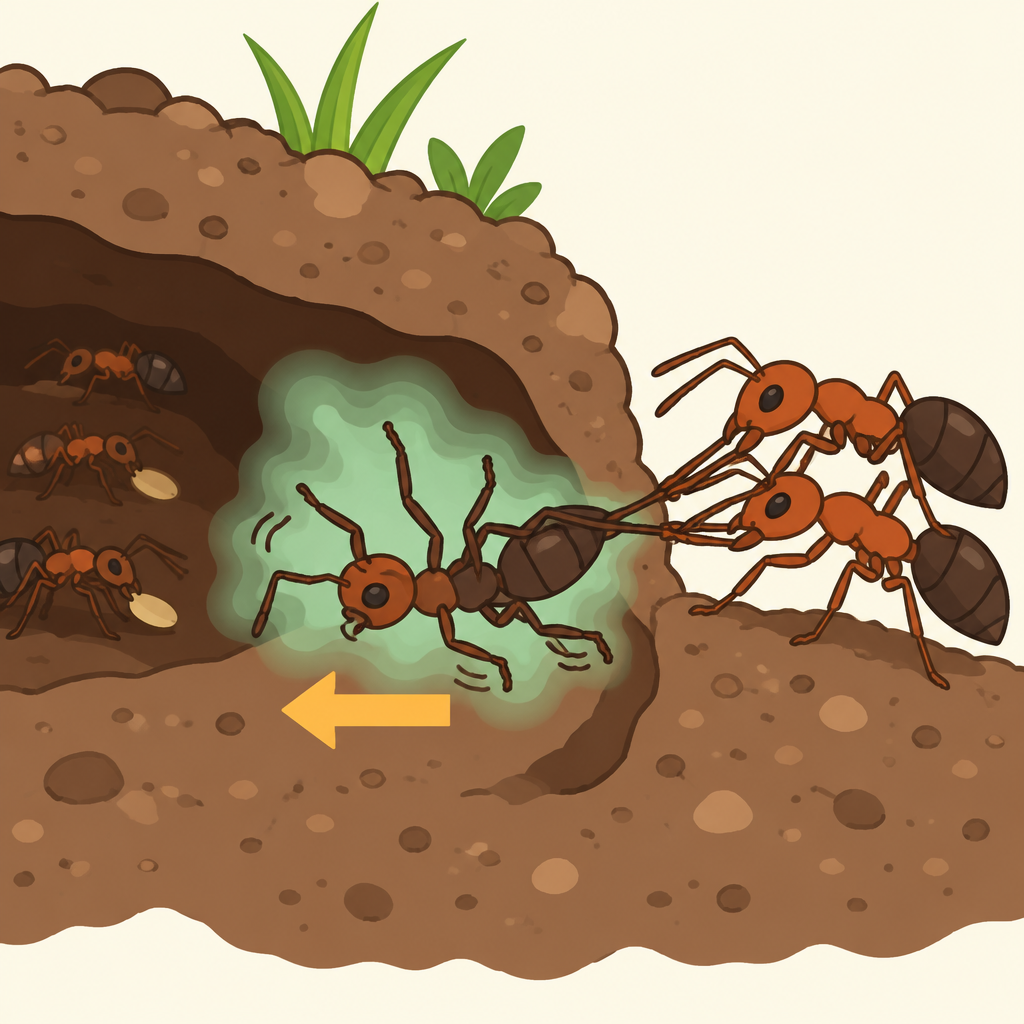
Notice the carried ant's kicking legs: it is plainly alive, yet the death smell alone drives its nest mates to haul it away.
Why? The ants run a simple program shaped by evolution: smell of death, carry it out. Usually that keeps the nest clean.
Here the cue fired by rote. The program never checks whether the ant is actually dead.
Same Water, Two Feelings
Rest one hand in hot water and the other in cold. Then put both into the same room-temperature water.
- Hot hand: One hand rests in hot water.
- Cold hand: The other hand rests in cold water.
- Same water: Both hands move into room-temperature water.
- Two feelings: The first hand feels cold; the second feels hot.
The hand from the hot bucket feels it as cold. The hand from the cold bucket feels it as hot.[[4]](https://fs.blog/great-talks/psychology-human-misjudgment/)
The water has one temperature, the number a thermometer would read. But neither hand reads that number. Each hand registers only the difference, or contrast, from what it just felt. That is perception: what your senses register. Munger says thinking works the same way: as perception goes, so goes cognition. We judge something by how it compares with what came just before, not on its own.
In his talk The Psychology of Human Misjudgment, Munger lists psychological tendencies, the automatic patterns behind our misjudgments. He names the one at work here the Contrast-Misreaction Tendency: we react to the contrast with what came just before, and that reaction can be wrong. He says few psychological tendencies do more damage to correct thinking.[[4]](https://fs.blog/great-talks/psychology-human-misjudgment/)
These shortcuts are not bad; most of the time they work. Trouble starts when the situation changes and the program does not notice.
Smart People Misjudge Too
Are misjudgments rare defects of stupid people? No. The same kind of simple, automatic programs run in every brain, including bright ones.
Knowing about a bias does not remove it. You still need rules for the decisions that matter.
In your own work, ask which few errors would really hurt and could not be undone. Write a simple rule against each one.
A few names in the panel below need a word of introduction. Berkshire Hathaway is the company where Munger served as Vice Chairman alongside Warren Buffett, its Chairman and CEO. Greg Abel is another Berkshire executive. A news release is the company's own public announcement. Poor Charlie's Almanack is a book of Munger's talks, including the one the ant and bucket examples come from, and Stripe Press is a publisher.
- Munger since the book
- Where Munger's talks are collected
Every misjudgment in this lesson began with a trigger: a cue, like the death smell on the ant, that sets off an automatic program with no check on whether it fits.
So what is the most powerful trigger of all? The next lesson looks at rewards.
Check yourself
A strong approach to decisions is to _____.
- remove a few damaging errors
- make every decision brilliant
Answer: remove a few damaging errors
Bevelin’s approach is to prevent a few damaging errors, rather than demand brilliant decisions every time.
An ant nest’s usual rule is to _____ an ant out when it smells like death. The rule misfires because it responds to a strong _____ without checking the _____.
Answer: An ant nest’s usual rule is to carry an ant out when it smells like death. The rule misfires because it responds to a strong cue without checking the situation.
The smell normally helps ants remove dead ants, but the same cue caused them to remove a live ant because the program did not check the changed situation.
Which decision deserves the most careful scrutiny?
- Choosing what to eat for lunch
- Choosing whom to trust with your savings
- Choosing which color notebook to buy
- Choosing where to sit during a short break
Answer: Choosing whom to trust with your savings
Trusting someone with your savings could cause lasting harm and may be hard to undo. Choosing lunch is a small, easily corrected decision.
Keep going
This is lesson 1 of 12 in Seeking Wisdom: From Darwin to Munger. Next up:
- Never Underestimate Incentives
- Why First Conclusions Stick
- Why Losses Loom Larger
- Following Crowds and Authorities
- Favors, Concessions, and Reasons
Wondering turns any topic into short lessons you can read, watch, or listen to, with practice questions and an AI tutor.