Free sample lesson · Psychology 2e I — Foundations, Brain, and Cognition
Psychology as a Science
Can a vivid intuition answer a measurable question about behavior?
Lesson 1 of the Wondering course Psychology 2e I — Foundations, Brain, and Cognition
Intuition Meets Evidence
Can a vivid intuition answer a measurable question about behavior? Not by itself.
Psychology is the scientific study of mind and behavior. Its claims must face observations that could constrain, revise, or reject them.
- Intuition
- Empirical claim
Intuition can suggest an idea. Common sense can feel convincing.
But a confident story is not evidence. Psychology is not pure common sense, and sounding plausible does not make an explanation scientific.
Turning Ideas Into Measures
Many psychological ideas are abstract. You cannot point at attention the way you point at a chair.
An operational definition connects the idea to a measurable event.
For example, attention could be measured as errors or response time under specified conditions.
- Abstract idea: Start with an idea such as attention.
- Measurable event: Pick errors or response time.
- Set conditions: Specify the conditions under which you measure.
- Predict: State how errors or response times should change.
Now the claim makes a prediction. If attention drops, errors or response times should change in ways you can record.
What Could Prove It Wrong?
An empirical claim must meet observations that could count against it.
Ask: what result would challenge this? If no result could, the claim is not being tested.
- Proposed claim
- Observable implications?: Can you say what result would challenge it?
- Not tested: Calling it psychological does not make it tested.
- Measure and observe
- Observations fit?
- Claim survives test
- Revise or reject
- No
- Yes
- Yes
- No
A statement that cannot specify observable implications is not tested just because someone calls it psychological.
Brain vocabulary does not rescue it either. A brain-based sentence is not automatically more scientific than a behavioral one.
Famous Schools, Ongoing Tests
Psychology has a long history of competing schools.
Structuralism, functionalism, behaviorism, psychoanalysis, humanism, Gestalt psychology, and the cognitive revolution each emphasized different questions and different kinds of evidence.
That history shaped the field. Yet historical influence is not proof.
A claim from a famous school still needs current evidence to stay supported.
One Behavior, Many Levels
Take one behavior: a student misses a deadline.
Several things may be happening at once: sleep loss, planning errors, learned avoidance, team norms, and workplace incentives.
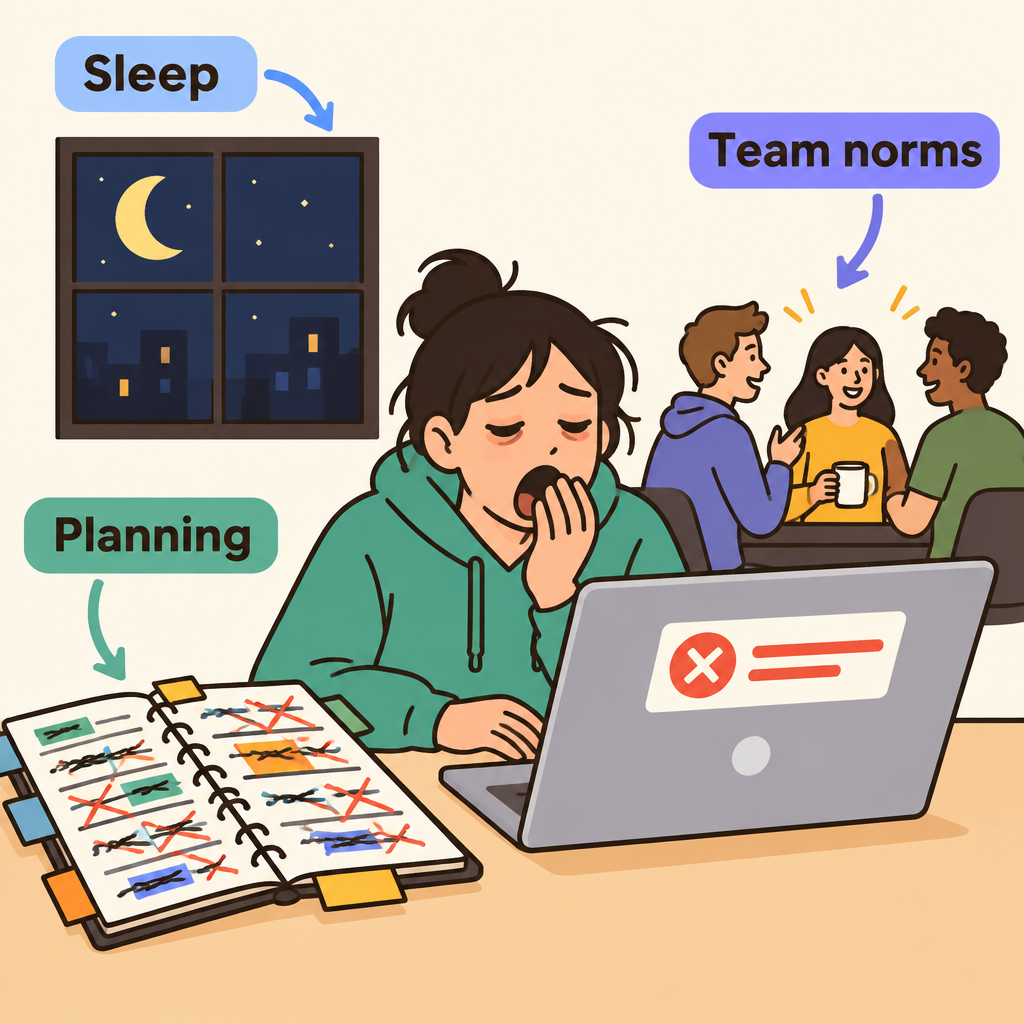
Notice that tiredness, a messy plan, and the team all surround the same missed deadline at the same time.
Each points to a different level of explanation: biological, cognitive, learning, social, and cultural.
This scenario is illustrative, not a diagnosis. It shows how one event can invite several questions.
Matching Questions to Levels
Each level answers its own question and needs its own measure.
A biological account might test sleep. A cognitive account tests planning. A learning account tests whether avoiding the task brings relief.
A social account tests team norms.
These accounts are complementary. One contributing level does not make the others false. Still, complementary does not mean identical: each account must fit its question and evidence.
Your Claim-Checking Toolkit
When you meet a claim about behavior, slow down before trusting it.
First, operationalize it: name the measurable event. Second, ask what observation would challenge it.
Then ask which level the measure addresses. Sleep data speaks to the biological level; team norms speak to the social level.
- Test the claim
- Name the measurable event
- Find a challenging observation
- Choose the level
- Sleep data: Speaks to the biological level.
- Team norms: Speak to the social level.
Neither a vivid story nor brain vocabulary settles a question. Evidence does.
Check yourself
Research shows that sleep loss contributes to a student missing deadlines. Does this mean a social explanation, such as team norms about lateness, must be false?
- Yes, one valid level rules out the others
- No, both levels can contribute at once
Answer: No, both levels can contribute at once
No. Levels of explanation are complementary. Sleep loss (biological) and team norms (social) can both contribute to the same behavior. One level being supported does not refute the others, though each account still needs its own evidence.
To study the vague idea of _____, a researcher writes an _____ that measures it as _____ on a task under specified conditions.
Answer: To study the vague idea of attention, a researcher writes an operational definition that measures it as response time on a task under specified conditions.
An operational definition connects an abstract idea, such as attention, to a measurable event, such as response time or errors. This turns an intuition into something that observations can test.
Which statement is an empirical psychological claim?
- People make more errors on a memory task after one night without sleep.
- Everyone has a hidden true self that no one can ever observe.
- Procrastination happens because the brain's energy is out of balance.
- It's common sense that stressed people simply think less clearly.
Answer: People make more errors on a memory task after one night without sleep.
An empirical claim specifies observable implications that could count against it. Error counts after sleep loss can be measured, and the claim fails if errors do not rise. The other options sound plausible but name no observation that could challenge them.
Keep going
This is lesson 1 of 12 in Psychology 2e I — Foundations, Brain, and Cognition. Next up:
- From Questions to Evidence
- Correlation, Cause, and Replication
- Genes, Neurons, and Signals
- Brain Systems in Context
- Consciousness and Sleep
Wondering turns any topic into short lessons you can read, watch, or listen to, with practice questions and an AI tutor.