Free sample lesson · Practical Video Color Grading
Correction Versus Grading
Why does fixed white balance still feel emotionally wrong?
Lesson 1 of the Wondering course Practical Video Color Grading
What You Will Learn
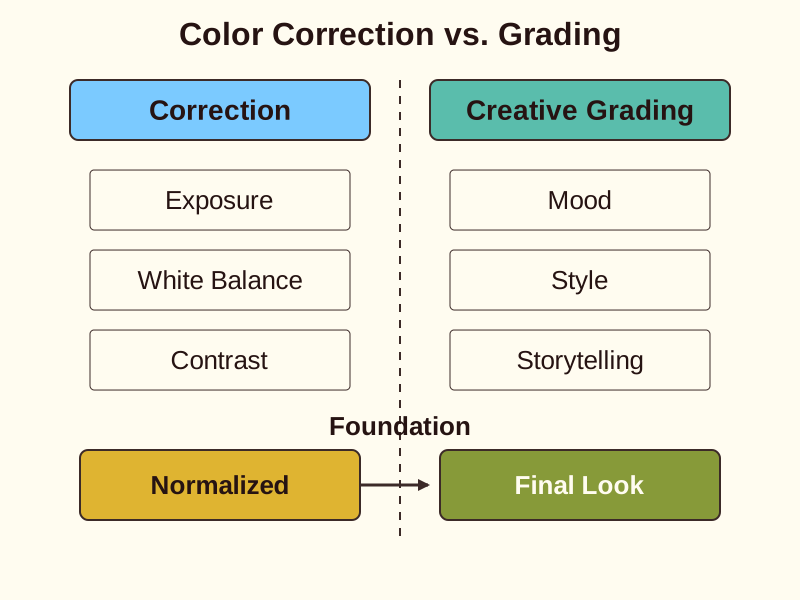
Separating correction from grading prevents you from treating technical repairs and creative mood choices as the same problem.
The Two Stages of Color
Why does a perfectly white-balanced shot sometimes feel wrong? It is because you are likely confusing correction with grading.
Color correction is about technical repairs. It makes your footage look natural and consistent.
Color grading is about emotional design. It creates a specific mood or style after the image is technically sound.
Separating these steps prevents you from using creative filters to hide basic technical errors.
- Correction
- Grading
Step One: Color Correction
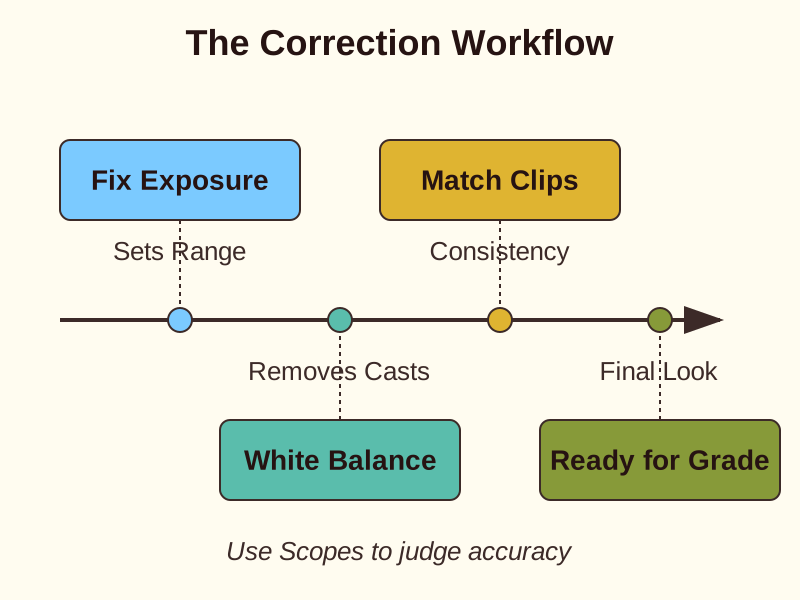
Color correction normalizes your footage. You fix exposure, white balance, and contrast to make the image believable.
Imagine a shot under mixed window and lamp light. The white balance might look green or orange.
Correction removes that cast. It ensures that white objects look white and skin tones look healthy.
Use technical tools like scopes to judge these changes. This step ensures every clip in your timeline matches before you add a look.
Step Two: Creative Grading
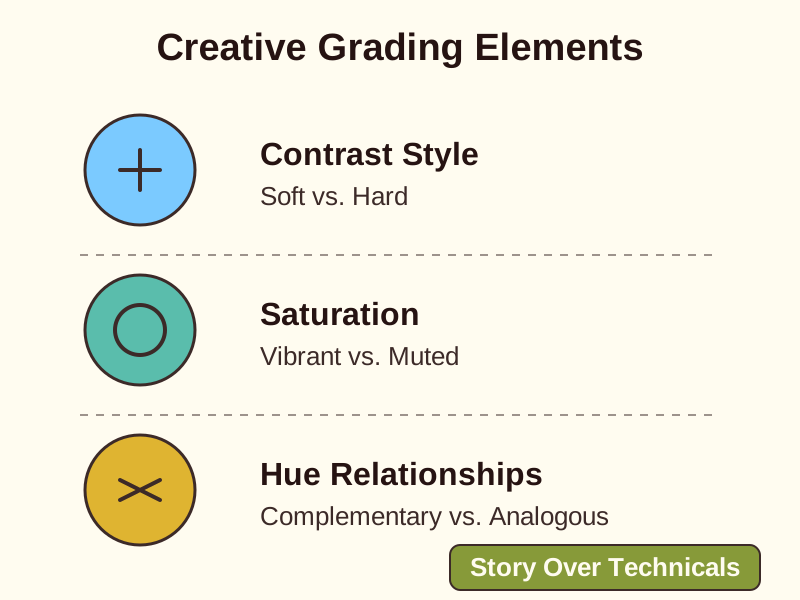
Once your image is balanced, you can begin the creative grade. This is where you shape the story through color.
You might add warm highlights and cool shadows to an interview. This makes the scene feel intimate or suspenseful.
Grading is not just applying a preset or a LUT. It is an intentional choice about saturation, hue relationships, and contrast style.
You judge a grade by taste and story goals rather than technical charts.
Avoid the Masking Trap
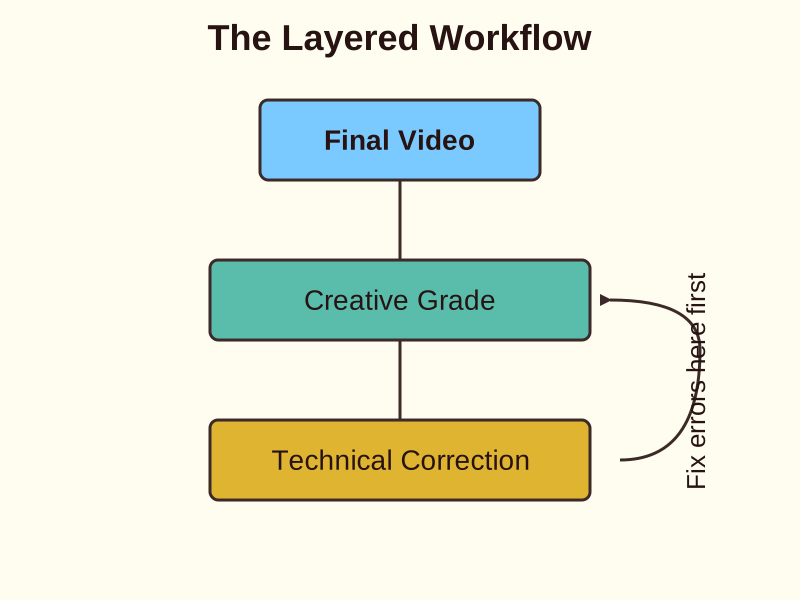
A common mistake is using a heavy grade to hide poor exposure. This usually results in muddy shadows or lost detail.
A stylized look still requires accurate correction underneath. If a white shirt is green due to bad lighting, fix the green cast first.
Only after the shirt looks neutral should you apply your creative palette.
Following this workflow ensures your final video looks professional and intentional on every screen.
How to Apply It in Real Life
- Normalize: Fix the technical exposure and white balance issues first.
- Match: Ensure the shot looks like the other clips in the scene.
- Grade: Apply the creative look to enhance the story mood.
Check yourself
Color _____ is the process of making footage look natural and consistent by fixing technical errors.
- correction
- grading
Answer: correction
Correction is about technical repairs (white balance, exposure), while grading is about emotional design and style.
In a professional workflow, you first _____ the footage to fix technical errors, then _____ clips to ensure consistency, and finally _____ the scene to create a specific mood.
Answer: In a professional workflow, you first normalize the footage to fix technical errors, then match clips to ensure consistency, and finally grade the scene to create a specific mood.
You must fix technical issues (normalize) before applying creative styles (grade) to avoid 'muddy' results.
Why is it a mistake to apply a creative 'look' or LUT to footage that has a strong green color cast?
- The grade will likely result in muddy shadows and lost detail.
- Creative grades automatically fix white balance issues.
- Technical tools like scopes only work after a grade is applied.
- Correction should only be done if you aren't using a LUT.
Answer: The grade will likely result in muddy shadows and lost detail.
Applying creative grades over technical errors often results in 'muddy' shadows and lost detail because the underlying image isn't balanced.
Keep going
This is lesson 1 of 8 in Practical Video Color Grading. Next up:
- Scopes Before Screens
- Exposure Comes First
- Neutral Color Balance
- Contrast and Saturation
- Hue Shapes Emotion
Wondering turns any topic into short lessons you can read, watch, or listen to, with practice questions and an AI tutor.