Free sample lesson · Outlive: The Science and Art of Longevity
Medicine 3.0 Paradigm
What if most medical care only treats disease after it's too late to prevent it?
Lesson 1 of the Wondering course Outlive: The Science and Art of Longevity
Overview of Medicine 3.0
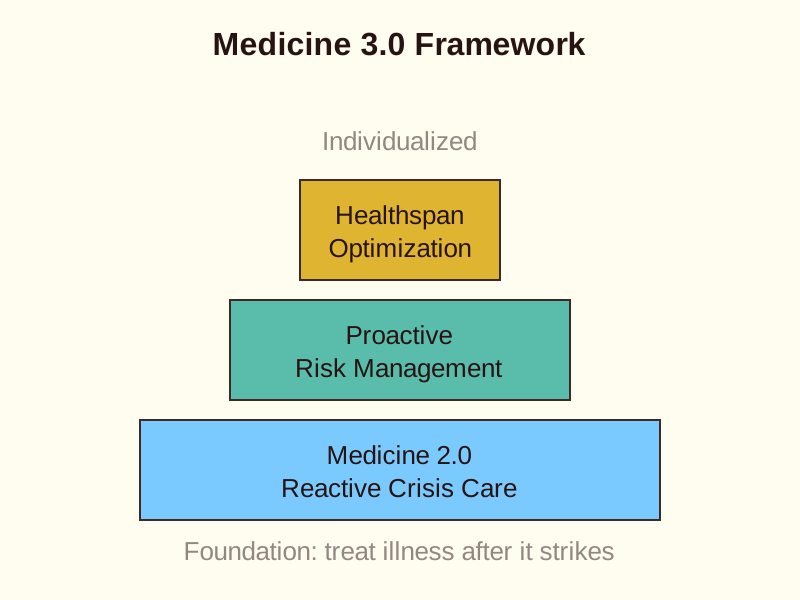
Explore how the Medicine 3.0 paradigm shifts healthcare from reactive crisis treatment to proactive, individualized healthspan planning.
The Shift to Medicine 3.0
Most medical care today follows Medicine 2.0. This approach waits for a disease to develop before starting treatment.
Medicine 3.0 is a proactive shift. It focuses on early detection and risk management decades before symptoms appear.
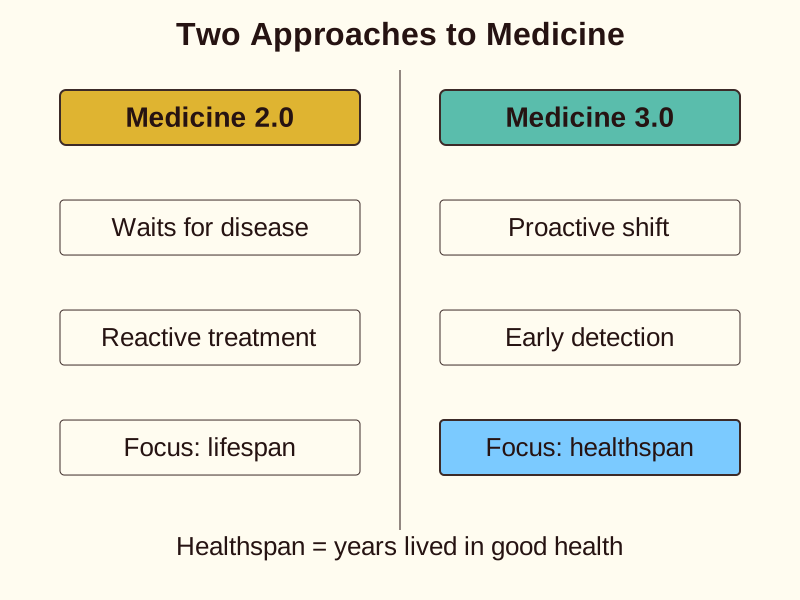
The goal is to extend healthspan, which is the number of years you live in good health.
Reactive vs Proactive Care
Medicine 2.0 is reactive. Doctors often wait for a crisis, like a heart attack, to prescribe medication.
- Crisis Trigger: Medicine 2.0 waits for a severe health crisis to occur before acting.
- Early Marker: Medicine 3.0 identifies biomarkers like high apoB levels early in life.
- Early Tool: Clinicians apply lipid-lowering tools years before any clinical damage happens.
In Medicine 3.0, a clinician might identify high apoB levels in a 45-year-old man.
They may start lipid-lowering tools early. This aims to lower cardiovascular risk before any damage occurs.
Probabilities Not Guarantees
It is important to understand that neither approach is perfect. Prevention does not guarantee that you will never get sick.
- Misconception
- Reality
Medicine 3.0 focuses on changing the probabilities of disease.
By managing risks early, you improve your odds. However, medical outcomes remain uncertain even with the best planning.
Personalized Risk Management
Medicine 3.0 requires individualized assessment. It is not a one-size-fits-all set of rules.
Decisions are based on your unique data and history. This allows for precise interventions tailored to your body.
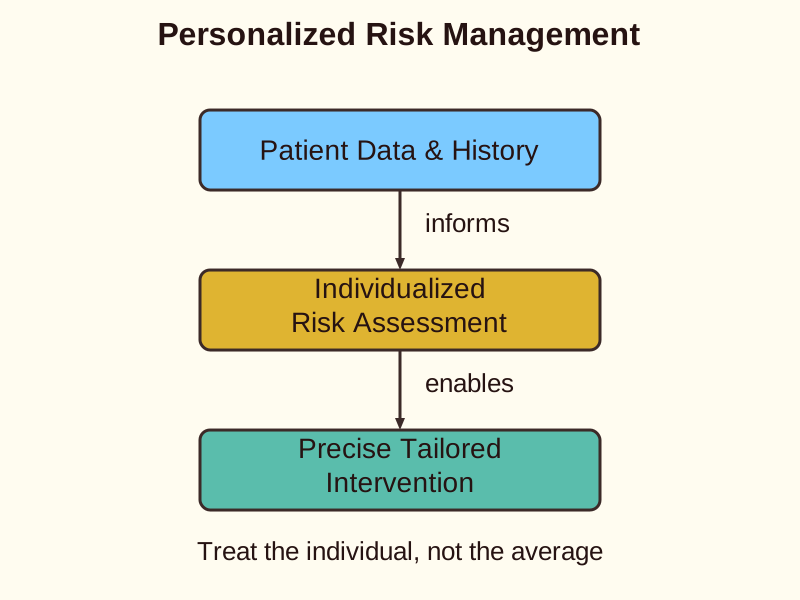
This framework moves away from treating the average patient and toward treating the individual.
Putting It All Together
- Assess Risks: Identify potential markers before symptoms appear.
- Shift Probabilities: Use early interventions to improve long-term odds.
- Tailor Individually: Base decisions on unique patient data rather than population averages.
Check yourself
Medicine 3.0 focuses on _____ decades before clinical symptoms appear.
- proactive risk management
- reactive symptom treatment
Answer: proactive risk management
Medicine 3.0 prioritizes early detection and risk management long before disease symptoms manifest, whereas Medicine 2.0 typically waits for a health crisis or symptom to initiate treatment.
In medical care, _____ waits for a crisis like a heart attack before acting, whereas _____ measures early markers like apoB levels to apply interventions early.
Answer: In medical care, Medicine 2.0 waits for a crisis like a heart attack before acting, whereas Medicine 3.0 measures early markers like apoB levels to apply interventions early.
Medicine 2.0 responds reactively after a major clinical event occurs, while Medicine 3.0 uses early biomarkers like apoB to intervene proactively.
A patient undergoes early biomarker screening and adopts early lipid-lowering interventions under a Medicine 3.0 approach. How should the outcome of these preventive interventions be understood?
- They alter disease probabilities to improve long-term healthspan, though uncertainty remains.
- They guarantee complete immunity from cardiovascular events over the patient's lifetime.
- They eliminate all medical uncertainty once treatment thresholds are personalized.
- They substitute lifestyle planning for clinical data analysis.
Answer: They alter disease probabilities to improve long-term healthspan, though uncertainty remains.
Preventive interventions in Medicine 3.0 change the long-term statistical probabilities of developing disease, but they cannot provide absolute guarantees against sickness.
Keep going
This is lesson 1 of 30 in Outlive: The Science and Art of Longevity. Next up:
- Early Intervention Impact
- Healthspan Over Lifespan
- Four Horsemen
- Risk Assessment
- ApoB & Cardio Prevention
Wondering turns any topic into short lessons you can read, watch, or listen to, with practice questions and an AI tutor.