Free sample lesson · Never Split the Difference
Emotions, Not Logic
What if winning negotiations isn't about logic and compromise, but understanding emotions?
Lesson 1 of the Wondering course Never Split the Difference
The Myth of the Rational Negotiator
For decades, negotiation theory assumed people are rational actors. Each side would weigh options logically and then split the difference.
Chris Voss argues this view is fundamentally wrong.
People are emotional beings. Fears, desires, and the need to feel understood shape their choices far more than careful calculation.
That shift changes how you approach every negotiation, from business deals to talks with family.
What Really Drives People
Picture a client rejecting a fair price. Logic says they should accept. Yet something else is going on.
Maybe they fear looking foolish to their boss. Maybe they want respect more than savings.
People are also shaped by cognitive biases, mental shortcuts that bend judgment away from pure calculation.
- What drives decisions
- Fears: Example: looking foolish to the boss.
- Desires: Example: wanting respect more than savings.
- Need to be understood: People want to feel heard.
- Cognitive biases: Mental shortcuts that bend judgment.
Clever arguments rarely reach these hidden drivers.
Negotiation as Discovery
If emotions drive people, then winning the argument is not the goal.
Voss frames negotiation as a process of discovery. Your job is to uncover as much information as possible about what the other side fears, wants, and needs.
Logic and arguments push people to defend their position. Empathy and listening invite them to reveal it.
- Battle
- Discovery
Every new piece of information opens options you could not see before.
Building Safety Through Empathy
People share real information only when they feel safe.
Voss says negotiation begins with listening. You make the conversation about the other person and validate their emotions.
Validating does not mean agreeing. It means showing you see how they feel, such as: "It sounds like this deadline is putting real pressure on you."
That builds trust and safety, and a real conversation can begin.
- Listen: Negotiation begins with listening, not talking.
- Focus on them: Make the conversation about the other person.
- Validate emotions: Show you see how they feel without needing to agree.
- Build trust: Create enough trust and safety for honesty.
- Talk for real: A real conversation can now begin.
Why Splitting the Difference Fails
Imagine one side asks $100 and the other offers $60. Meeting at $80 feels fair and fast.
Voss calls this a lazy compromise. It often satisfies no one, because neither side's real needs were discovered.
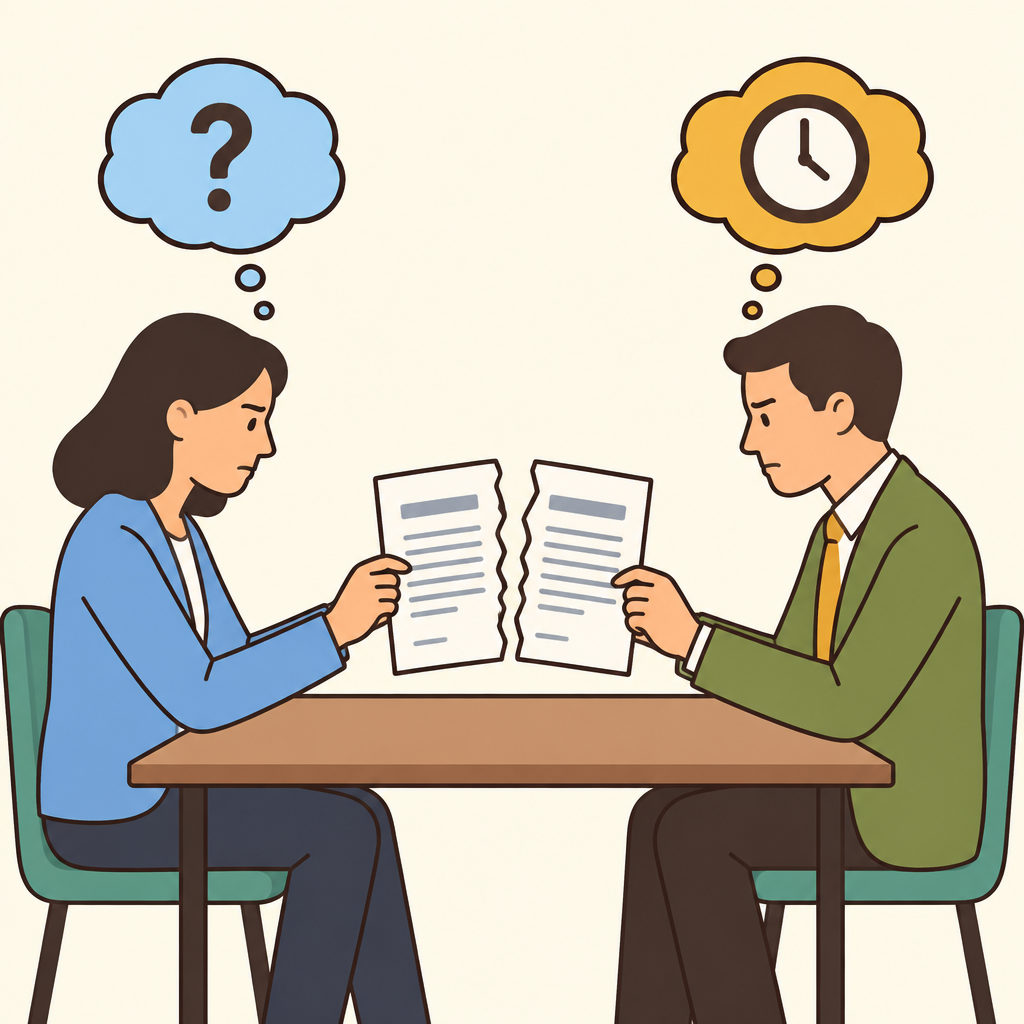
Notice that the halves are equal, yet the seller's hidden need for fast payment sits untouched in the thought bubble, which is why the split satisfies no one.
Maybe the seller needed fast payment more than a higher price. Splitting the number hides that.
Aim higher: use what you learn to find a deal that fits both sides.
Be Ready to Walk Away
Discovery also protects you. Once you know what matters, you can spot a bad deal.
Voss is clear: no deal is better than a bad deal.
Being willing to walk away keeps you from accepting a lazy compromise just to finish.
If a deal falls short, keep exploring. If there is nothing more to learn, walk away.
- Listen and validate
- Discover needs: Uncover what they fear, want, and need.
- Deal meets needs?
- Accept deal
- More to learn?
- Walk away: No deal is better than a bad deal.
- Yes
- No
- Yes
- No
Check yourself
In a negotiation, your main goal should be to _____
- uncover as much information as possible
- win with the strongest logical argument
Answer: uncover as much information as possible
Negotiation is a process of discovery. The aim is to uncover as much information as possible through listening and empathy. Out-arguing the other side with logic shuts down the flow of information.
Traditional negotiation theory treated people as _____ actors who weigh options logically. Voss argues people are actually _____ beings driven by fears and desires. Using _____ creates the safety needed for real conversation.
Answer: Traditional negotiation theory treated people as rational actors who weigh options logically. Voss argues people are actually emotional beings driven by fears and desires. Using empathy creates the safety needed for real conversation.
The old view assumed rational calculation. Voss counters that emotions and cognitive biases drive decisions, so empathy—making people feel understood—builds the psychological safety that allows genuine dialogue.
A seller asks $100 and a buyer offers $60. They quickly agree to split the difference at $80. Why would Voss see this as a weak outcome?
- It is a lazy compromise that often satisfies neither side
- It always favors the side that made the first offer
- It is too emotional and ignores logical analysis
- It takes too long compared to arguing positions
Answer: It is a lazy compromise that often satisfies neither side
Splitting the difference is a lazy compromise. It skips the work of discovering what each side truly needs, so it often leaves both parties unsatisfied. Voss urges negotiators to aim higher.
Keep going
This is lesson 1 of 25 in Never Split the Difference. Next up:
- Active Listening
- Tactical Empathy: Understanding Without Agreeing
- Mirroring
- Voice Tones
- Label Emotions
Wondering turns any topic into short lessons you can read, watch, or listen to, with practice questions and an AI tutor.