Free sample lesson · Neuroscience for Health and Psychology
The Neuron
What if your body had its own high-speed postal service?
Lesson 1 of the Wondering course Neuroscience for Health and Psychology
The Body's High-Speed Postal Service
Imagine your body has a specialized delivery system. This network handles every thought, movement, and feeling you experience.
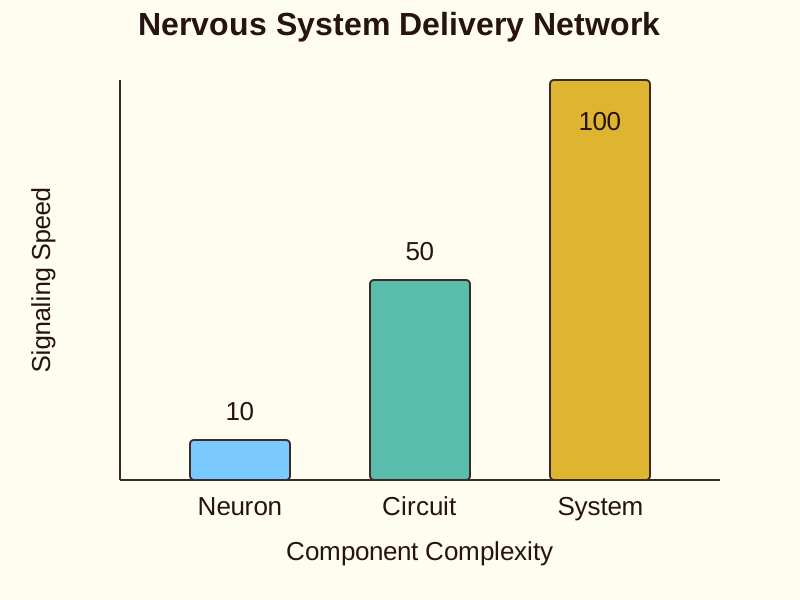
The neuron is the fundamental building block of this system. It is a unique cell designed to send messages across your body.
Neurons connect to other nerve cells, muscles, and glands. They form the foundation of your entire nervous system.
The Three Parts of a Neuron
Most neurons share three main structures that help them process information.
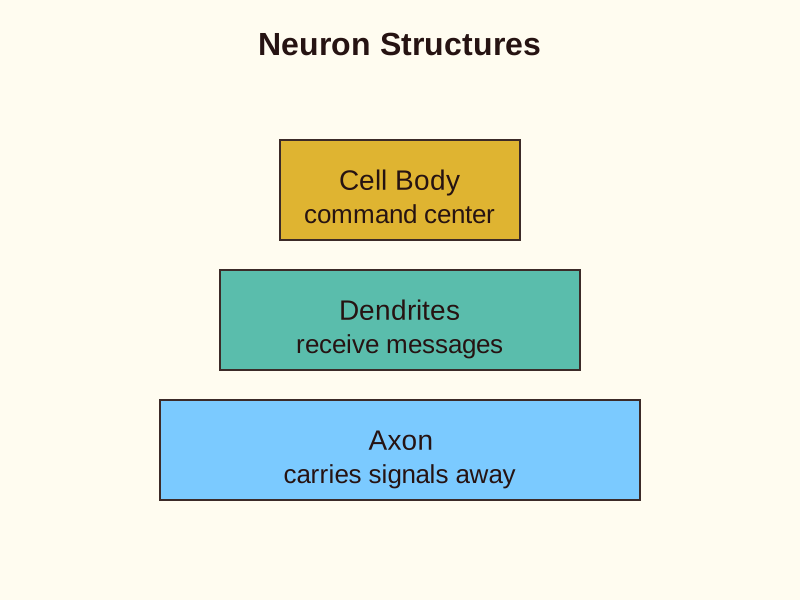
The cell body acts as the command center. It contains the nucleus and essential life-support materials.
Dendrites look like tree branches. They reach out to receive incoming messages from other cells.
The axon is a long tail that carries signals away from the cell body toward the next destination.
How Neurons Send Messages
Communication starts with an electrical impulse. This signal travels quickly down the length of the axon.
- Electrical Impulse: An electrical signal travels quickly down the length of the axon.
- Chemical Release: The impulse triggers the release of neurotransmitters at the axon terminal.
- Synapse Crossing: Chemicals cross the synapse and bind to receptors on the next neuron.
When the impulse reaches the end, it triggers the release of neurotransmitters. These are special chemicals that carry the message.
These chemicals cross a tiny gap called a synapse. They bind to receptors on the next neuron to pass the information along.
Why These Tiny Cells Matter
This complex network allows you to function every day. It handles everything from basic reflexes to deep emotions.
Understanding neurons helps you grasp how the brain influences your health and behavior.
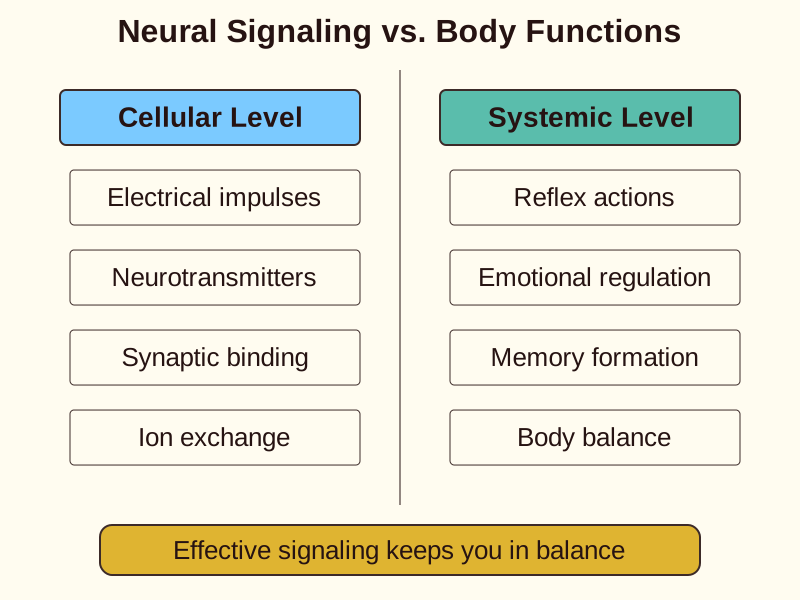
When these cells communicate effectively, your body and mind stay in balance. Every memory you hold is the result of these tiny electrical and chemical signals.
How to Apply It in Real Life
- Quality Sleep: Ensure adequate rest to allow neurons to clear metabolic waste and strengthen synaptic connections.
- Balanced Nutrition: Provide the chemical building blocks necessary for neurotransmitter synthesis.
- Mental Stimulation: Engage in continuous learning and novel challenges to encourage dendritic branching and synaptic plasticity.
Check yourself
The main purpose of a neuron is to _____ across the body.
- send messages
- produce blood cells
Answer: send messages
Neurons are specialized cells designed specifically to receive, process, and send electrical and chemical signals throughout the body.
In a neuron, _____ receive incoming signals, the _____ acts as the command center, and the _____ carries signals away toward the next cell.
Answer: In a neuron, dendrites receive incoming signals, the cell body acts as the command center, and the axon carries signals away toward the next cell.
Each structure of the neuron plays a specific role: dendrites receive incoming messages, the cell body processes them and keeps the cell alive, and the axon transmits the signal down its length.
What happens when an electrical impulse reaches the end of an axon?
- It triggers the release of neurotransmitters across a gap.
- It reflects back to the cell body as a physical wave.
- It converts directly into muscle fibers to move the body.
- It destroys the neuron to prevent duplicate messaging.
Answer: It triggers the release of neurotransmitters across a gap.
An electrical signal cannot jump across the physical gap (synapse) directly. Instead, reaching the end of the axon triggers the release of chemical messengers called neurotransmitters, which cross the synapse to deliver the signal.
Keep going
This is lesson 1 of 4 in Neuroscience for Health and Psychology. Next up:
- Electric Signals
- Chemical Messengers
- Neural Plasticity
Wondering turns any topic into short lessons you can read, watch, or listen to, with practice questions and an AI tutor.