Free sample lesson · Multiplayer Agents, Company Brain, and Bug-to-PR Loops
From Assistant to Operating System
YC tried over 50 Hermes assistants. Why did management get harder?
Lesson 1 of the Wondering course Multiplayer Agents, Company Brain, and Bug-to-PR Loops
From Assistant to Operating System
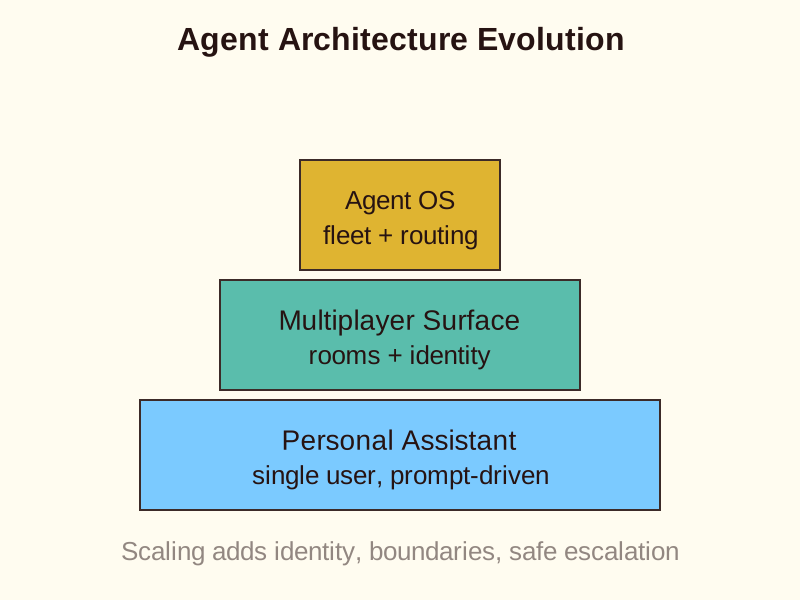
Discover how scaling agents from a single personal assistant to a team-wide operating system requires identity, boundaries, routing, and safe escalation.
The Limit of Personal Assistants
A single coding agent works well for one person. It uses your files and your permissions.
However, scaling to a team changes the problem. YC provisioned over 50 Hermes agents for employees before hitting a wall.
Managing a fleet of that size is difficult. You move from prompt engineering to an operating problem.
- Single Assistant
- Fleet of Agents
The Agent Operating System
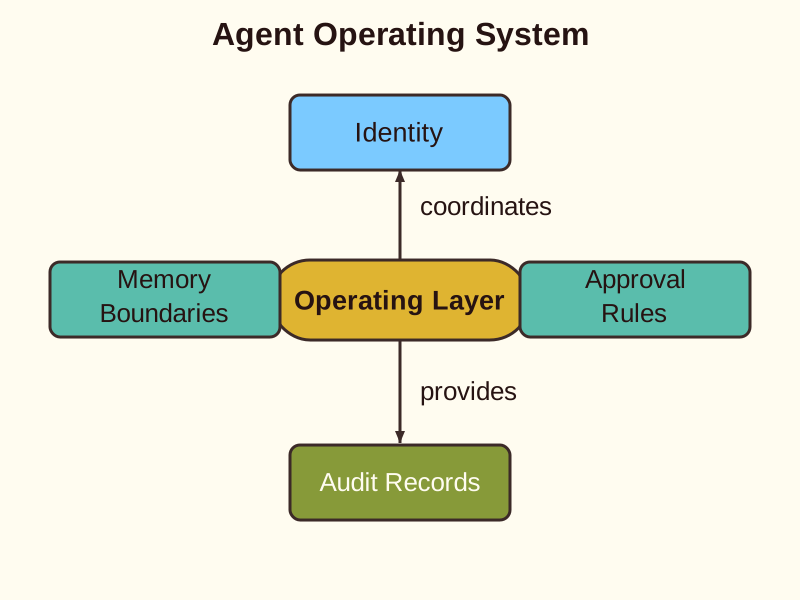
A team needs an operating layer to function safely. This layer coordinates identity, memory boundaries, and approval rules.
Without it, you just have a personal assistant in Slack. That approach lacks control.
An operating system provides sandboxes and audit records. It ensures many people use agents without sharing one unsafe assistant.
Building a Multiplayer Surface
Multiplayer agents work in shared rooms and projects. They must preserve who asked for what and where results belong.
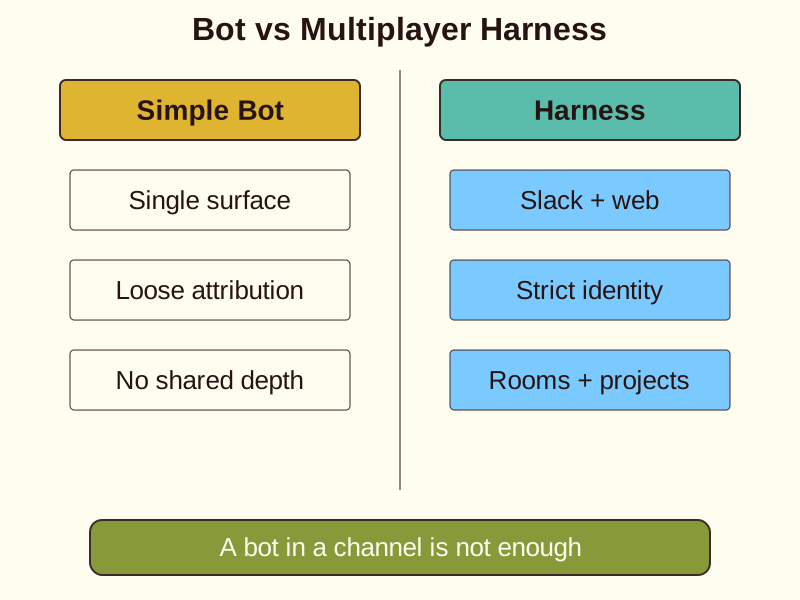
YC uses a harness for work in Slack and on the web. It keeps identity consistent across both surfaces.
Putting a bot in a channel is not enough. You need extra controls to make the system truly collaborative.
Routing and Verification
A founder might start with one agent fixing bugs. A multiplayer system routes work from tools like Linear.
It runs in a worktree and posts evidence. Finally, it opens a pull request under a known actor.
Teams often blame the model for failures. Often, the real issue is missing ownership or a lack of verification gates.
- Route Work: Route tasks from management tools like Linear to the agent system.
- Run Worktree: Execute the task in an isolated worktree and gather evidence.
- Verify & PR: Open a pull request under a known actor once verification gates pass.
Safe Escalation and Scope
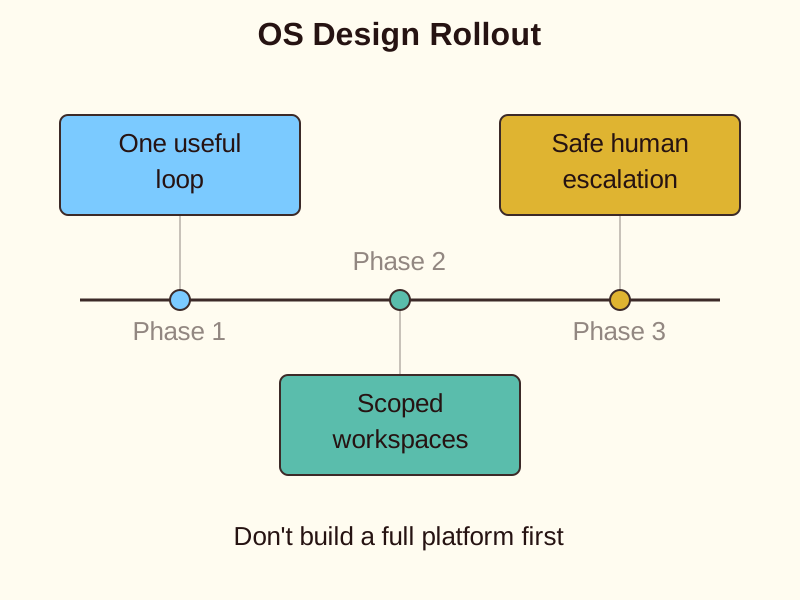
Do not build a full platform before you have one useful loop. The operating system is a design lens.
Focus on scoped workspaces and memory boundaries. These tools help agents escalate tasks safely to humans.
Distinguish between model capability and operating system problems. This distinction is vital for a successful multi-agent rollout.
Putting It All Together
- Define Identity: Assign distinct scopes and credentials to prevent shared assistant vulnerabilities.
- Route & Execute: Receive work items from project queues and collect verification evidence.
- Verify & Escalate: Pass results through verification gates and escalate safely to humans when unsure.
Check yourself
Moving a single coding bot directly into a team Slack channel automatically provides a secure multi-user operating layer.
- True
- False
Answer: False
Simply putting a personal assistant into a shared channel lacks sandboxing, identity routing, and audit controls. A true agent operating system is required to coordinate multi-user interactions safely.
When automating issue resolution, work is routed from management tools like Linear, executed inside an isolated _____, verified through strict gates, and submitted as a pull request under a known _____.
Answer: When automating issue resolution, work is routed from management tools like Linear, executed inside an isolated worktree, verified through strict gates, and submitted as a pull request under a known actor.
The standard execution pipeline isolates work in a worktree to run tests and gather evidence before opening a PR under a defined, trackable actor identity.
A team notices that an automated agent executed an unsafe database change when processing a user request in Slack. What type of failure occurred?
- An operating system problem, because the infrastructure lacked proper approval rules and scope boundaries.
- A model capability problem, because the LLM failed to understand basic database syntax.
- A prompt engineering problem, because the prompt system instruction was missing context.
- A context window problem, because the agent ran out of token memory during execution.
Answer: An operating system problem, because the infrastructure lacked proper approval rules and scope boundaries.
Unintended execution due to missing approval rules, access boundaries, or permission scopes is an operating system problem, not a model capability failure.
Keep going
This is lesson 1 of 16 in Multiplayer Agents, Company Brain, and Bug-to-PR Loops. Next up:
- Scopes Beat One Shared Brain
- Memory That Survives Runs
- Maintenance Habits Keep It Useful
- Permissions Are Brain Design
- The Five-Part Loop
Wondering turns any topic into short lessons you can read, watch, or listen to, with practice questions and an AI tutor.