Free sample lesson · Medieval Echoes in Modern AI
Automata
Could mechanical brass heads from the Middle Ages be the ancestors of modern chatbots?
Lesson 1 of the Wondering course Medieval Echoes in Modern AI
Machines Before Microchips
The dream of artificial minds did not start with silicon.
It started in workshops. Medieval clockmakers and polymaths built machines that seemed to think, using gears, weights, and water instead of code.
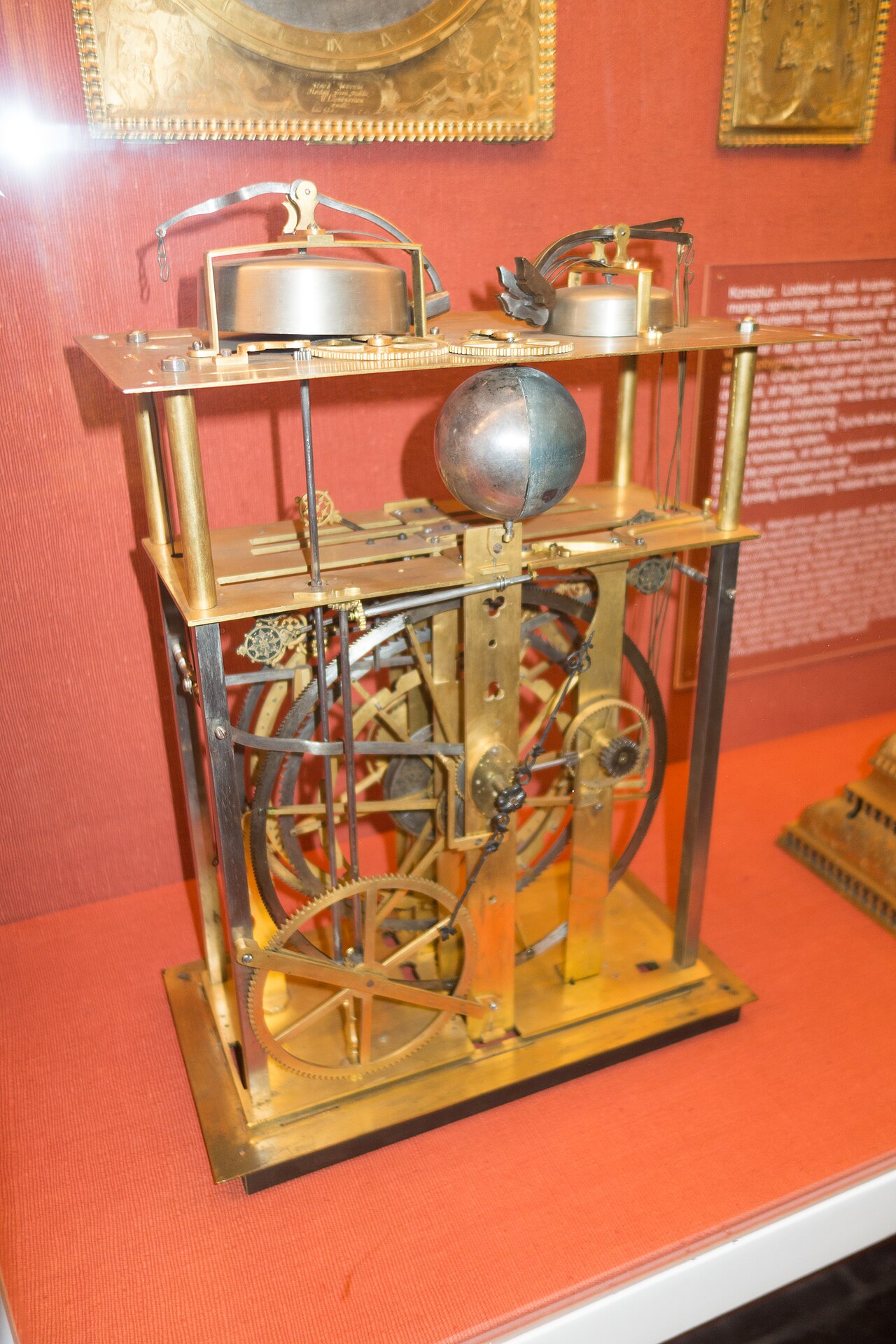
Medieval clock mechanism · Thomas Quine · CC BY 2.0 · Wikimedia Commons
Long before neural networks, people were already trying to place intelligence inside a physical object.
The Brazen Head Legend
In the 13th century, rumors spread about brazen heads.
These were mechanical constructs, said to answer questions put to them. Albertus Magnus was one figure named as their maker.
- Brazen head
- Language model
Think of a primitive, physical version of a Large Language Model: ask it something, and a response comes out of the box.
Gears, Water, and Rules
What powered these machines? Intricate gears and hydraulic systems.
A sequence of physical parts moved in a fixed order. Turn one gear, and the next motion follows without any choice being made.
- Power: Gears or hydraulic systems supply the driving force.
- Sequence: Physical parts move in a fixed order.
- Motion: Turning one gear makes the next motion follow.
- Output: The machine mimics life or speech through that sequence.
That fixed order is the medieval version of an algorithm: a rule that runs the same way every time.
Externalizing Logic
These automata were the first human attempts to externalize logic into a physical vessel.
Speech and reasoning had always lived inside a head. Now they were being pushed outward into brass and water.
- Medieval automata: First human attempts to place logic in a physical vessel.
- Brass and water: The physical materials of the medieval attempt.
- Modern AI: Pursues the same ambition with different materials.
- Speech and reasoning: What had always lived inside a head.
Modern AI does the same thing with different materials. The ambition is centuries old; only the medium changed.
Sequences Versus Networks
Here is the real technical split.
Medieval machines used physical sequences to mimic life. Modern AI uses neural networks.
- Medieval automata
- Modern AI
One is a chain of moving parts you can point at. The other is trained code with no gear to inspect. Both aim at the same target: automated intelligence.
The Original Black Box
Medieval automata sat inside mysterious clockwork cabinets.
You saw the question go in and the answer come out. The workings stayed hidden, and the line between engineering and magic blurred.
Modern AI is called a black box for the same reason. The cabinet changed material, not character.
A Continuous Lineage
The thread runs unbroken from the 13th century to now.
Rumored brazen heads, gear-driven and hydraulic automata, and today's neural networks all belong to one long project.
- Brazen heads rumored: Figures like Albertus Magnus were said to build heads that answered questions.
- Clockwork cabinets: Gears and hydraulic systems drove automata inside mysterious cabinets.
- Neural networks: Intangible code replaces brass, pursuing the same centuries-old ambition.
Studying these mechanical ancestors shows that the ambition to automate intelligence is not new. Only the material shifted, from tangible brass gears to intangible code.
Check yourself
Were brazen heads rumored to be mechanical constructs that answered questions?
- Yes
- No
Answer: Yes
Yes. In 13th-century reports, brazen heads were said to respond to questions. They were legends about physical machines, not modern software.
Medieval automata used _____ of moving parts, while modern AI uses _____ trained in code.
Answer: Medieval automata used physical sequences of moving parts, while modern AI uses neural networks trained in code.
Physical sequences describe the ordered gear movements of medieval machines. Neural networks describe the trained computational structures used by modern AI. Both pursue automated intelligence through different mechanisms.
What does it mean to externalize logic in a medieval automaton?
- Place rules and operations into a physical machine
- Hide all machines inside a human mind
- Replace gears with trained neural-network code
- Make a machine operate without any fixed rules
Answer: Place rules and operations into a physical machine
Externalizing logic means moving reasoning-like operations from a person’s mind into a physical machine. Gears, water, and other parts embody the machine’s rules.
Keep going
This is lesson 1 of 9 in Medieval Echoes in Modern AI. Next up:
- Alchemy
- Scholasticism
- Scriptoria
- Guilds
- Printing
Wondering turns any topic into short lessons you can read, watch, or listen to, with practice questions and an AI tutor.