Free sample lesson · MantaGO for Shops and Restaurants
Common Questions
How many times a day do customers ask about your opening hours, menu or stock?
Lesson 1 of the Wondering course MantaGO for Shops and Restaurants
Start With What Customers Ask
How many times a day do customers ask about your opening hours, menu or stock?
If you run a shop or restaurant, the answer is probably a lot. Each reply pulls a member of staff away from serving.
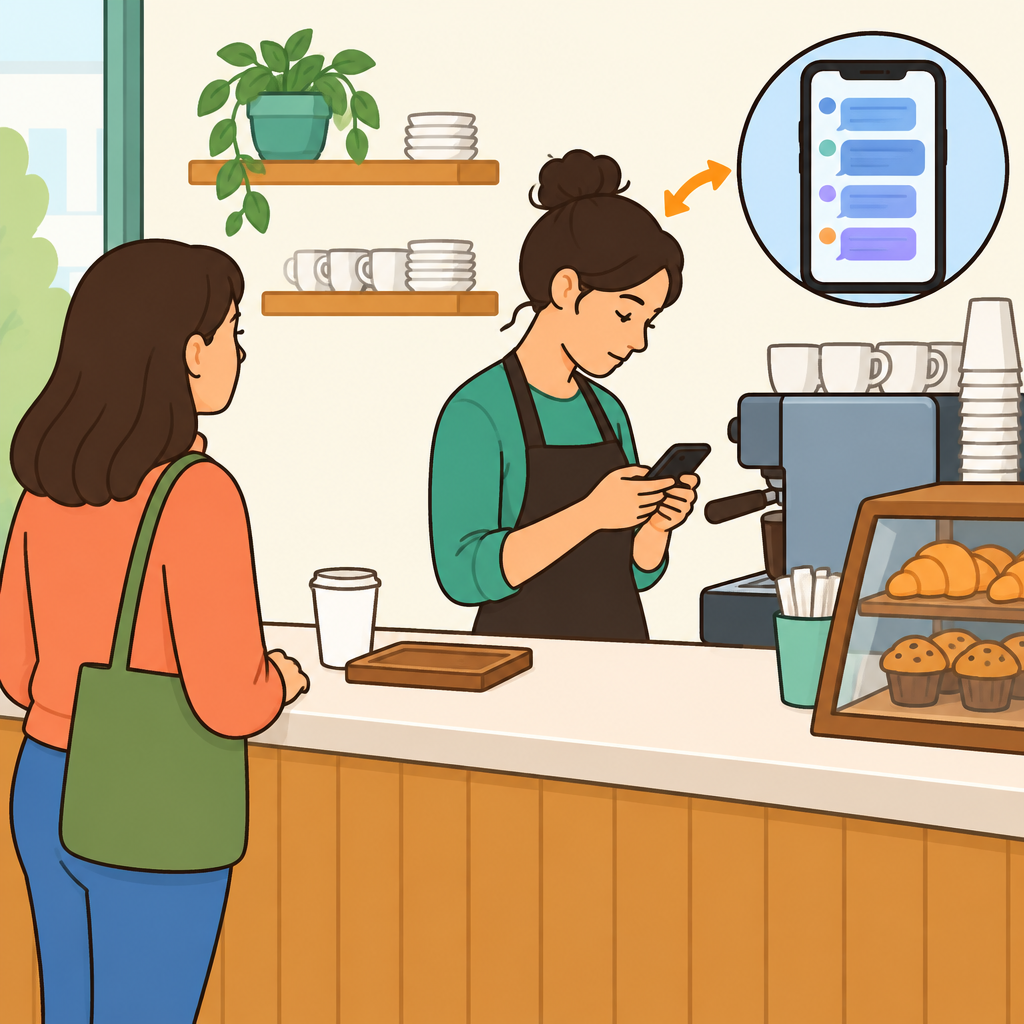
Notice how the staff member must turn away from the waiting customer to answer a message, which is the time a chatbot can give back.
Before you build a chatbot in MantaGO, the first step is simple. Notice which questions keep coming back.
Those repeated questions show you what your chatbot should answer first.
The Questions You Hear Most
Most shops and restaurants hear the same few questions again and again.
Opening hours: What time do you open? The menu: Is the menu online?
Stock: Is an item available, such as Do you have oat milk?
These are everyday questions. The answer is the same no matter who asks, which makes them a good fit for your chatbot.
Count One Week of Messages
Imagine a small café owner who is new to MantaGO. Customers send messages all day, and staff keep stopping orders to reply.
To see what really repeats, the owner tallies one week of messages.
Opening hours came up 42 times, the menu 30 times, oat milk 18 times and table bookings 5 times.
- Opening hours: 42
- Menu: 30
- Oat milk: 18
- Table bookings: 5
A simple tally turns a vague feeling of being busy into a clear list you can act on.
Rank, Then Find the Top
Counting is half the job. Next, the owner sorts the list.
Step 1: Rank the questions by count, from most to least.
- Top three: Opening hours, menu and oat milk together.
- Table bookings: A small share that staff can handle personally.
Step 2: Add up the top three. Opening hours, menu and oat milk make 90 of 95 questions, about 95%. Table bookings make the other 5.
Step 3: Write chatbot replies for opening hours, the menu link and stock items first.
What Stays With Your Team
Not every question belongs with the chatbot.
In the café example, table bookings came up only 5 times. Staff deal with bookings personally.
- Chatbot
- Staff
Routine messages now get instant answers. Customers get quick replies, and staff spend less time repeating the same information.
That frees your team to serve customers and handle questions that need a personal answer.
Your First Move in MantaGO
Here is the whole method in plain words, ready for your own shop or restaurant.
List the questions customers send. Count how often each one appears, for example over one week.
Rank them from most to least frequent. Then write chatbot replies for the top ones first.
- List: Write down the questions customers send.
- Count: Tally how often each one appears, for example over one week.
- Rank: Sort the questions from most to least frequent.
- Write replies: Give your chatbot answers for the top questions first.
Automating the most frequent questions saves the most staff time. It also gets customers quick answers to everyday questions.
Check yourself
When choosing the first answers for a new MantaGO chatbot, a shop owner should start with the questions customers ask _____.
- most often
- least often
Answer: most often
Start with the questions customers ask most often. Automating them saves the most staff time and gives the most customers instant replies. Rare questions save very little time when automated.
To set up a chatbot, list the repeated questions, then _____ them by how often they appear. The _____ questions become the chatbot's starting answers. Questions that need a _____ answer stay with staff.
Answer: To set up a chatbot, list the repeated questions, then rank them by how often they appear. The most frequent questions become the chatbot's starting answers. Questions that need a personal answer stay with staff.
Ranking by count shows which questions come up most. Those top questions become the chatbot's first answers. Anything that needs a personal touch, such as a booking, is still handled by staff.
A restaurant owner is setting up MantaGO for the first time. Which group of customer questions is the best starting set of chatbot answers?
- Opening hours, menu, and whether an item is in stock
- Complaints, refunds, and disputes over a bill
- Custom party plans, catering quotes, and menu tastings
- Job applications, supplier offers, and press requests
Answer: Opening hours, menu, and whether an item is in stock
Opening hours, the menu, and stock are typical everyday questions that customers ask again and again. They have fixed answers, so a chatbot can handle them well. Complaints, special event plans, and job applications are rarer or need a personal reply from staff.
Keep going
This is lesson 1 of 13 in MantaGO for Shops and Restaurants. Next up:
- Conversation Flows
- No-Code Chatbot
- Human Handoff
- Orders & Bookings
- Product Menus
Wondering turns any topic into short lessons you can read, watch, or listen to, with practice questions and an AI tutor.