Free sample lesson · Luxury Strategy Playbook
Premium Is Not Luxury
Why can a better suitcase still fail as luxury?
Lesson 1 of the Wondering course Luxury Strategy Playbook
The Better Suitcase Problem
A suitcase can be lighter, tougher, and better organized than every rival on the shelf.
That makes it excellent. It does not make it luxury.
Premium wins a comparison. Luxury creates meaning that sits outside the comparison entirely.
- Premium
- Luxury
This distinction decides how you price, distribute, and tell your story.
Where The Value Comes From
Premium value is comparative. The question is simple: does this product perform better than what else is available?
Luxury value is symbolic and cultural. The question changes: does this brand create a world people want to enter, display, remember, or inherit?
- Premium
- Luxury
Same price tag. Completely different source of value.
The Trunk And The Suitcase
A highly engineered suitcase is premium because it is lighter, tougher, and better organized.
A Louis Vuitton trunk is luxury because travel heritage, monogram codes, craft narrative, and social recognition change the meaning of ownership.
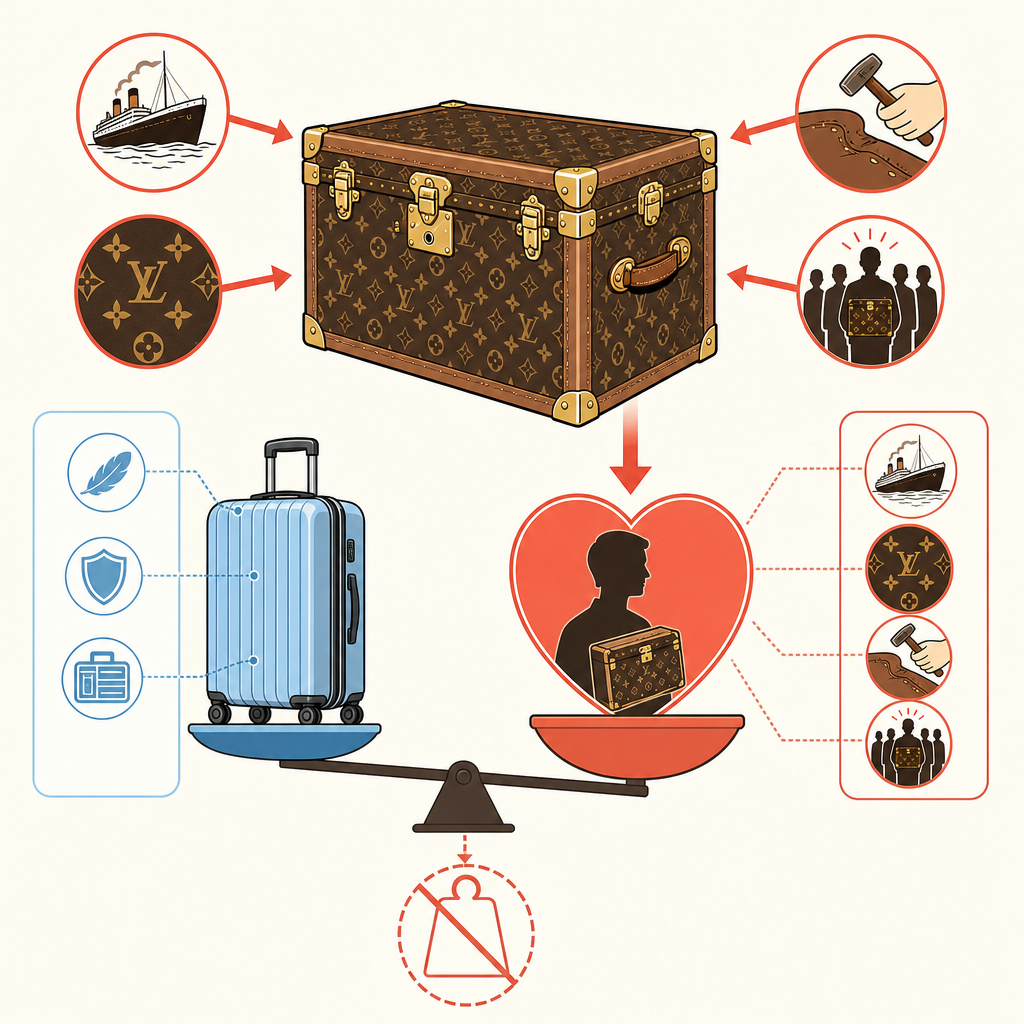
Recognizable codes turn an object into a symbol
The trunk is not winning a features test. It carries something the features test cannot measure.
What Luxury Value Includes
Quality is still required. Quality alone is not sufficient.
Luxury value is built from distance, codes, selective access, service rituals, and the ability to hold desire over time.
- Signals and access
- Distance: The brand stays apart instead of drawing near.
- Codes: Signs that are recognized before any feature is checked.
- Selective access: Who may buy, and where, is controlled.
- Held over time
- Service rituals: How the brand behaves during the purchase itself.
- Lasting desire: The pull survives long after the object is bought.
Quality is required; none of these five come from quality alone.
Notice that most of these live outside the product itself. They live in how the brand behaves.
The Expensive Mistake
The common mistake is treating luxury as the top price tier of ordinary marketing.
That leads teams to add expensive materials while leaving distribution, storytelling, and client experience unchanged.
The result is a costly product with no world around it.
Remember the boundaries too: affordable brands can borrow luxury aesthetics, and expensive brands can still be non-luxury.
Classify The Move
Use one test on any brand decision.
Ask whether the move makes the product objectively better than rivals, or whether it builds meaning, distance, and access that comparison cannot reach.
Lighter materials and smarter organization sit on the premium side.
- Brand decision: Take one move the team is proposing.
- Beats rivals objectively?
- Premium optimization: Lighter materials, smarter organization.
- Builds meaning or access?
- Luxury value creation: Selective distribution, heritage narrative, service rituals.
- Neither yet: Cost added with nothing else changed.
Selective distribution, heritage narrative, and service rituals sit on the luxury side.
Carrying It Into Decisions
Premium asks how good the product is. Luxury asks what world the brand creates.
In premium, the product proves superiority and communication supplies that proof, so buyers can find and compare it wherever they shop.
In luxury, distribution controls access and communication carries heritage and codes.
Before your next brand move, name which game you are playing. Optimizing features while neglecting symbolic value is how a better suitcase still fails as luxury.
Check yourself
A suitcase that is lighter, tougher, and better organized than rival suitcases is premium rather than luxury.
- True
- False
Answer: True
Correct. Superior measurable performance wins a comparison, which is the source of premium value. Luxury value depends on cultural meaning, distance, access, and related brand behaviors beyond product performance.
Premium value comes from _____ against rival products, while luxury value comes from _____ beyond direct comparison.
Answer: Premium value comes from superior performance against rival products, while luxury value comes from cultural meaning beyond direct comparison.
Premium buyers want the better-performing product among available alternatives. Luxury buyers seek entry into a meaningful brand world involving display, memory, recognition, or inheritance.
A brand doubles its material costs but leaves its distribution, storytelling, and client experience unchanged. How should this move be classified?
- Premium optimization, because higher cost always means better performance
- Luxury value creation, because expensive materials create luxury automatically
- Neither yet, because only product cost changed
- Both, because any expensive brand occupies both strategies
Answer: Neither yet, because only product cost changed
The move is neither premium optimization nor luxury value creation by itself. More expensive materials may improve quality, but without a clear performance advantage it does not win a comparison; without changed meaning, access, or experience, it does not create luxury value.
Keep going
This is lesson 1 of 16 in Luxury Strategy Playbook. Next up:
- Dream Before Demand
- Anti-Laws of Marketing
- Scarcity Needs Legitimacy
- Heritage as Raw Material
- Codes Beat Logos
Wondering turns any topic into short lessons you can read, watch, or listen to, with practice questions and an AI tutor.