Free sample lesson · Low-Friction Pacing for Chronic Illness
Intensity Reduction
What if performing at 70% actually doubled your weekly output?
Lesson 1 of the Wondering course Low-Friction Pacing for Chronic Illness
What You Will Learn
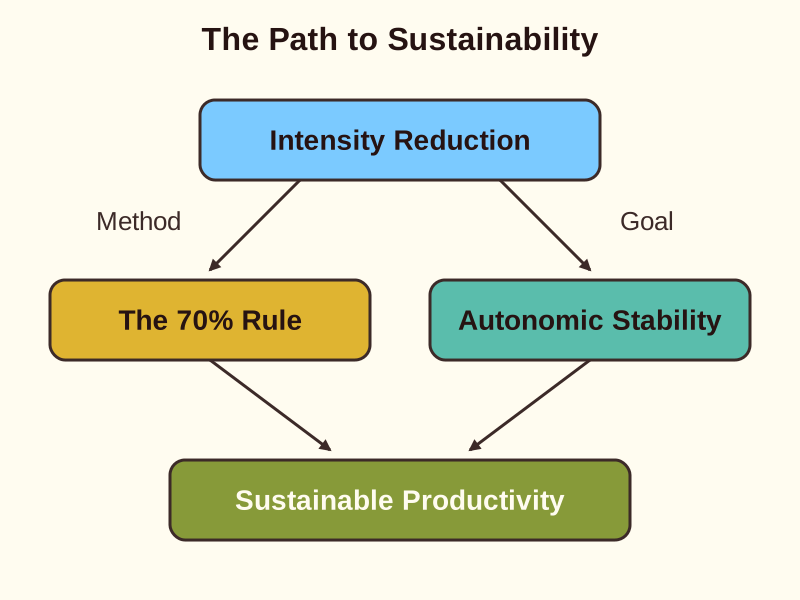
Lowering peak intensity prevents the physiological triggers that lead to crashes.
The Trap of Peak Intensity
High-intensity bursts of activity often feel productive in the moment. For those with AuDHD or chronic illness, these peaks can trigger a systemic inflammatory response.
This reaction leads to a sudden crash or autonomic dysfunction. You might finish a task but lose the rest of your week to recovery.
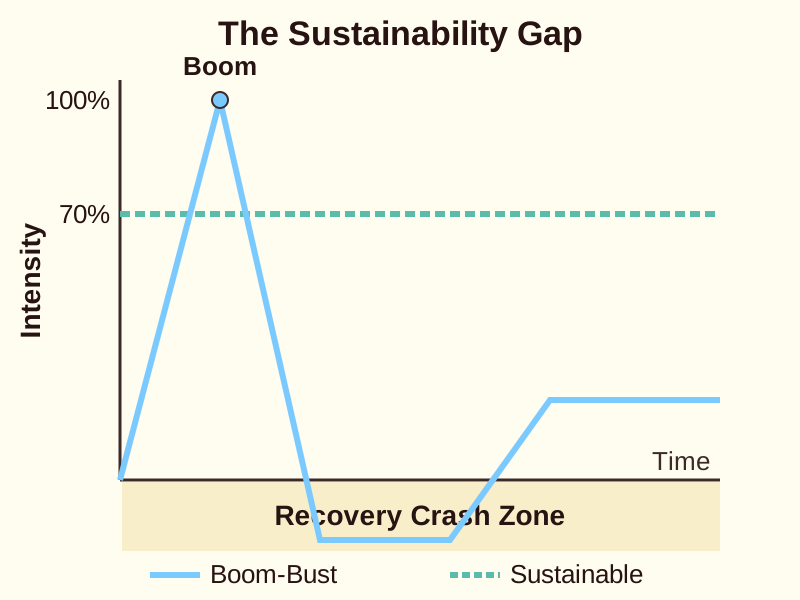
True productivity is not about how hard you can push today. It is about how much you can sustain over time.
The 70 Percent Rule
The 70% Rule suggests limiting your effort to a sub-maximal level. You intentionally hold back 30% of your energy as a safety buffer.
- 100% Sprint
- 70% Rule
This buffer prevents you from hitting your symptom threshold. By staying in this safe zone, you avoid the painful boom-bust cycle.
Aim for a consistent 70% effort rather than a 100% sprint. This shift prioritizes your long-term stability over short-term output.
Reducing Friction and Inflammation
Lowering intensity reduces the friction between your goals and your body. When you work at a lower gear, your nervous system stays regulated.
This approach is a form of low-friction pacing. It allows you to manage SaaS consulting or complex math without triggering executive burnout.
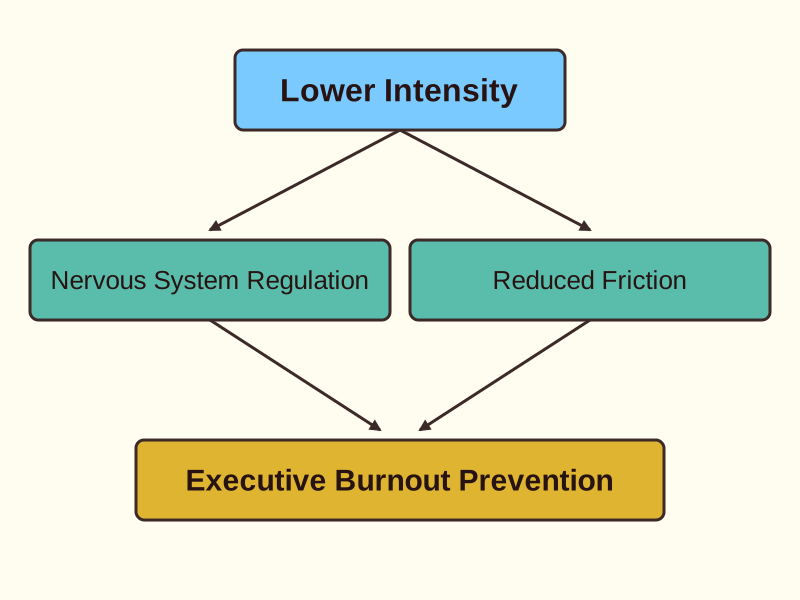
Consistency creates a smoother recovery path. You are no longer fighting your physiology to get work done.
Weekly Sustainability Over Daily Max
Success is measured by your total weekly output. A person who works at 70% every day will outperform someone who crashes after one day at 100%.
Lowering your peak intensity makes your schedule predictable. You can plan business workflows and AI prototyping with confidence.
Focus on staying below your limit. This strategy transforms your energy management from chaos into a sustainable system.
Bringing It Into Daily Practice
- Identify Max: Determine what 100% effort (a full sprint) looks like for this task.
- Calculate 70%: Scale back the duration or complexity to leave a 30% energy buffer.
- Set Barriers: Establish a hard stop to prevent 'just one more thing' intensity creep.
- Monitor Recovery: Check for inflammatory triggers or autonomic signs after finishing.
Check yourself
The 70% Rule suggests keeping _____ of your energy as a safety buffer to prevent crashes.
- 30%
- 10%
Answer: 30%
By holding back 30% of your energy, you create a buffer that prevents you from hitting your symptom threshold.
In the boom-bust cycle, a _____ in activity triggers inflammation, which is followed by a sudden _____ in energy.
Answer: In the boom-bust cycle, a peak in activity triggers inflammation, which is followed by a sudden crash in energy.
High-intensity bursts feel productive but often cause autonomic dysfunction, leading to a forced recovery period.
Why is a consistent 70% effort considered more productive than occasional 100% sprints?
- It prioritizes long-term stability over short-term output
- It allows you to finish individual tasks faster
- It uses up all available daily energy
Answer: It prioritizes long-term stability over short-term output
Sustainability is the key to productivity. Consistent effort avoids the recovery time needed after a 'bust' phase, leading to higher total output over a week.
Keep going
This is lesson 1 of 17 in Low-Friction Pacing for Chronic Illness. Next up:
- Breaking the All-or-Nothing Cycle
- Barrier Setting
- Urgency Deconstruction
- Recalibrating Urgency and Finding Meaningful Momentum
- Cognitive Reframing
Wondering turns any topic into short lessons you can read, watch, or listen to, with practice questions and an AI tutor.