Free sample lesson · LLM Test-Time Reasoning
Slow Thinking for Models
Why can a model answer a familiar fact instantly but struggle with 12345 times 56789 unless it writes intermediate steps?
Lesson 1 of the Wondering course LLM Test-Time Reasoning
What You Will Learn
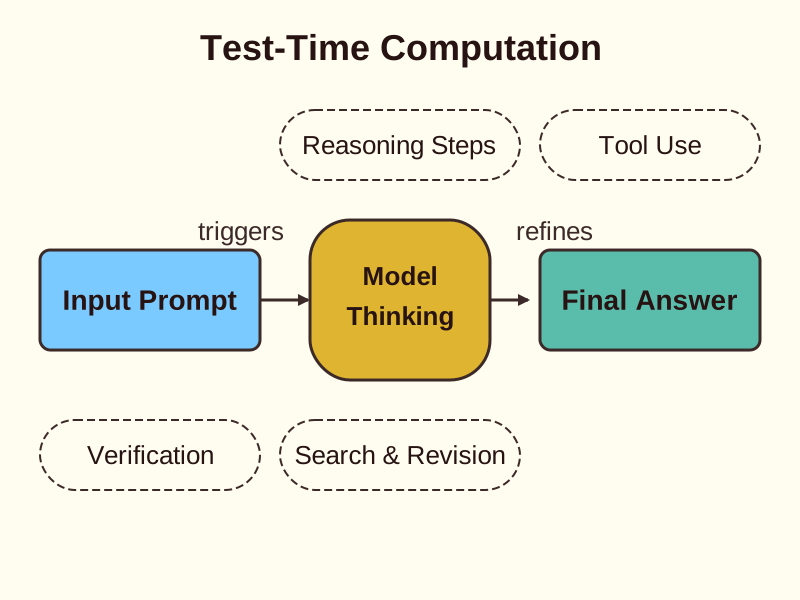
The point of model thinking time is to spend computation where a direct answer would skip decomposition, checking, or correction.
The Need for Thinking Time
Why can a model answer a simple fact instantly but struggle with a math problem like $$12345 \times 56789$$?
Complex tasks require more than just pattern matching. They require test-time computation.
This is computation spent after training but before the final answer is shown. It allows the model to process steps that a direct answer would skip.
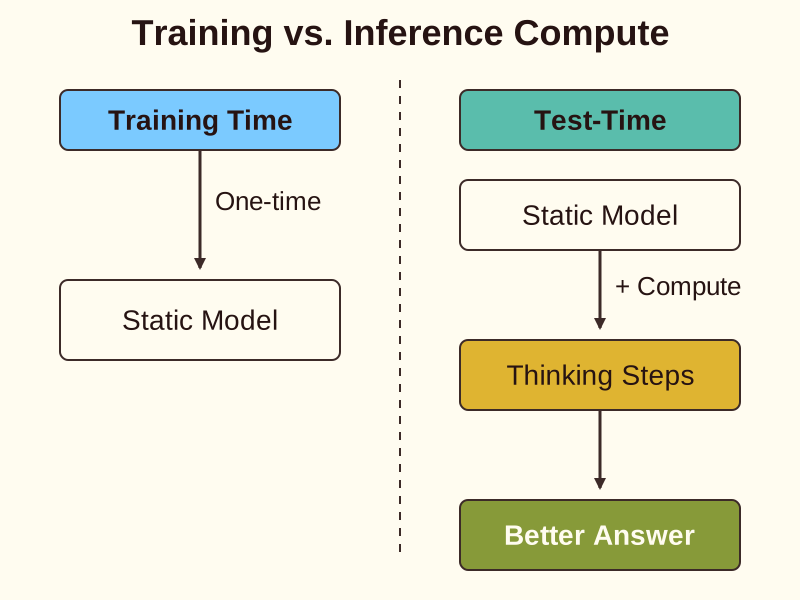
Fast versus Slow Reasoning
Models often use fast reasoning for easy prompts. This relies on immediate intuition and pattern completion.
Slow reasoning is deliberate. It allocates extra steps to inspect assumptions and split tasks into smaller parts.
Think of it like a human. You answer "What is your name?" instantly, but you pause and use a scratchpad for long division.
- Fast Reasoning
- Slow Reasoning
How Models Think at Inference
A model can "think" by generating intermediate tokens. This might look like a chain of thought or a scratchpad of partial products.
It can also use search, revision, or tool calls to verify its work.
For example, a coding model might run a test before finalizing a script. This extra work helps the model recover from mistakes before you see the result.
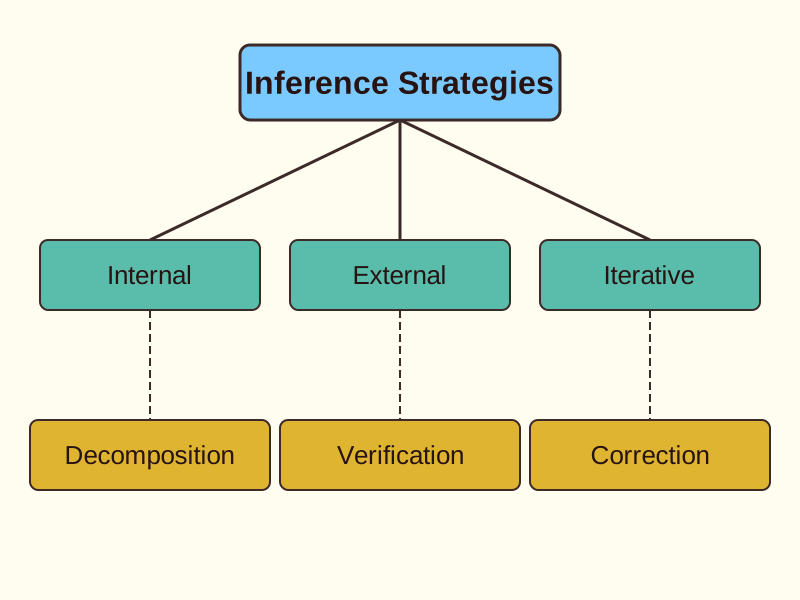
When to Spend Compute
Extra tokens do not always mean better quality. More work must lead to a better decision to be useful.
Use slow reasoning for tasks requiring decomposition or error correction.
Skip it for simple greetings or basic facts. Spending extra computation on easy tasks is wasteful and does not change the outcome.
Putting It All Together
- Decompose: Break the complex prompt into manageable sub-tasks.
- Compute: Generate intermediate tokens or call tools to solve each part.
- Verify: Check the intermediate results for logic errors or hallucinations.
- Finalize: Synthesize the verified steps into a concise final response.
Check yourself
Test-time computation refers to extra work a model performs _____.
- during inference
- during training
Answer: during inference
Test-time (or inference-time) computation happens after training is finished, while the model is generating a specific answer.
The slow thinking workflow starts by _____ a prompt, then _____ intermediate steps, and finally _____ the results for errors.
Answer: The slow thinking workflow starts by decomposing a prompt, then computing intermediate steps, and finally verifying the results for errors.
Models follow a sequence: break the task down, do the work (compute), and check for mistakes before finishing.
In which scenario is 'slow reasoning' most beneficial for a model?
- Answering 'What is the capital of France?'
- Saying 'Hello' to a user
- Finding a bug in a complex software script
- Recalling the date of a famous historical event
Answer: Finding a bug in a complex software script
Slow reasoning is best for complex logic like coding or math where the model needs to check its work; simple facts are handled more efficiently by fast pattern matching.
Keep going
This is lesson 1 of 11 in LLM Test-Time Reasoning. Next up:
- Inference Compute as Resource
- Thoughts as Latent Variables
- Chain-of-Thought Scratchpads
- Parallel Search and Voting
- Revision Needs Feedback
Wondering turns any topic into short lessons you can read, watch, or listen to, with practice questions and an AI tutor.