Free sample lesson · LLM Fundamentals
Three Training Stages
How does a neural network learn to be a helpful assistant?
Lesson 1 of the Wondering course LLM Fundamentals
The Foundation of AI Training
Training a large language model is a three-stage process. It is similar to how a person goes through different levels of education.
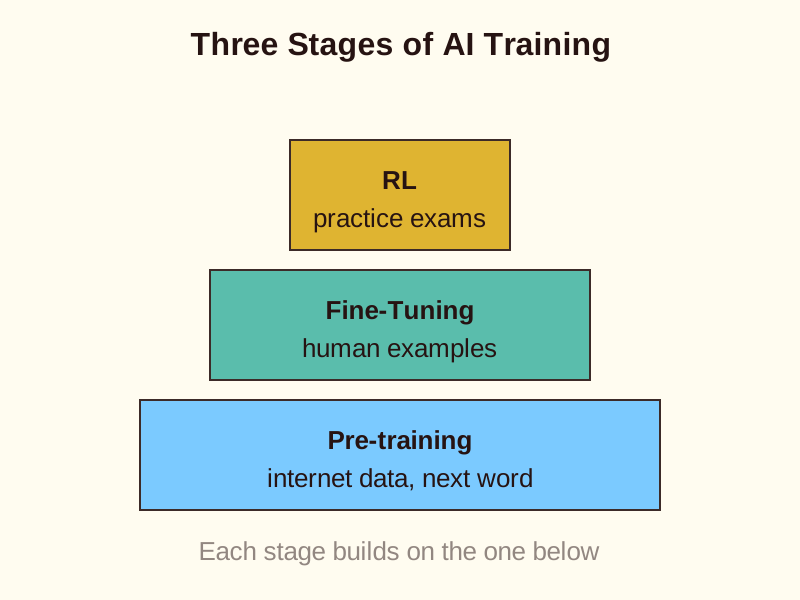
First, the model must learn the basics of language. This happens during pre-training.
In this stage, the model reads massive amounts of internet data. It learns to predict the next word in a sentence. This creates a base model that understands patterns but cannot follow instructions yet.
The High Cost of Pre-training
Pre-training is the most resource-heavy phase. It requires thousands of specialized computers working together for a long time.
This stage typically takes about 3 months to complete. It is also very expensive, often costing millions of dollars.
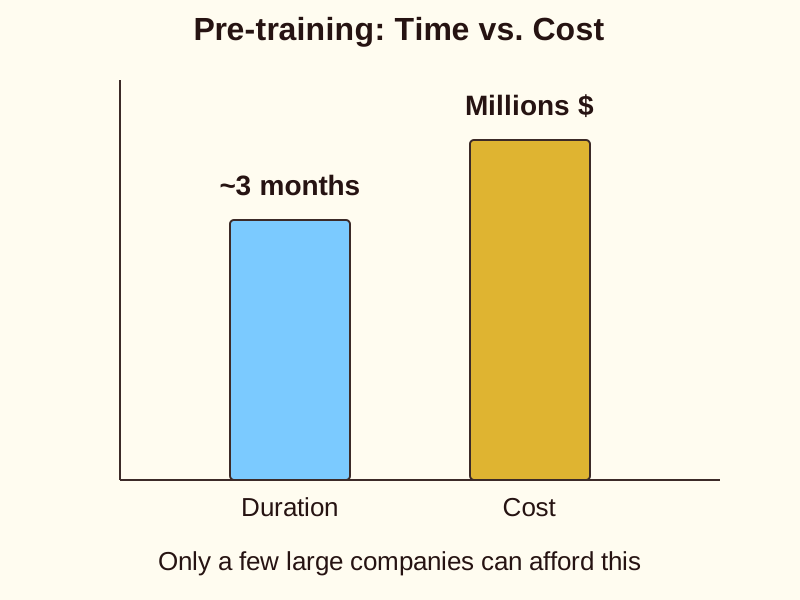
Because of these high costs, only a few large companies can build base models from scratch. Most developers start with an existing base model instead.
Learning to be an Assistant
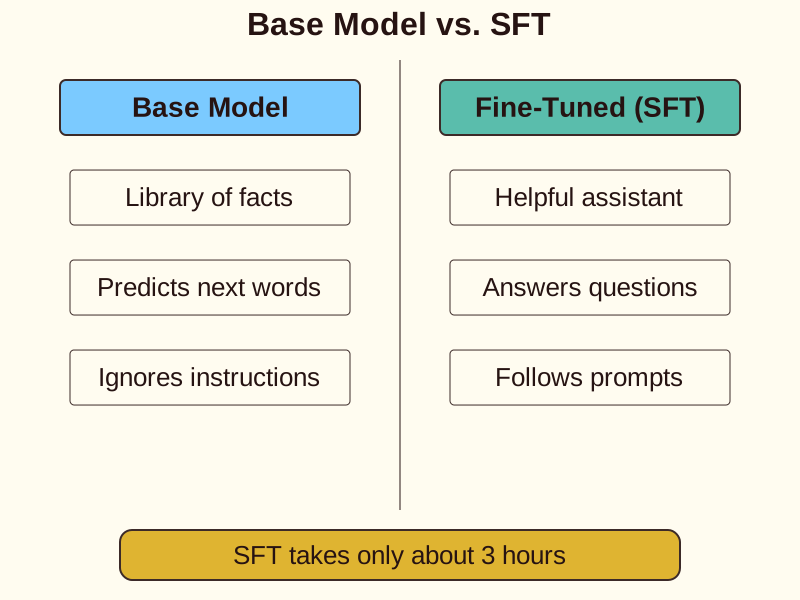
A base model is like a library of facts. To make it helpful, it needs Supervised Fine-Tuning (SFT).
During SFT, humans provide examples of good conversations. The model learns how to answer questions and follow specific prompts.
This stage is much faster than pre-training. It usually takes only about 3 hours to complete. It transforms a raw document simulator into a useful assistant.
Mastering Problem Solving
The final stage is Reinforcement Learning (RL). This is where the model practices solving difficult problems.
Think of this as a student doing practice exams. The model tries different strategies and receives feedback on which answers are best.
This stage helps the model discover the most efficient ways to think. It ensures the AI is not just repeating data but actually solving the task at hand.
- 1. Pre-training: Learns language basics by predicting next words from massive internet data over three months.
- 2. Fine-Tuning: Transforms the base model into an assistant using human conversation examples in just hours.
- 3. Reinforcement: Enables advanced problem-solving practice through trial strategies and performance feedback.
Lesson Wrap-Up
- Assess Base Model: Check if the model has the foundational domain knowledge required for your project.
- Check Fine-Tuning: Determine if the model can follow conversational prompts and format constraints reliably.
- Evaluate Reasoning: Look for reinforcement learning capabilities if the project requires multi-step logic or math.
Check yourself
Pre-training an AI model requires _____ resources and time compared to post-training.
- significantly more
- significantly less
Answer: significantly more
Pre-training takes months and millions of dollars, while post-training stages like fine-tuning take far less time and money.
In model development, _____ teaches assistant behavior using dialogue examples, while _____ helps the model practice solving complex tasks using feedback.
Answer: In model development, Supervised Fine-Tuning teaches assistant behavior using dialogue examples, while Reinforcement Learning helps the model practice solving complex tasks using feedback.
SFT uses direct human conversation examples to guide behavior, whereas RL lets the model practice strategies and refine them based on feedback.
What is the primary function of the Reinforcement Learning (RL) phase in LLM training?
- It lets the model practice solving problems and refine strategies through feedback.
- It scans billions of web pages to build an initial vocabulary.
- It reduces the financial cost of purchasing hardware for base model creation.
- It converts audio recordings into written text scripts.
Answer: It lets the model practice solving problems and refine strategies through feedback.
Reinforcement Learning allows the AI to practice problem solving like a student taking practice exams, learning which thinking strategies produce the best results.
Keep going
This is lesson 1 of 20 in LLM Fundamentals. Next up:
- Internet Data Curation
- Tokenization Fundamentals
- Neural Network Training
- Base Models Explained
- Text Generation Process
Wondering turns any topic into short lessons you can read, watch, or listen to, with practice questions and an AI tutor.