Free sample lesson · KIIP Level 5 Final Review
상징과 기념일
태극기는 3·1절에도 달고 현충일에도 다는데, 현충일에는 왜 다르게 달까요?
Lesson 1 of the Wondering course KIIP Level 5 Final Review
Korea's Name, Flag, and Anthem
The same flag can hang two different ways. Before we get to flag days, review the symbols the exam asks about most.
Korea's official name is Daehan Minguk (대한민국).
The national flag is the Taegeukgi (태극기). It carries the meaning of peace and harmony.
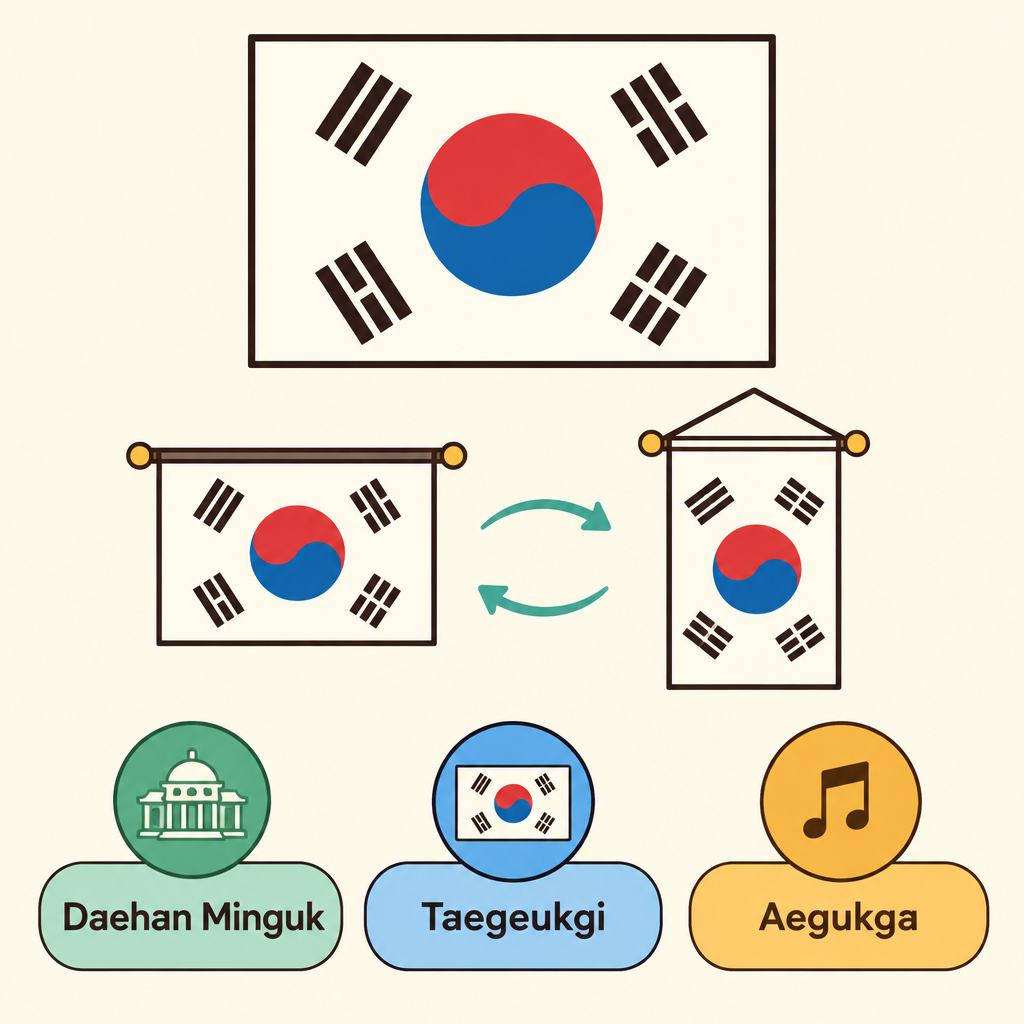
The Taegeukgi: a flag of peace and harmony
The national anthem is Aegukga (애국가). The name means a song that holds a heart of love for the country.
The Mugunghwa and the National Emblem
Korea's national flower is the mugunghwa (무궁화).
The national emblem (국가 문장) is built on two symbols you already know: the Taegeukgi and the mugunghwa shape.
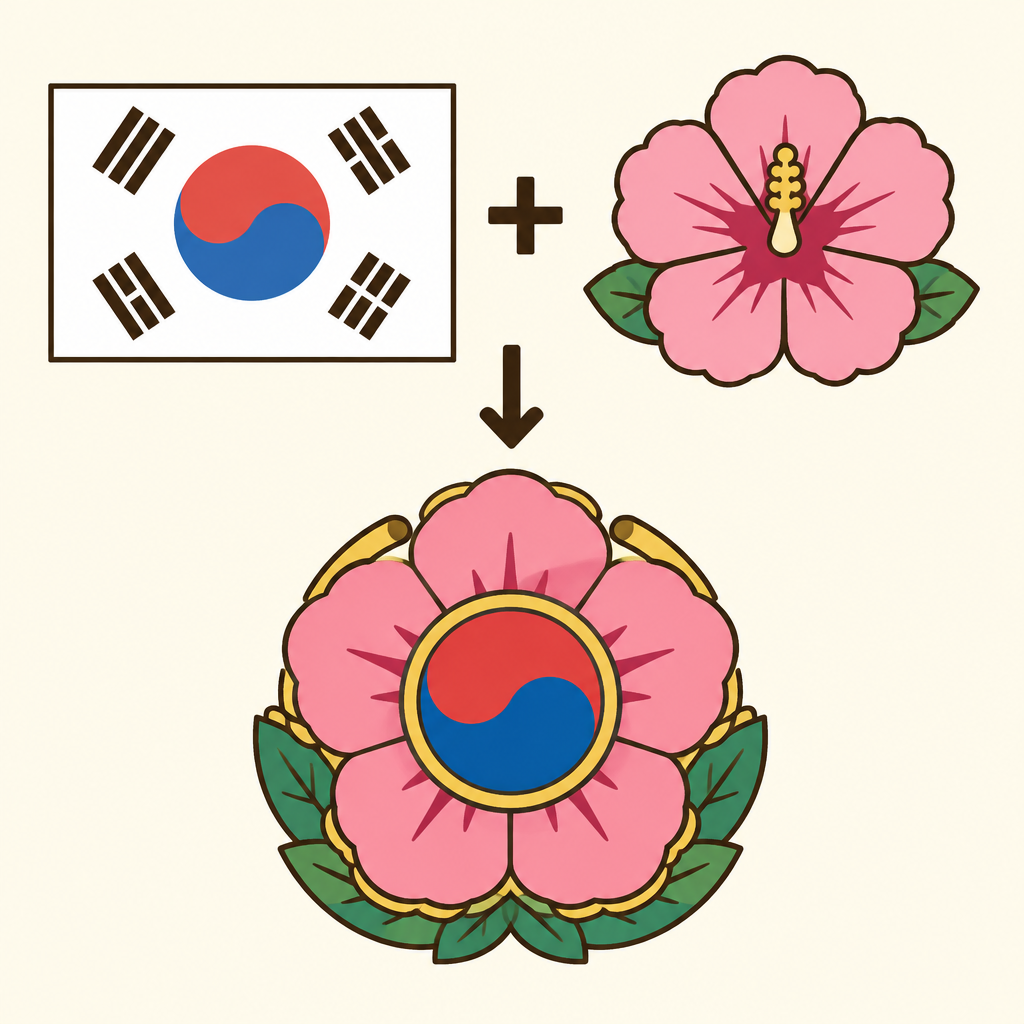
The emblem combines the flag and the mugunghwa
A useful memory link: flag plus flower makes the emblem.
If an answer choice names a different flower, or says the emblem is based on the anthem, it does not match the source.
Hangul: 1443 and 24 Letters
Hangul (한글) is Korea's own writing system. King Sejong of Joseon created it in 1443.
Its letters copy shapes. Consonants and vowels were modeled on the human speech organs and on the shapes of heaven, earth, and people.
Hangul has 24 letters in total: 14 consonants and 10 vowels.
Check the math on test day: $$14 + 10 = 24$$. Any other total is a distractor.
- Year created: Made by King Sejong of Joseon.
- Consonants: 14
- Vowels: 10
- Total letters: 24
- Modeled on
- Speech organs
- Heaven, earth, people
Six Days to Fly the Flag
You may fly the Taegeukgi any day. On these six days, you see it much more often.
March 1, Samiljeol: the independence movement against Japanese rule. June 6, Hyeonchungil: honoring those who gave their lives for the country.
July 17, Jeheonjeol: Korea's first constitution. August 15, Gwangbokjeol: liberation from Japanese rule. October 3, Gaecheonjeol: founding of Gojoseon, Korea's first state.
October 9, Hangeullal: King Sejong's proclamation of Hunminjeongeum, set to encourage Hangul study and spread.
- Samiljeol: Independence movement against Japanese rule.
- Hyeonchungil: Honors those who gave their lives for the country.
- Jeheonjeol: Korea's first constitution.
- Gwangbokjeol: Liberation from Japanese rule.
- Gaecheonjeol: Founding of Gojoseon, Korea's first state.
- Hangeullal: Proclamation of Hunminjeongeum.
Celebration or Mourning?
Imagine a KIIP Level 5 student who lives in an apartment. She wants to hang the Taegeukgi on her balcony on March 1 and June 6.
A neighbor says the flag should not look the same on both days.
The key question: is the day a celebration, or a day of mourning (조의를 표하는 날)?
- Check March 1: Samiljeol marks the independence movement, so it is a celebration and the flag flies normally at the top.
- Check June 6: Hyeonchungil honors those who gave their lives for the country, so it is a day of mourning.
- Lower it: On mourning days the flag goes to half-mast, about one flag-width below the top.
Result: she flies the flag normally on March 1 and at half-mast on June 6. The neighbor is right.
Exam Review: Spot the Odd One
Among the six flag days here, only June 6, Hyeonchungil is a mourning day.
The other five celebrate: independence, a constitution, liberation, a founding, and Hangul.
- Celebration days
- Mourning day
Watch two easy mix-ups. Samiljeol is the independence movement, while Gwangbokjeol is actual liberation. Hangul was created in 1443, but Hangeullal marks its proclamation.
For any flag question, ask first: celebration or mourning?
Check yourself
The official name of the Republic of Korea is _____
- Daehan Minguk
- Joseon
Answer: Daehan Minguk
Korea's official country name is Daehan Minguk (대한민국). Joseon was the name of an earlier dynasty, the one in which King Sejong created Hangul. It is not the current official name.
Korea's national flag, the _____, carries the meaning of peace and harmony. The national anthem, _____, is a song of love for the country. The flower that symbolizes Korea is the _____.
Answer: Korea's national flag, the Taegeukgi, carries the meaning of peace and harmony. The national anthem, Aegukga, is a song of love for the country. The flower that symbolizes Korea is the mugunghwa.
Each symbol has its own role. The Taegeukgi (flag) stands for peace and harmony. Aegukga (anthem) means a song of love for the country. The mugunghwa is the national flower. Korea's national emblem is also based on the shapes of the Taegeukgi and the mugunghwa.
Hangul was created by King Sejong in 1443. How is its set of basic letters made up?
- 24 letters: 14 consonants and 10 vowels
- 24 letters: 10 consonants and 14 vowels
- 28 letters: 14 consonants and 14 vowels
- 21 letters: 14 consonants and 7 vowels
Answer: 24 letters: 14 consonants and 10 vowels
Hangul has 24 letters: 14 consonants and 10 vowels. Its letters were modeled on the human speech organs and on the shapes of heaven, earth, and human. A common exam trap is swapping the two numbers.
Keep going
This is lesson 1 of 10 in KIIP Level 5 Final Review. Next up:
- 가족과 일터
- 주거와 복지
- 교육 제도
- 전통 문화
- 정부 구성
Wondering turns any topic into short lessons you can read, watch, or listen to, with practice questions and an AI tutor.