Free sample lesson · K12 AI Literacy Essentials
AI Basics
Are language models just playing a game of word prediction?
Lesson 1 of the Wondering course K12 AI Literacy Essentials
The Core of Modern AI
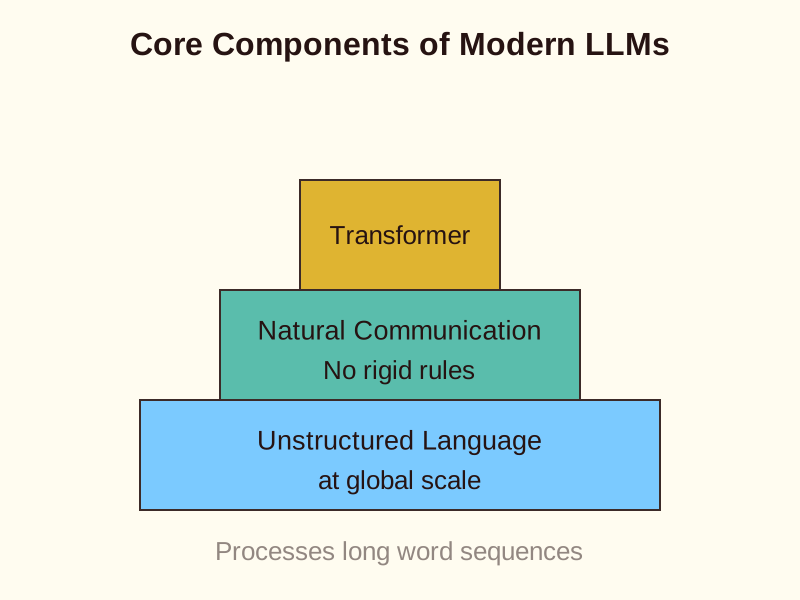
Large Language Models, or LLMs, represent a massive shift in how we interact with technology. They are the first systems capable of handling unstructured human language at a global scale.
Unlike older systems that relied on rigid rules, these models allow for natural communication. You can speak to them much like you would speak to another person.
At their heart, these models are built on a specific neural network architecture called a transformer. This design is what allows the AI to process long sequences of words effectively.
Giant Statistical Machines
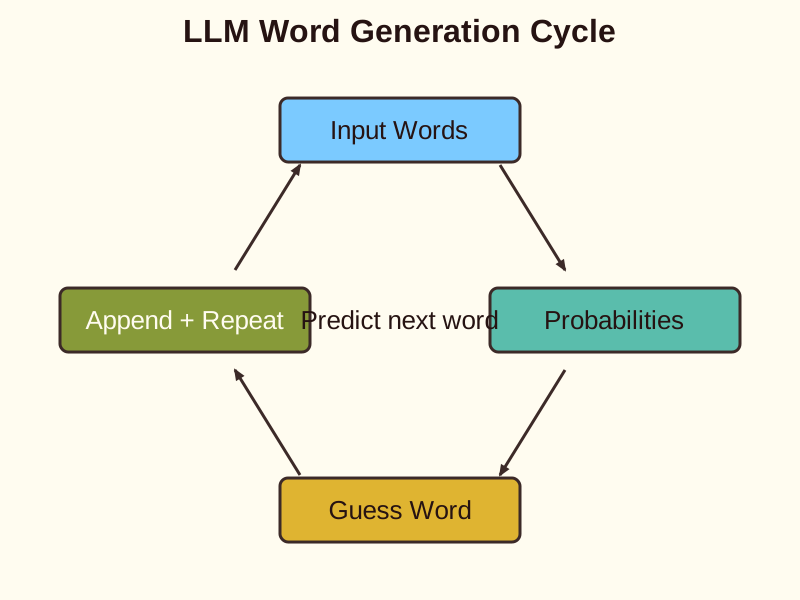
It is helpful to think of an LLM as a giant statistical prediction machine. It does not "know" facts in the way humans do.
Instead, the model calculates the mathematical probability of what comes next. It looks at the words already present and guesses the most likely following word.
By repeating this process millions of times, the AI generates coherent sentences. It is essentially playing a high-stakes game of word prediction based on patterns it found during training.
Pattern Recognition in Text
LLMs learn by analyzing vast amounts of existing text. They identify deep patterns in how humans structure language, logic, and arguments.
When you provide a prompt, the AI matches your input against these learned patterns. It then generates language that follows the established statistical path.
This process allows the model to mimic human styles. It can write a poem, a technical report, or a code snippet by following the specific patterns associated with those formats.
- Analyze Text: The model ingests vast amounts of existing text to identify deep structural patterns.
- Match Prompt: When given a prompt, the AI matches the input against these learned statistical paths.
- Mimic Style: It generates language that faithfully mimics specific formats like poems, reports, or code.
Context Over Keywords
Traditional search engines often rely on simple keyword matching. They look for specific strings of text to find a result.
LLMs operate differently. They capture deeper context, nuance, and reasoning within a conversation.
Because they use the transformer architecture, they can track relationships between words that are far apart in a sentence. This allows the AI to understand the "why" behind a question rather than just the "what."
- Search Engines
- LLMs
The Transformer Advantage
The transformer architecture is the engine behind the LLM. It excels at handling sequences of data, making it perfect for language.
Traditional models often struggled with long sentences. They would forget the beginning of a paragraph by the time they reached the end.
Transformers solve this by paying "attention" to all parts of the input simultaneously. This creates a more holistic understanding of the text, leading to more accurate and relevant predictions.
Predictive AI in Practice
When an AI performs a task, it is executing a sequence of statistical choices. Every word it outputs is a result of these internal calculations.
This explains why AI can sometimes sound very confident even when it is wrong. It is simply following the most probable path of words based on its training data.
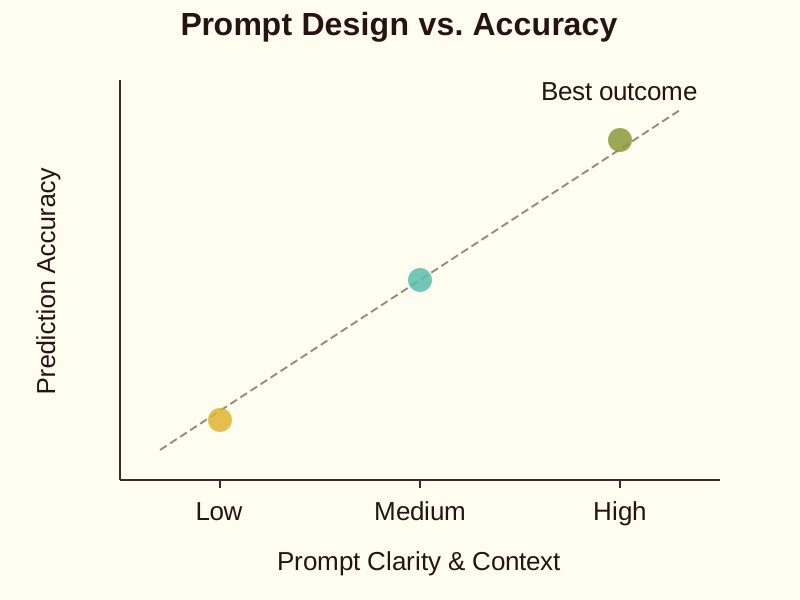
Understanding this mechanism helps you design better prompts. If you provide clear patterns and context, the statistical machine is more likely to predict the correct outcome for your specific needs.
Putting It All Together
- Recognize Mechanism: Acknowledge that LLMs are statistical prediction engines rather than conscious knowers.
- Leverage Context: Provide rich context and clear patterns to guide the AI's probabilistic path toward desired outcomes.
- Evaluate Critically: Assess AI outputs by understanding why confident errors occur due to high-probability training paths.
Check yourself
At their core, Large Language Models function as statistical machines that calculate the _____ of the next token based on patterns in training data.
- probability
- factuality
Answer: probability
LLMs do not lookup static facts like databases; instead, they calculate the mathematical probability of the next word or token based on learned statistical patterns.
While traditional search engines process language using _____, modern LLMs capture deeper context by utilizing _____ neural networks.
Answer: While traditional search engines process language using keyword matching, modern LLMs capture deeper context by utilizing transformer neural networks.
Traditional search relies on simple keyword matching across exact strings, whereas LLMs use the transformer architecture to process long sequences and understand context.
Why might an LLM generate inaccurate or false statements with high apparent confidence?
- It is following the most probable statistical path of words, regardless of truth.
- It retrieves verified facts from an internal database that contains corrupted entries.
- It deliberately generates false information when the user prompt lacks technical keywords.
- It applies rigid logic rules that conflict with natural language syntax.
Answer: It is following the most probable statistical path of words, regardless of truth.
LLMs do not verify factual accuracy against an external knowledge base. They execute statistical choices, outputting words that follow the most probable linguistic path learned during training.
Keep going
This is lesson 1 of 6 in K12 AI Literacy Essentials. Next up:
- Smart Learning
- Machine Bias
- Algorithm Logic
- Digital Rights
- Social Good
Wondering turns any topic into short lessons you can read, watch, or listen to, with practice questions and an AI tutor.