Free sample lesson · Introduction to Jazz History
Origins
Imagine walking through a 19th-century New Orleans market where African rhythms collide with European brass bands.
Lesson 1 of the Wondering course Introduction to Jazz History
The Birth of Jazz
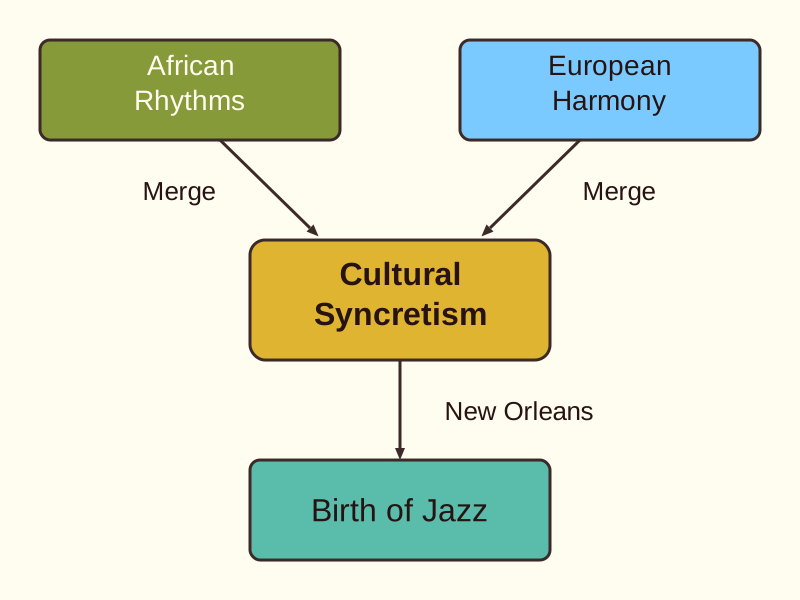
Understanding the roots of jazz reveals how diverse cultural traditions can merge to create a completely new form of expression.
The New Orleans Melting Pot
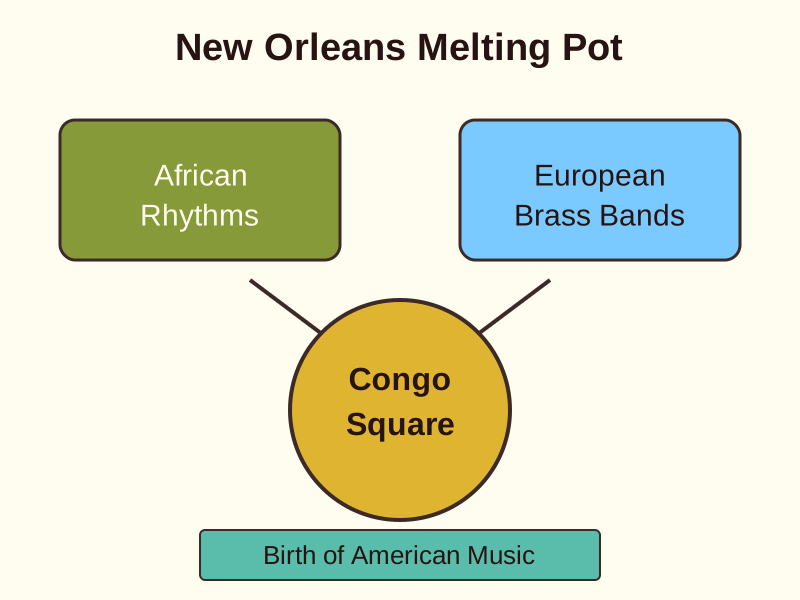
Imagine walking through a 19th-century New Orleans market. African rhythms collide with European brass bands.
This city was a unique melting pot. It provided the perfect environment for different musical worlds to meet.
In places like Congo Square, enslaved people gathered to keep their musical heritage alive. This foundation eventually changed the world.
Merging Two Worlds
Jazz was born from cultural syncretism. This is the blending of diverse traditions into something new.
It combined West African rhythmic sensibilities with European harmonic structures.
African traditions brought call-and-response patterns and complex polyrhythms. European influence added brass instruments and formal arrangements. This synthesis created a revolutionary musical language.
- African Influence
- European Influence
The Roots of the Sound
Before it was called 'Jazz,' several precursors set the stage.
Spirituals and work songs provided emotional depth. The blues contributed a specific harmonic framework and raw feeling.
Meanwhile, Ragtime introduced highly syncopated rhythms. These styles merged to give jazz its famous 'swing' feel and improvisational spirit.
A Global Legacy
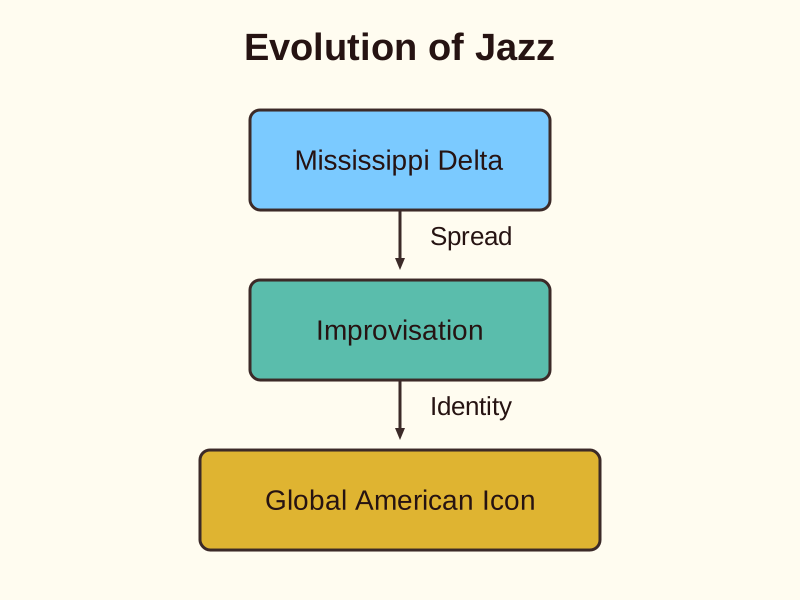
What started in the Mississippi Delta soon spread across the globe.
Jazz became more than just music. It defined the American musical identity for the 20th century.
By mastering improvisation, jazz musicians proved that diverse cultural roots can create a unified, powerful form of expression.
Putting It All Together
- Gathering: Diverse cultures meet in the unique melting pot of New Orleans.
- Syncretism: African rhythms blend with European harmonies and instruments.
- Integration: Spirituals, Blues, and Ragtime merge into a swing feel.
- Global Impact: Improvisation creates a unified, powerful American identity.
Check yourself
Jazz music primarily developed within African-American communities in _____.
- New Orleans
- New York City
Answer: New Orleans
New Orleans is considered the birthplace of jazz due to its unique mix of cultures in the late 19th century.
In the development of jazz, _____ traditions contributed polyrhythms and call-and-response, while _____ traditions provided harmonic structures and brass instruments.
Answer: In the development of jazz, African traditions contributed polyrhythms and call-and-response, while European traditions provided harmonic structures and brass instruments.
Jazz is a 'syncretic' genre, meaning it blends the rhythmic complexity of African music with the structural systems of European music.
Which musical style contributed 'syncopated rhythms' to early jazz?
- Ragtime
- Opera
- Country
Answer: Ragtime
Ragtime was a major precursor to jazz, famous for its 'ragged' or syncopated timing.
Keep going
This is lesson 1 of 13 in Introduction to Jazz History. Next up:
- Ragtime
- Blues
- Dixieland
- Swing
- Bebop
Wondering turns any topic into short lessons you can read, watch, or listen to, with practice questions and an AI tutor.