Free sample lesson · Information to Knowledge Systems
Stop Moving Bricks
Why would an architect steal bricks instead of a blueprint?
Lesson 1 of the Wondering course Information to Knowledge Systems
What You Will Learn
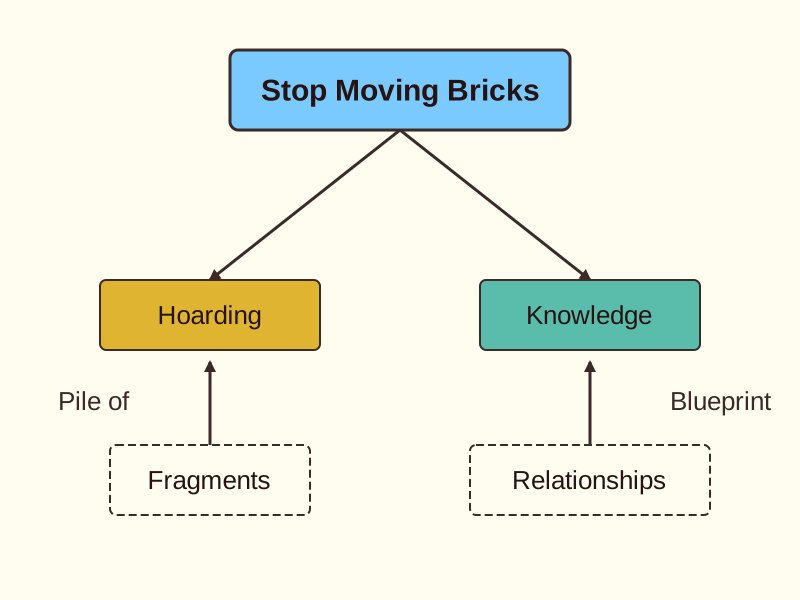
The brick metaphor prevents mistaking saved articles, notes, or highlights for knowledge you can rebuild from.
The Architect and the Bricks
Imagine an architect who sees a beautiful building while traveling. To bring it home, they decide to demolish it and carry the bricks back in a suitcase.
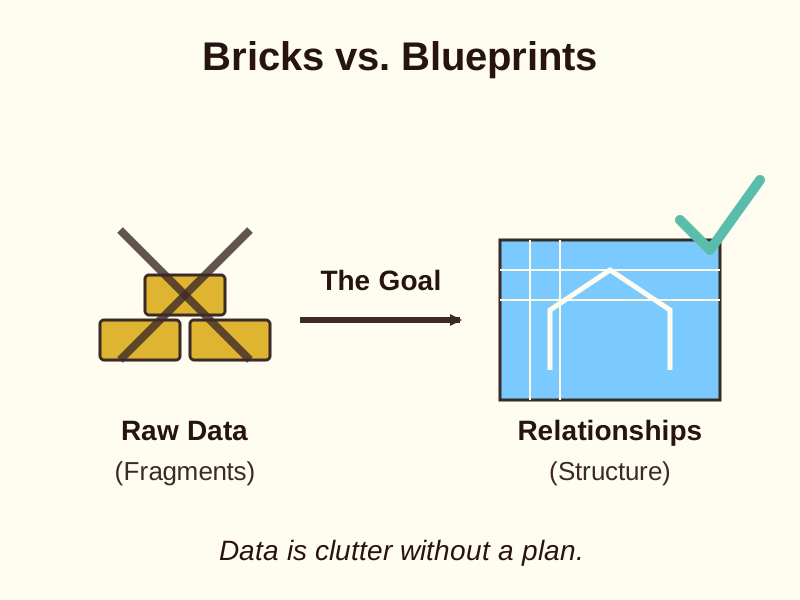
This sounds absurd. A pile of bricks is just heavy material. It does not tell you how the building was made.
To recreate the building, the architect needs the blueprint. The blueprint shows the relationships between the parts. Without it, the bricks are just clutter.
The Information Hoarding Trap
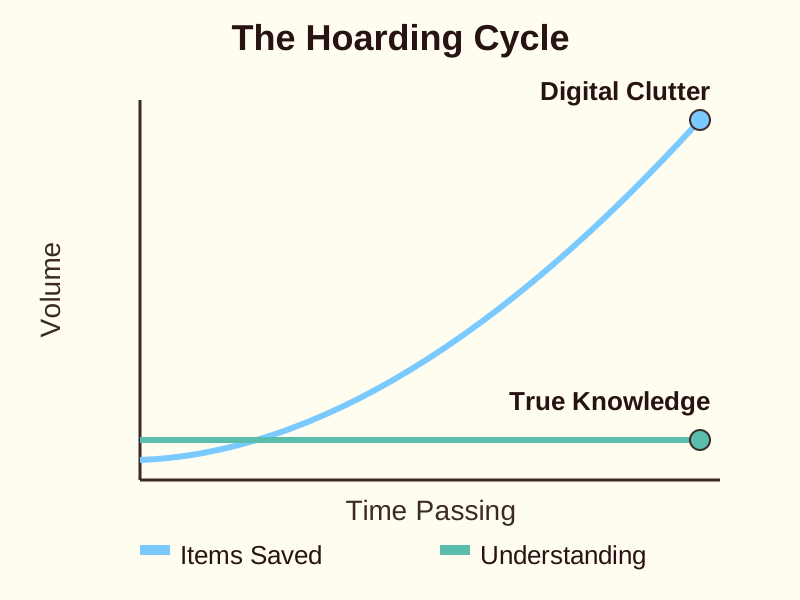
Many learners act like the architect with the suitcase. They scroll through social media, save articles, and highlight dozens of quotes.
Storing information on a phone is not the same as building knowledge. You might have a folder full of AI tips, but can you explain how the models actually work?
Saving more fragments does not lead to understanding. It only increases the amount of digital clutter you have to manage.
Fragments vs Structure
A fragment is a single piece of information, like a quote or a fact. It is a brick.
Structure is the map of how those facts connect. It includes causes, consequences, and workflows.
Knowledge begins when you stop collecting pieces and start identifying relationships. A concept map or a diagram is a blueprint. A list of bookmarks is just a pile of bricks.
- Fragments (Bricks)
- Structure (Blueprint)
Building Reusable Knowledge
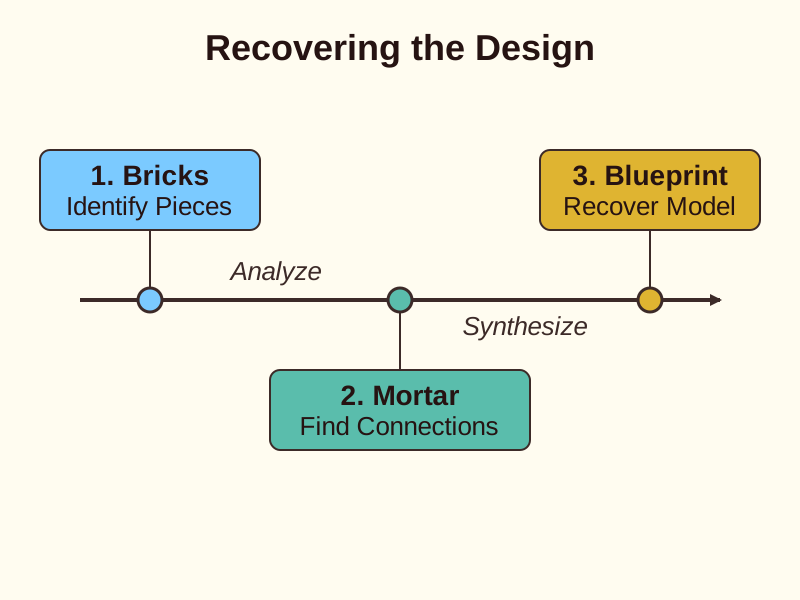
To make your learning useful, you must recover the design structure of an idea.
Ask yourself: How do these pieces work together? Could I rebuild this idea from scratch using my notes?
If you can explain the underlying model, you have a blueprint. If you only have a screenshot, you are still just moving bricks. Focus on the connections to make your knowledge truly reusable.
How to Apply It in Real Life
- Filter: Stop saving every interesting fragment and only keep what you intend to structure.
- Connect: When taking a note, write down how this new fact relates to something you already know.
- Map: Draw a quick sketch or concept map to visualize the 'blueprint' of the information.
- Test: Try to explain the core model to someone else without looking at your saved fragments.
Check yourself
In the brick metaphor, a _____ represents a single isolated fact or quote.
- fragment
- structure
Answer: fragment
A fragment (brick) is an isolated piece of info. Structure (the blueprint) is how those pieces connect.
To build reusable knowledge, you should _____ incoming fragments, _____ them to what you know, and _____ the relationships between them.
Answer: To build reusable knowledge, you should filter incoming fragments, connect them to what you know, and map the relationships between them.
This sequence moves you from simply hoarding 'bricks' to creating a 'blueprint' you can actually use.
Which scenario describes 'Structure Recovery' rather than 'Fragment Collection'?
- Saving 50 bookmarks about AI tools into a browser folder.
- Highlighting the most interesting sentences in a long article.
- Drawing a diagram showing how different parts of a business model interact.
- Taking a screenshot of a complex infographic to view later.
Answer: Drawing a diagram showing how different parts of a business model interact.
Structure recovery focuses on the relationships and models that allow you to rebuild the idea, not just storing the pieces.
Keep going
This is lesson 1 of 8 in Information to Knowledge Systems. Next up:
- Information Versus Knowledge
- DIKW in a Spreadsheet
- Seven Layers of Knowing
- Concepts and Connections
- Test the Links
Wondering turns any topic into short lessons you can read, watch, or listen to, with practice questions and an AI tutor.