Free sample lesson · How Not to Study a Disease
Human Cost
What happens when decades of scientific research fail the millions of families desperately waiting for a cure?
Lesson 1 of the Wondering course How Not to Study a Disease
More Than a Medical Condition
Textbooks describe Alzheimer's disease as a medical condition. Families who live with it describe something far harsher.
Alzheimer's is a catastrophic illness. It destroys the personality and identity of the person who has it.
At the same time, it places tremendous burdens on families and caregivers.
So keep two kinds of damage in mind: what the patient loses, and what the people around them must carry.
- Patient loses
- Personality: The traits that made them who they were
- Identity: Their sense of self
- Others carry
- Families: Face tremendous burdens
- Caregivers: Share the weight of daily care
Alzheimer's harms the patient and everyone around them.
Dorothy's Story
The book opens with the story of Dorothy.
Dorothy lived a vibrant life. She took good care of herself as she aged.
Even so, she fell victim to Alzheimer's disease. Taking care of herself did not keep it away.
The author calls her story a stern reminder of what a nasty disease Alzheimer's is.
- Vibrant life: Dorothy lived fully and energetically.
- Careful aging: She took good care of herself as she aged.
- Alzheimer's: She still fell victim to the disease.
- Stern reminder: Her story shows what a nasty disease Alzheimer's is.
A Person Slipping Away
What makes Alzheimer's so cruel is what it takes.
In Dorothy's case, her personality literally slipped away from the body in which it lived.
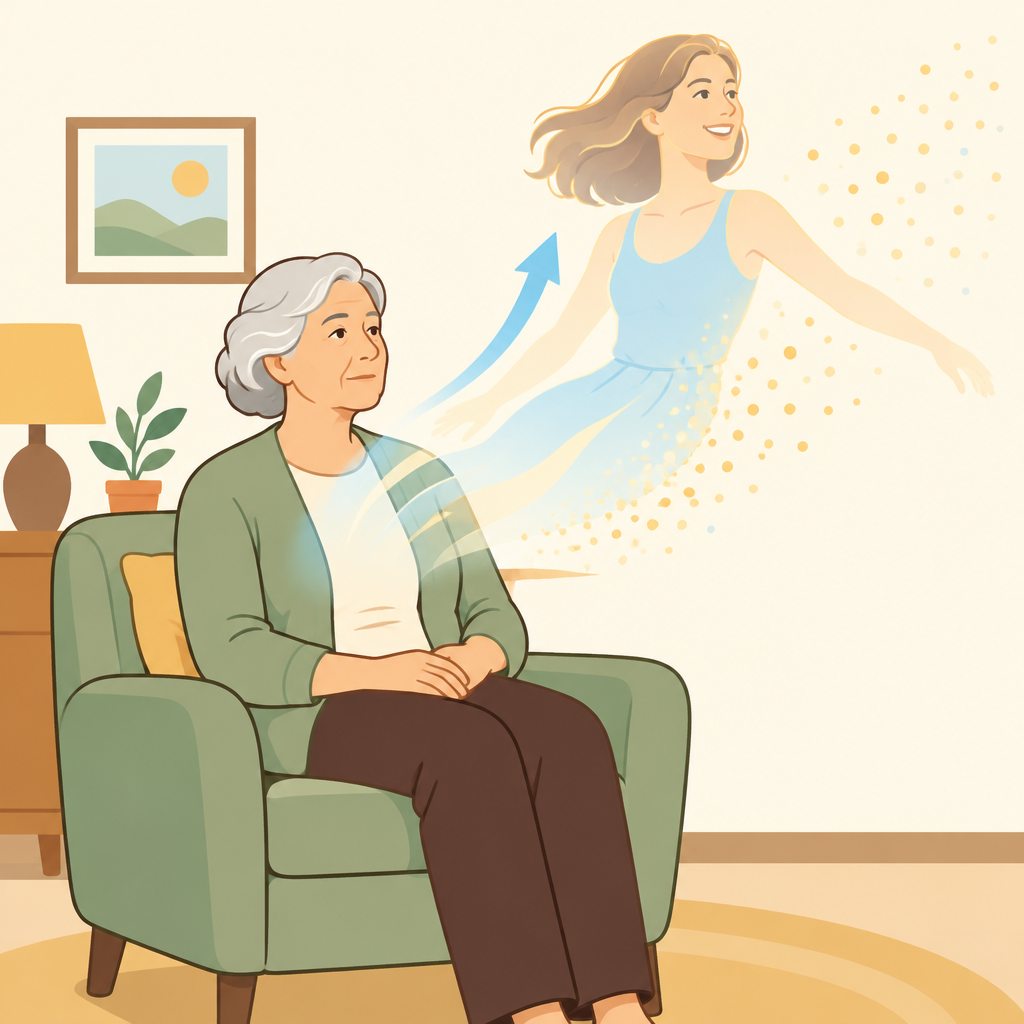
Notice that the body stays in the chair while the vibrant self drifts off, which is exactly how Alzheimer's separates a person from their personality.
Her body remained. The person her family knew faded.
This is the core loss. The disease erases who someone is while they are still physically present.
One Among Millions
Dorothy's story is one among millions.
Each case reaches beyond the patient. The entire family feels it, along with the wider caregiving network of people who support the patient.
- Caregiving network: The wider circle of people supporting the patient.
- Entire family: Relatives who watch a loved one change.
- Patient: The person losing personality and identity.
The disease affects every circle, not only the center.
Caregivers carry tremendous burdens as the person they love changes.
When you think of one diagnosis, picture the circle of people around it.
Why Failed Research Hurts
This human side makes research failures far more tragic.
Behind every failed clinical trial and flawed hypothesis are real people waiting for help.
Repeating the same failed approaches costs time that patients and families do not have.
That is why getting the science right matters so much, and why the urgency is real.
What to Remember
Alzheimer's destroys a person's personality and identity.
It places tremendous burdens on families and caregivers, so its harm spreads far beyond one patient.
Dorothy's story shows that even a vibrant, careful person can be taken by it.
When you read about research, remember the millions of families depending on it.
Check yourself
Beyond memory loss, Alzheimer's disease can destroy a person's _____
- personality and identity
- physical strength only
Answer: personality and identity
Alzheimer's is described as a catastrophic illness that destroys personality and identity. A once-vibrant person's personality can slip away from the body in which it lived, while physical strength may remain for some time.
Dorothy lived a vibrant life and took good care of herself as she aged, yet she still developed Alzheimer's. What does her case best illustrate?
- A healthy, active life does not guarantee protection from Alzheimer's
- Alzheimer's mostly strikes people who neglected their health
- Alzheimer's rarely changes a person's personality
- Alzheimer's is a rare condition affecting few families
Answer: A healthy, active life does not guarantee protection from Alzheimer's
Dorothy's story shows that even a healthy, vibrant person can fall victim to Alzheimer's. Her story serves as a stern reminder of how nasty the disease is, and it is one among millions.
Does Alzheimer's disease mainly affect only the patient, leaving family members largely unaffected?
- Yes
- No
Answer: No
No. Alzheimer's places tremendous burdens on families and caregivers. It affects the whole family and caregiving network, not just the person diagnosed.
Keep going
This is lesson 1 of 26 in How Not to Study a Disease. Next up:
- Auguste Deter
- Politics & Naming
- Rare to Common
- Preclinical Diagnosis
- Amyloid Cascade
Wondering turns any topic into short lessons you can read, watch, or listen to, with practice questions and an AI tutor.