Free sample lesson · Good Inside
Good Inside
What if challenging behavior isn't a sign of a 'bad' child, but a signal that they're struggling?
Lesson 1 of the Wondering course Good Inside
The Core Belief
The foundational principle of this approach is that everyone is good inside. This means that your inherent worth is separate from your actions.
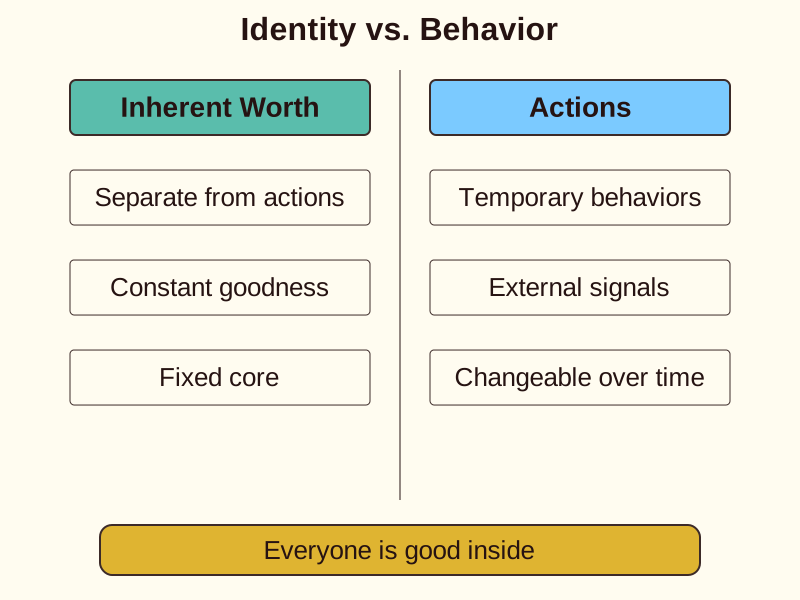
Behavior is not a measure of character. Even when a child acts out, they remain a good person at their core.
This mindset shift changes how you see your child. You move away from judgment and toward understanding.
Behavior as a Signal
Difficult behavior is a signal of an internal struggle. It is not evidence of a bad child.
When a child has a hard time, they are lacking the skills to manage a situation. They are not trying to be difficult.
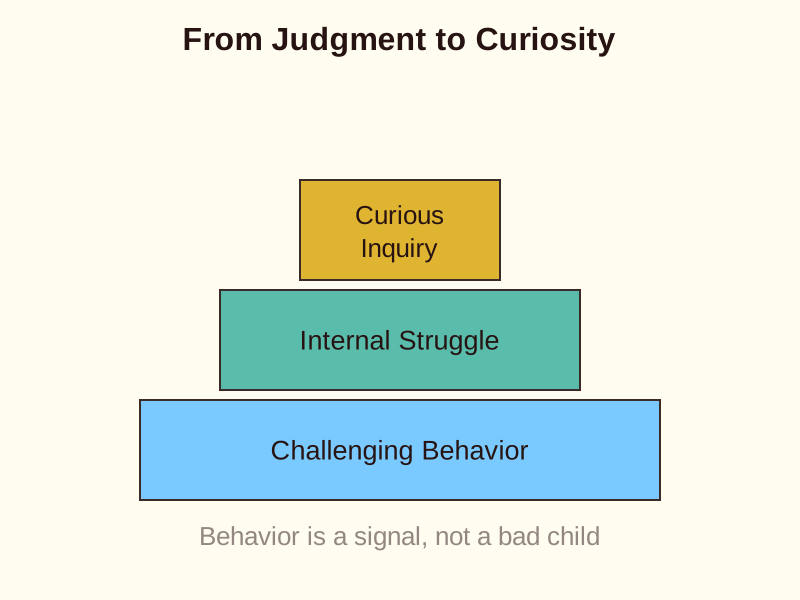
Viewing actions as signals allows you to be curious. You can ask what is happening beneath the surface instead of focusing on punishment.
Safety and Growth
Believing in goodness creates psychological safety. This safety is the primary requirement for a child to learn and grow.
When children feel seen as good people, they are more open to change. Shame and labels often shut down the ability to learn.
- Shame & Labels
- Psychological Safety
By separating identity from behavior, you create a space where genuine connection can happen.
Applying it to Yourself
The good inside framework applies to parents too. You are good inside even when you make mistakes or lose your temper.
Parenting is difficult work. You can be a good parent who is having a hard time.
When you accept your own goodness, it becomes easier to extend that same compassion to your child. Growth starts with this mutual respect.
- Accept Self: Recognize your own inherent goodness even when you make mistakes.
- Extend Compassion: Channel that same understanding toward your child's struggles.
- Grow Together: Build mutual respect and psychological safety for both of you.
How to Apply the Good Inside Framework
- Separate Worth: Remind yourself that the child is good inside and not acting out to be bad.
- Look for Signals: Identify the internal struggle or missing skill causing the difficult behavior.
- Create Safety: Respond with curiosity and connection instead of punishment or shame.
Check yourself
In the Good Inside framework, a child's difficult behavior indicates that they _____.
- are lacking skills to manage the situation
- are inherently a bad person at their core
Answer: are lacking skills to manage the situation
Difficult behavior is a signal of an internal struggle or a lack of skills to manage a situation, not proof of a bad character.
In this approach, difficult behavior is seen as a _____ of internal struggle, while the individual's core remains _____.
Answer: In this approach, difficult behavior is seen as a signal of internal struggle, while the individual's core remains good.
Viewing actions as signals allows parents to shift from judgment to curiosity, recognizing that core identity is separate from behavior.
Why is psychological safety considered essential for a child's development in this framework?
- It eliminates the need for any adult guidance or boundary setting.
- It makes children feel seen as good, keeping them open to change and learning.
- It ensures that children will never experience frustrating or difficult situations.
- It proves that actions have no impact on social relationships.
Answer: It makes children feel seen as good, keeping them open to change and learning.
When children feel seen as fundamentally good people, they are protected from shame and remain open to learning and positive change.
Keep going
This is lesson 1 of 22 in Good Inside. Next up:
- The Core Principle: Good Inside
- Identity Matters
- Two Truths
- Role Clarity
- Sturdy Boundaries
Wondering turns any topic into short lessons you can read, watch, or listen to, with practice questions and an AI tutor.