Free sample lesson · Fundamentals of Electrical Engineering
Electric Charge
What invisible force causes lightning and static cling?
Lesson 1 of the Wondering course Fundamentals of Electrical Engineering
The Invisible Force Behind Lightning
What invisible force causes lightning and static cling? The answer is electric charge.
Electric charge is the basic property of matter responsible for electrical effects.
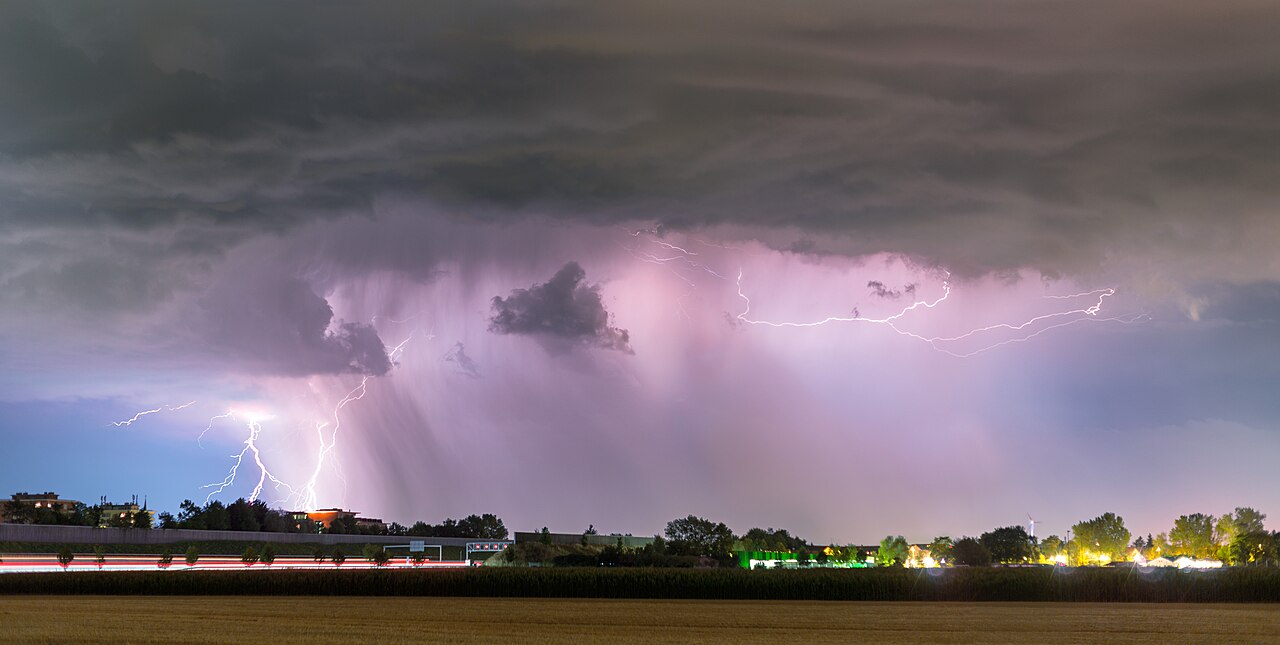
Lightning over ESO Headquarters · ESO/P. Horálek · CC BY 4.0 · Wikimedia Commons
You cannot see charge directly. You see what it does: static cling, a tiny spark, or a huge bolt of lightning.
Every electrical event you will study starts with this one idea.
Two Kinds of Charge
Electric charge comes in two forms: positive and negative.
- Electric charge: Basic property of matter behind electrical effects.
- Positive charge: One of the two forms.
- Negative charge: The opposite form.
An object can carry positive charge or negative charge. Either way, we call it a charged object.
The sign matters. It decides how two charged objects behave toward each other.
Think of the two signs as opposite partners. That idea sets up the rule on the next page.
Opposites Attract, Likes Repel
Here is the core rule: opposite charges attract, while like charges repel.
Positive and negative pull toward each other.
Two positives push apart. Two negatives also push apart.
A common slip is thinking only one sign repels. Any matching pair repels, whatever the sign.
Force Without Touching
Charged objects can exert forces without touching.
Picture a balloon sticking to a wall. No glue or tape holds it there. The attraction between charges does the work.
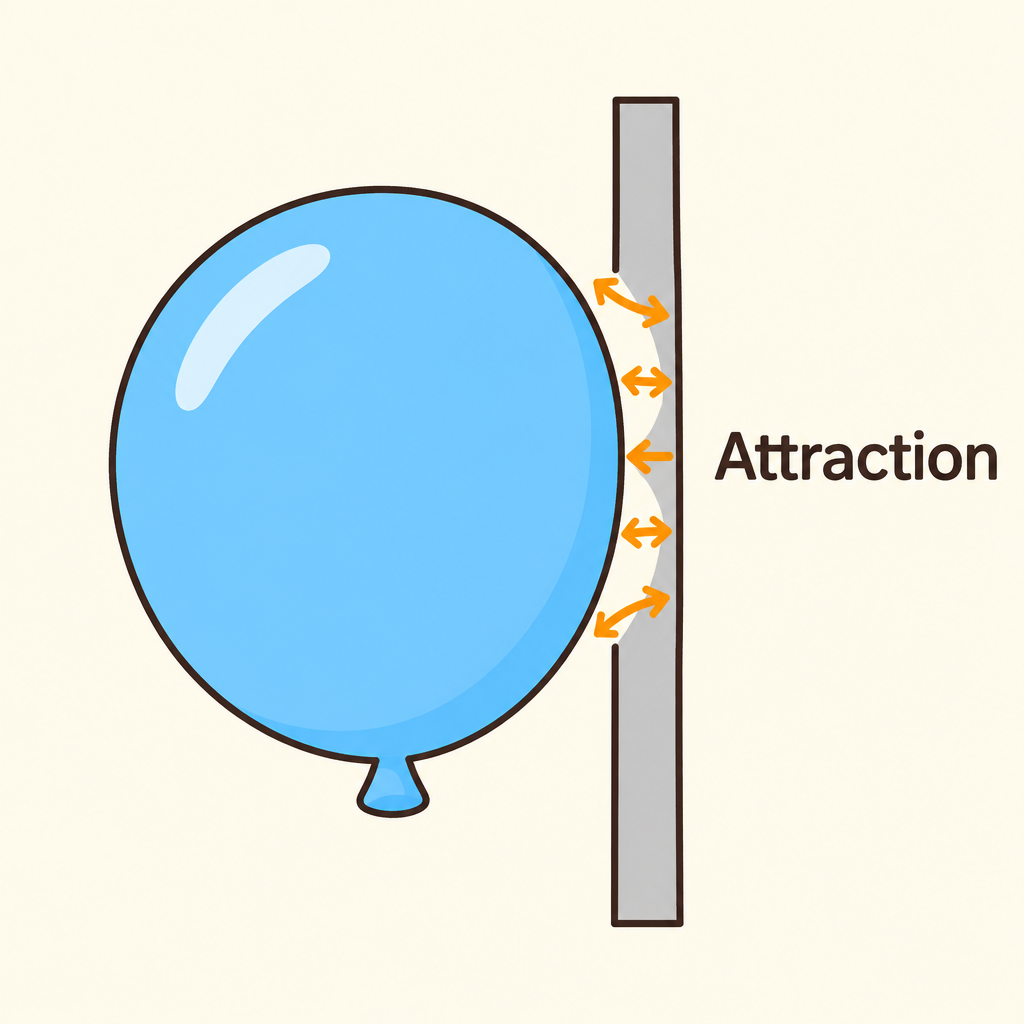
Notice there is no tape or glue: the pull between charges alone keeps the balloon in place.
This is why charge feels invisible. The push or pull reaches across a gap.
Later, you will describe this reach using electric fields.
Small Spark, Giant Bolt
The same idea explains events of very different sizes.
Walk across a carpet, touch something, and you may feel a small spark.
Lightning is a large electrical discharge in the sky. Both come from electric charge.
- Carpet spark
- Lightning
The scale changes. The basic cause stays the same.
The Foundation for What Comes Next
Electric charge is the fundamental source of all electrical phenomena.
Understanding it prepares you for electric fields, voltage, current, circuits, and electronic devices.
- Electronic devices
- Circuits
- Voltage and current
- Electric fields
- Electric charge: The foundation for all later study.
Each topic rests on understanding electric charge.
Key takeaways: charge is positive or negative. Opposites attract and likes repel. Charged objects act without touching.
Next time you see a spark or a clinging balloon, ask: which charges are interacting?
Check yourself
Electric charge is a basic property of matter responsible for electrical effects.
- True
- False
Answer: True
This statement is true. Electric charge is a property of matter that produces electrical effects such as sparks, static cling, and lightning.
Opposite charges _____, while like charges _____.
Answer: Opposite charges attract, while like charges repel.
Positive and negative charges pull toward each other. Two positive charges or two negative charges push apart.
A balloon sticks to a wall without glue or tape. Which explanation best fits this behavior?
- Charges exert an attractive force without touching
- The balloon is held by invisible glue
- Only positive charges can make objects stick
- The wall pushes the balloon away
Answer: Charges exert an attractive force without touching
Charged objects can attract across a gap, so the balloon can stick to the wall without touching it beforehand or using adhesive.
Keep going
This is lesson 1 of 9 in Fundamentals of Electrical Engineering. Next up:
- Voltage Current
- Resistance Basics
- Simple Circuits
- Circuit Types
- Passive Devices
Wondering turns any topic into short lessons you can read, watch, or listen to, with practice questions and an AI tutor.