Free sample lesson · Fundamentals of AI Agents
Defining Agents
What if your software could think and act instead of just following code?
Lesson 1 of the Wondering course Fundamentals of AI Agents
Beyond the Chatbot
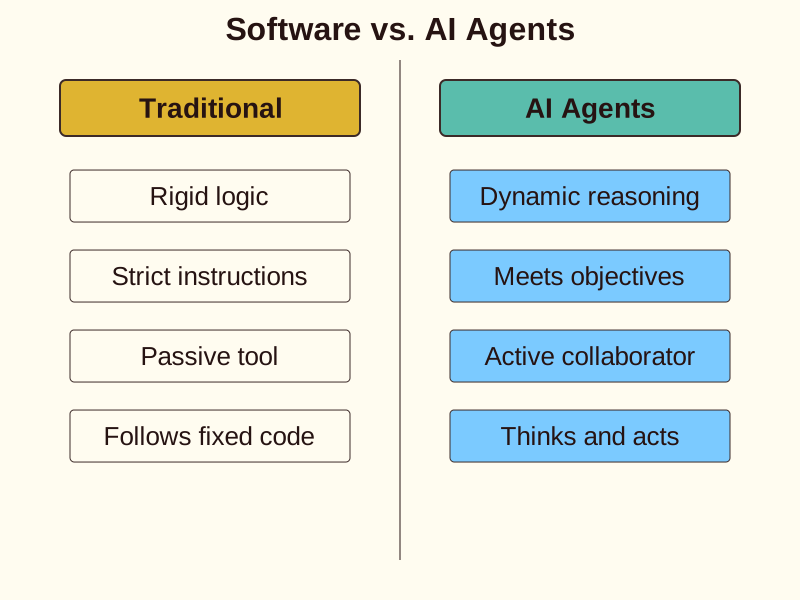
An AI agent is a system designed to meet specific objectives within an environment. It is more than a simple chatbot that replies to text.
Traditional software relies on rigid logic. It follows strict instructions without flexibility.
Agents represent a shift from passive tools to active collaborators. They do not just follow code; they think and act.
The Brain of the Agent
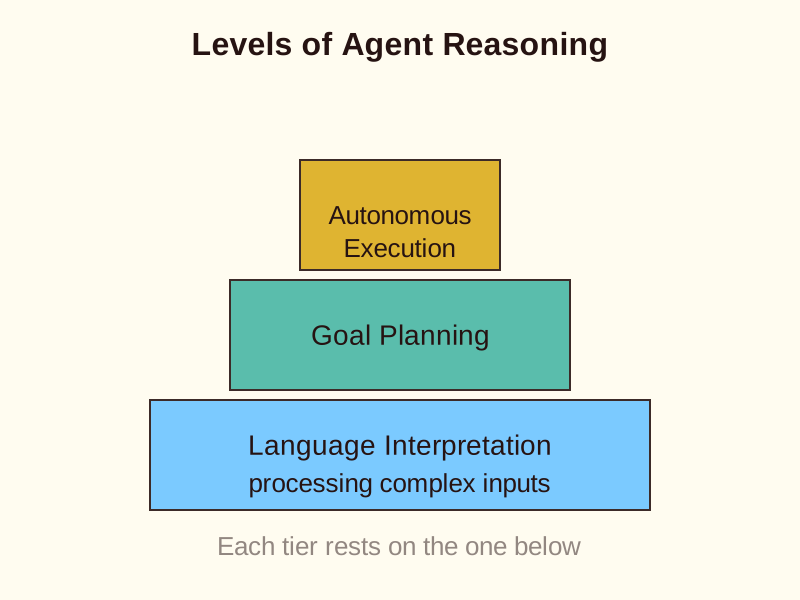
An agent uses a large language model as its central brain. This allows the system to interpret complex instructions.
Instead of following a fixed path, the agent decides which steps to take. It reasons about its goals to find the best solution.
This autonomy allows the agent to navigate tasks without constant human intervention. It maintains a sense of purpose throughout the process.
The Loop of Action
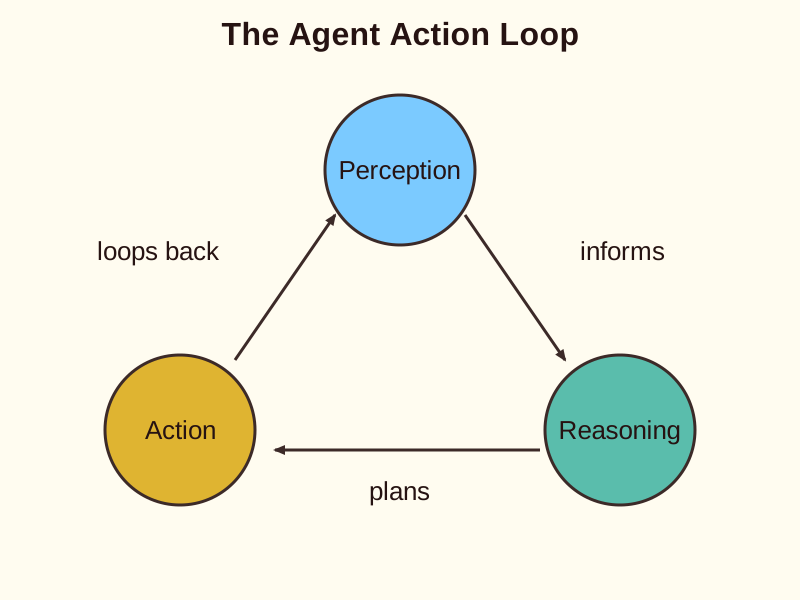
Agents operate through a continuous loop of perception, reasoning, and action. They perceive their environment to gather information.
Next, they reason about that data to plan their next move. Finally, they take independent actions to achieve an outcome.
This architecture allows them to interact with digital interfaces and use external tools. They adapt to changing inputs in real time.
The Power of Autonomy
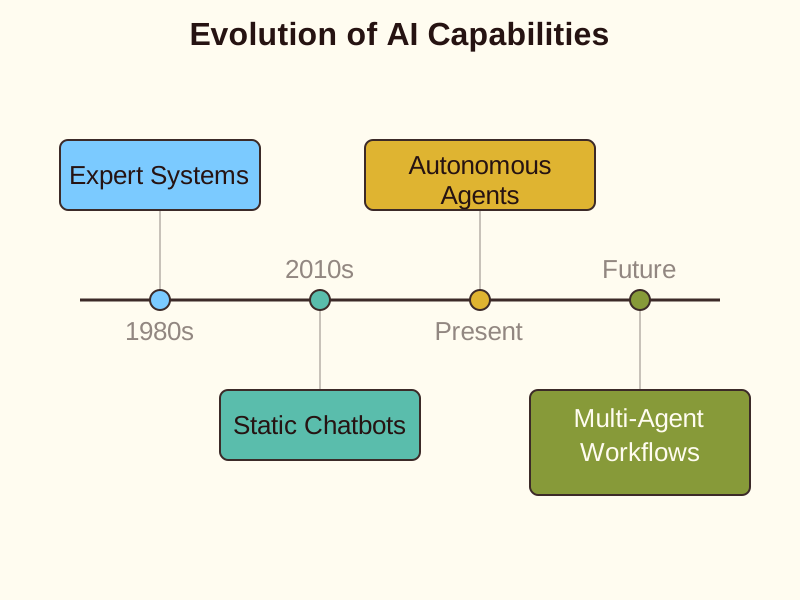
Autonomous agency is the ability to perceive and act independently. This capability opens vast potential for automation across many industries.
Understanding this shift is the first step in AI mastery. You are moving from static tools to entities that can solve problems.
Future systems will involve multi-agent workflows. These entities will work together to complete complex, large-scale projects.
Putting It All Together: Designing an AI Agent
- Perception: The agent ingests and interprets incoming environmental inputs.
- Reasoning: The agent evaluates its goals and decides on the best course of action.
- Action: The agent executes independent steps using available tools.
Check yourself
Unlike traditional software that follows rigid logic, an AI agent _____ to achieve goals.
- acts independently
- requires fixed code paths
Answer: acts independently
Traditional software strictly executes predefined rules, whereas AI agents reason and take independent actions autonomously.
An AI agent operates through a continuous cycle: it relies on _____ to gather environmental data, _____ to plan actions using its language model, and _____ to execute tasks with external tools.
Answer: An AI agent operates through a continuous cycle: it relies on perception to gather environmental data, reasoning to plan actions using its language model, and action to execute tasks with external tools.
The core loop of an agent involves gathering data from its environment (perception), evaluating goals to create a plan (reasoning), and executing steps autonomously (action).
What primary function does a large language model perform as the 'central brain' of an AI agent?
- It enforces strict, hardcoded instructions without flexibility.
- It interprets complex instructions and dynamically decides which steps to take.
- It serves solely as a user interface for responding to simple text chats.
- It replaces external tools by executing hardcoded database queries.
Answer: It interprets complex instructions and dynamically decides which steps to take.
The LLM serves as the central brain by processing complex instructions and reasoning about tasks to determine action steps, moving beyond fixed path execution.
Keep going
This is lesson 1 of 9 in Fundamentals of AI Agents. Next up:
- Core Architecture
- Agent Types
- Tool Use
- Reasoning Paths
- Memory Systems
Wondering turns any topic into short lessons you can read, watch, or listen to, with practice questions and an AI tutor.