Free sample lesson · Figma's 1-to-10 Playbook: Scaling Product Beyond Product-Market Fit
0 to 1 vs. 1 to 10: The Underdiscussed Phase of Growth
Lesson 1 of the Wondering course Figma's 1-to-10 Playbook: Scaling Product Beyond Product-Market Fit
Two Different Phases of Growth
Most startup advice focuses on one hard moment: getting a product to work at all.
That phase is called 0 to 1. It means finding product-market fit, where a product clearly solves a real need for a specific group.
But there is a second phase that gets far less attention.
1 to 10 starts after something already works. The job shifts to expanding that working product into new markets, new personas, or new products.
- 0 to 1
- 1 to 10
Three Ways to Go From 1 to 10
Once you have fit, growth can branch in three directions.
New markets means taking the product to places or segments it has not reached yet.
New personas means serving a different kind of user. New products means building something new on top of what already works.
Each path starts from the same base: a product people already value.
- Working product: Product-market fit already found.
- New markets: Places or segments not yet reached.
- New personas: A different kind of user.
- New products: Something new built on what works.
Figma Started as a Designer Tool
Figma is a clear example of this second phase.
It began as a tool for designers. That was its 0 to 1 story: it found fit with one specific group of people.
Look at the product itself. Its canvas and layout tools were built around how designers work.
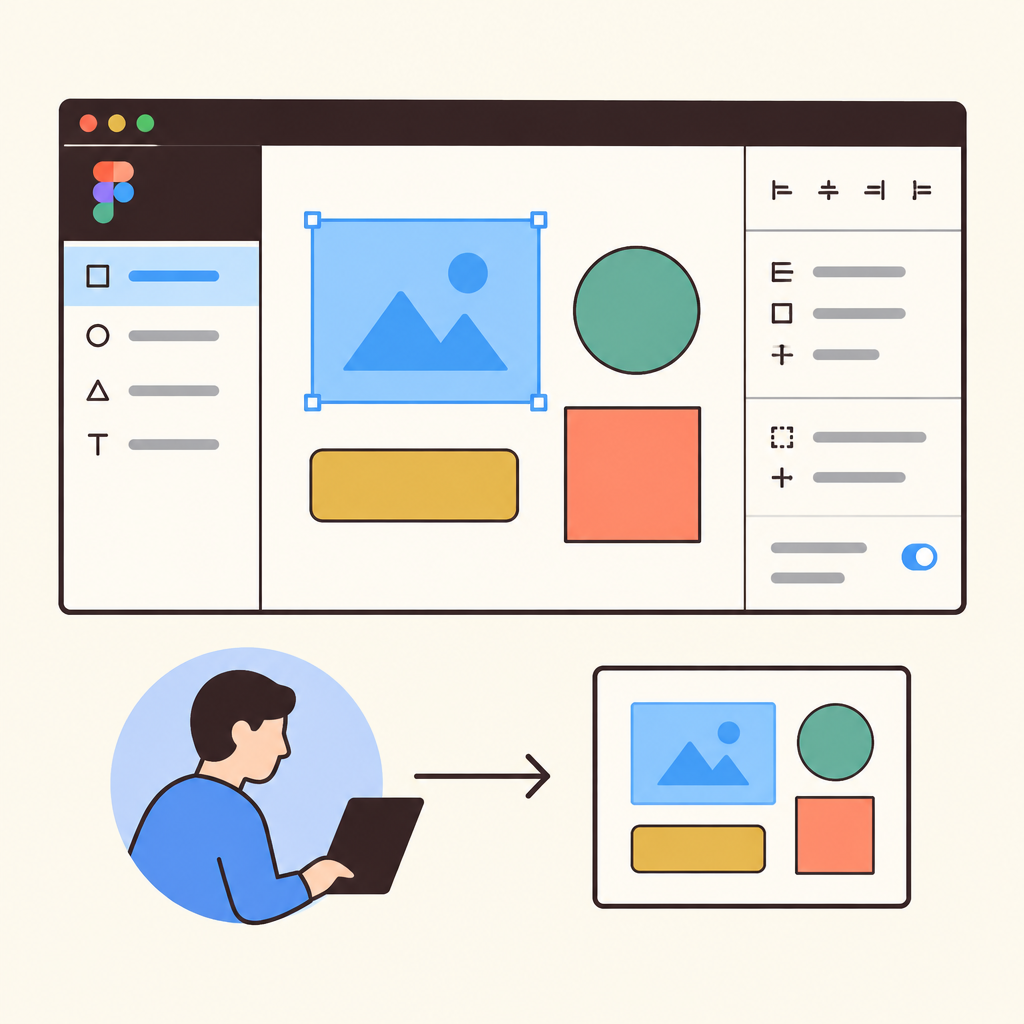
Figma's canvas was built for design work
That strong start became the base for everything that came next.
Most Figma Users Are Not Designers
Then Figma expanded to a new persona: people who are not designers.
Today, two-thirds of Figma's weekly active users are non-designers. That is about 67%, leaving roughly 33% who are designers.
- Non-designers: Two-thirds of weekly active users.
- Designers: The original persona, now the minority.
The group it was built for is now the minority.
That shift is what 1 to 10 looks like in practice.
Why This Phase Gets Overlooked
People love the 0 to 1 story. It is dramatic: an idea that finally works.
The 1 to 10 phase looks calmer from outside. The product already has fans, so it can seem like growth will just happen.
But expanding means serving people the product was not first built for. That is a new problem to solve.
Spotting Your Phase at Work
Start with one honest question: does the product already work for a specific group?
If not, you are still in 0 to 1. Keep searching for product-market fit.
If yes, you may be ready for 1 to 10. Pick a direction: new markets, new personas, or new products.
Naming the phase helps your team choose the right problem.
- Look at your product
- Works for a group?: Does it clearly solve a need for a specific group?
- 0 to 1: find fit
- 1 to 10: expand
- Pick a direction: New markets, new personas, or new products.
- No
- Try again
- Yes
Check yourself
A startup is still testing whether its product clearly solves a real need for any specific group of users. This startup is in the _____ phase
- 0 to 1
- 1 to 10
Answer: 0 to 1
Finding product-market fit, where a product clearly solves a real need for a specific group, is the 0 to 1 phase. The 1 to 10 phase begins only after something already works.
In 1 to 10 growth, expanding to _____ means reaching places or segments not yet served, expanding to _____ means serving a different kind of user, and expanding to _____ means building something new on top of what already works.
Answer: In 1 to 10 growth, expanding to new markets means reaching places or segments not yet served, expanding to new personas means serving a different kind of user, and expanding to new products means building something new on top of what already works.
All three 1 to 10 paths start from the same base: a product people already value. Markets refer to places or segments, personas to kinds of users, and products to new offerings built on the working core.
Figma first found fit with designers. Today, about two-thirds of its weekly active users are non-designers. Which kind of 1 to 10 expansion does this best illustrate?
- Expanding to a new persona
- Expanding to a new geographic market
- Launching an unrelated new product
- Still searching for product-market fit
Answer: Expanding to a new persona
Figma kept its core product but began serving a different kind of user, non-designers. That is a new persona expansion. The designers it was built for are now roughly 33% of weekly active users, making them the minority.
Keep going
This is lesson 1 of 6 in Figma's 1-to-10 Playbook: Scaling Product Beyond Product-Market Fit. Next up:
- FigJam's Origin: Treating User 'Hacking' as Signal
- Speed vs. Coherence: The Team-Structure Trade-off Behind FigJam, Dev Mode, and Slides
- Maker Week: A Mechanism for Surfacing 'Starters' Without Top-Down Approval
- Why Figma Acquired Visly to Argue Against Its Own Product Instincts
- The Feather-Ruffling Test and the Screenshot Test
Wondering turns any topic into short lessons you can read, watch, or listen to, with practice questions and an AI tutor.