Free sample lesson · Evaluating AI Biotech Legal Risks
Human Authorship
Can an algorithm legally hold a patent for a discovered drug molecule?
Lesson 1 of the Wondering course Evaluating AI Biotech Legal Risks
Can an Algorithm Own a Patent?
An AI system scans millions of molecules overnight. It flags one promising drug candidate no human considered.
Who is the inventor?
Under current patent law, the answer is not the machine. Patent statutes require an inventor to be a natural person.
That single rule shapes whether a biotech discovery becomes a protected asset or free public property.
The Thaler v. Vidal Ruling
Courts have already answered the machine-inventor question.
The Thaler v. Vidal ruling affirmed that patent statutes require an inventor to be a natural person. An AI system cannot be listed.
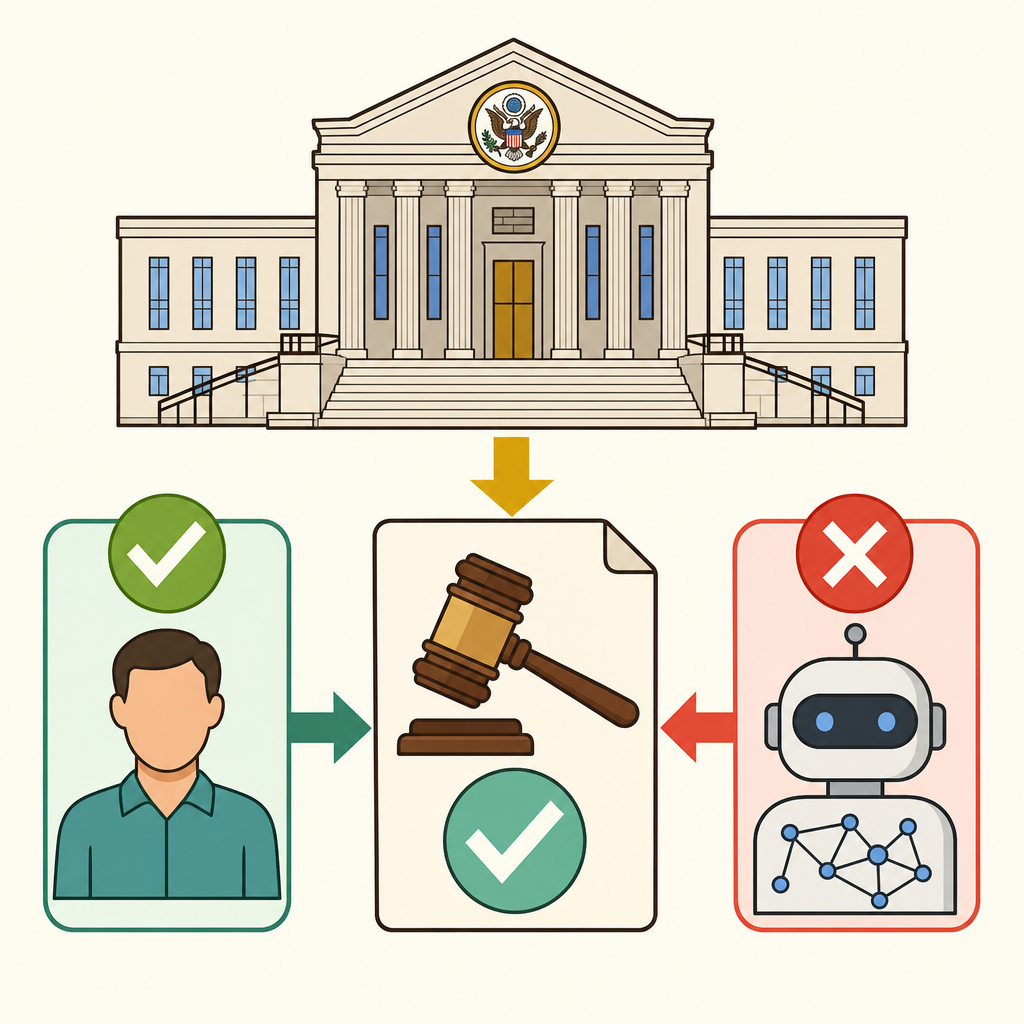
Courts, not algorithms, decide who counts as an inventor
This is not a policy preference or an open debate in filings. It is current judicial precedent that examiners and investors must work within.
Everything else in due diligence flows from this fixed starting point.
What Conception Means
Patent law does not reward whoever runs the experiment. It rewards conception.
Conception is the mental formation of the invention itself: the idea of the specific compound and how it works.
To be listed as an inventor, a natural person must provide that conception.
A machine can execute. Under the standard, only a person can conceive.
- Conception: A natural person mentally forms the specific invention.
- AI execution: The AI system searches or generates candidate compounds.
- Human contribution: The researcher's input must be significant, not merely running the tool.
- Inventor listed: A natural person is named as inventor on the filing.
- Protection: The discovery becomes an asset defensible against competitors.
The Significant Contribution Standard
The practical test is whether a human made a significant contribution to the conception of the invention.
Providing the specific prompt that led to the discovery can count. Merely hitting 'run' on a black-box algorithm generally does not.
The difference is not effort or job title. It is whether the human shaped the inventive idea.
Two researchers can use the same AI system and land on opposite sides of this line.
- Specific prompt
- Hitting 'run'
AI as Tool, Not Inventor
Understanding this distinction is the first step in mitigating legal risk.
When AI is a tool, the human directs it, and the human remains the conceiving mind behind the compound.
When AI is treated as a purported inventor, there is no natural person to name, and the filing fails.
The same software supports both framings. The human interaction decides which one applies.
- AI as tool
- AI as inventor
When Protection Fails
Suppose an AI system autonomously identifies a novel chemical compound with no significant human contribution to conception.
The discovery may be ineligible for patent protection.
Without a clear human author, the asset risks falling into the public domain.
A competitor can then use the compound freely, and the investment loses its defensive value.
- AI finds compound: An AI system surfaces a novel chemical compound.
- Significant human contribution?: Did a natural person contribute to conception of the invention?
- Name human inventor: A natural person is listed on the filing.
- Protectable asset
- Public domain risk: The discovery may be ineligible for patent protection.
- Yes
- No
The Due Diligence Hurdle
For investors, this creates a concrete due diligence problem.
Evaluating the IP portfolio of a biotech partner requires a granular look at how human researchers interacted with the AI.
Ask what the researcher actually supplied. Ask whether that input shaped the conception of the compound.
Documentation of the interaction matters as much as the compound itself.
- Identify asset: Locate the novel chemical compound in the partner's IP portfolio.
- Trace interaction: Examine how human researchers interacted with the AI system.
- Test contribution: Ask whether a person provided the specific prompt that led to the discovery.
- Judge protectability: Decide whether a clear human author supports patent protection.
A Question Worth Asking
The sharpest diligence question is simple.
Did the human provide the specific prompt that led to the discovery, or did they merely hit 'run' on a black-box algorithm?
One answer supports a named inventor. The other leaves the asset unprotectable against competitors.
Get this answer in writing before capital moves.
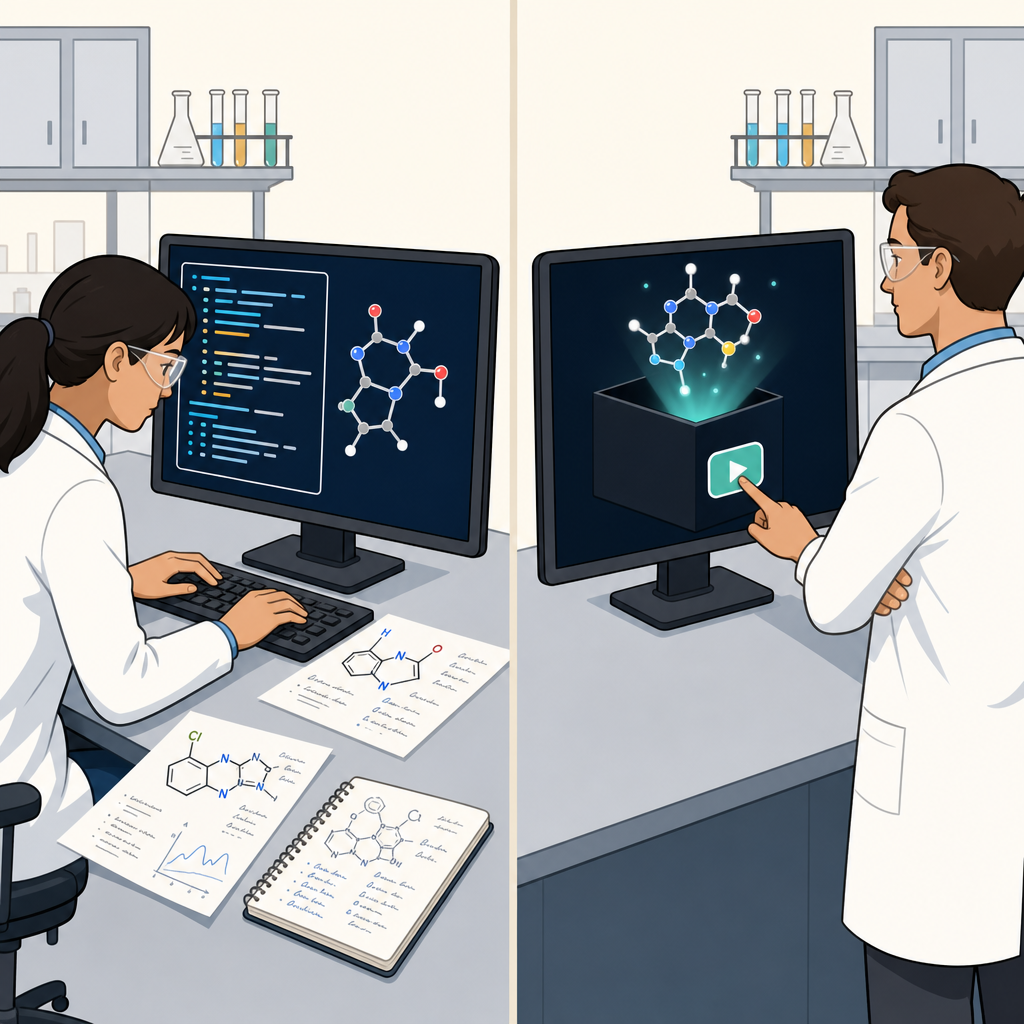
Notice that the hardware is identical on both sides; only the researcher's degree of involvement in shaping the query differs.
Key Takeaways
Patent statutes require an inventor to be a natural person, as affirmed in Thaler v. Vidal.
A human must provide a significant contribution to the conception of the invention.
AI used as a tool preserves protection. AI treated as the inventor does not.
Without a clear human author, the discovery risks the public domain and the investment becomes unprotectable.
Check yourself
Under current patent law, must a named inventor be a natural person?
- Yes
- No
Answer: Yes
Yes. Patent statutes, as affirmed by Thaler v. Vidal, require an inventor to be a natural person. An AI system cannot be listed as the inventor.
In AI-driven drug discovery, the mental formation of a specific compound is _____, the AI's performance of the search is _____, and the human's qualifying input is a _____.
Answer: In AI-driven drug discovery, the mental formation of a specific compound is conception, the AI's performance of the search is execution, and the human's qualifying input is a significant contribution.
Conception is the formation of the invention itself. Execution describes carrying out the search, which an AI system can do. A significant contribution is human input that meaningfully shapes the invention's conception.
A biotech researcher gives an AI system a highly specific prompt that defines a target mechanism and requested molecular structure. The system returns a novel compound matching those constraints. Which conclusion best fits current patent law?
- The researcher may qualify as an inventor because the prompt shaped conception.
- The AI system qualifies as the sole inventor because it produced the compound.
- No inventor can qualify because AI performed the molecular search.
- The researcher qualifies automatically because they own the AI system.
Answer: The researcher may qualify as an inventor because the prompt shaped conception.
The specific prompt may constitute a significant human contribution to conception because it shaped the inventive idea. The researcher must still be evaluated based on the actual interaction and contribution, but this differs from merely pressing run on a black-box algorithm.
Keep going
This is lesson 1 of 8 in Evaluating AI Biotech Legal Risks. Next up:
- Contribution Rules
- Training Data
- Privacy Compliance
- Subject Matter
- Trade Secrets
Wondering turns any topic into short lessons you can read, watch, or listen to, with practice questions and an AI tutor.