Free sample lesson · Collison on Craft and Ambition
Craft Is Strategic
When should a startup spend a week on a detail?
Lesson 1 of the Wondering course Collison on Craft and Ambition
What You Will Learn
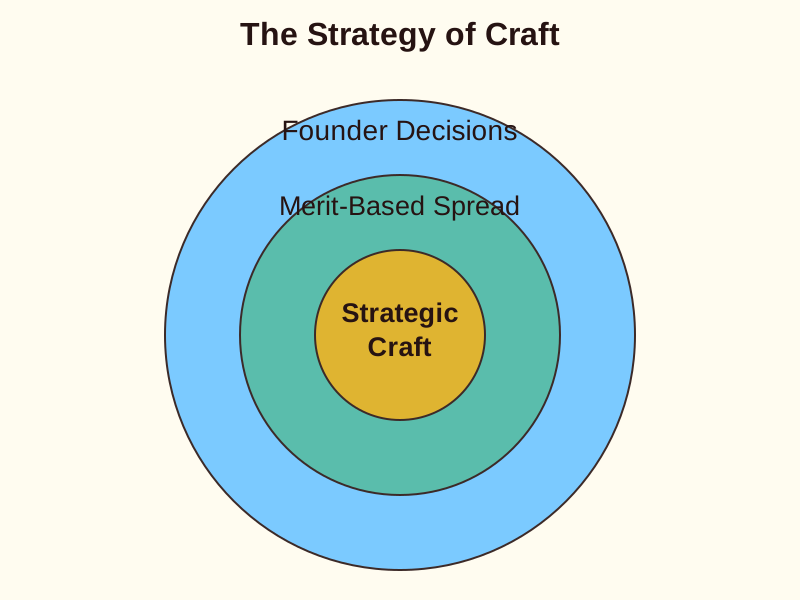
Craft matters when the detail changes adoption, trust, or future speed, not when it merely satisfies the maker's taste.
The Strategy of Craft
Craft is not about satisfying your personal taste. It is a strategic tool to change user behavior.
In software, craft means investing in details that build trust or increase future speed. It is the difference between a product that works and one that people love to recommend.
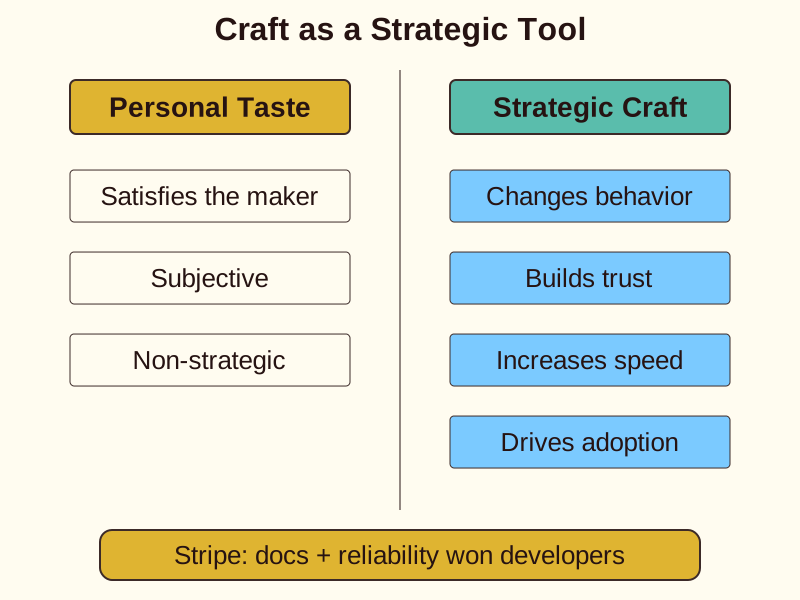
Stripe used high quality documentation and reliable code to win over developers. This created a competitive advantage that traditional marketing cannot buy.
Polish vs Strategic Craft
Founders often confuse visual polish with strategic craft. One feels good to the maker, while the other changes the business.
Strategic craft focuses on details like clear API error messages or copy-pasteable documentation. These details reduce integration time and drive adoption.
- Identify Detail: Pinpoint a specific product feature or polish element.
- Test Impact: Ask if the detail affects user comprehension or reliability.
- Filter Waste: Discard the detail if it only makes the team feel sophisticated.
- The strongest objection
Ask if a detail affects comprehension or reliability. If it only makes the team feel sophisticated, it is likely waste.
Merit Based Distribution
When a product spreads through technical communities, it competes on merit. This forces a company to build deep capabilities.
Patrick Collison notes that large organizations can buy ad campaigns or fleets. However, they often cannot turn capital into great software.
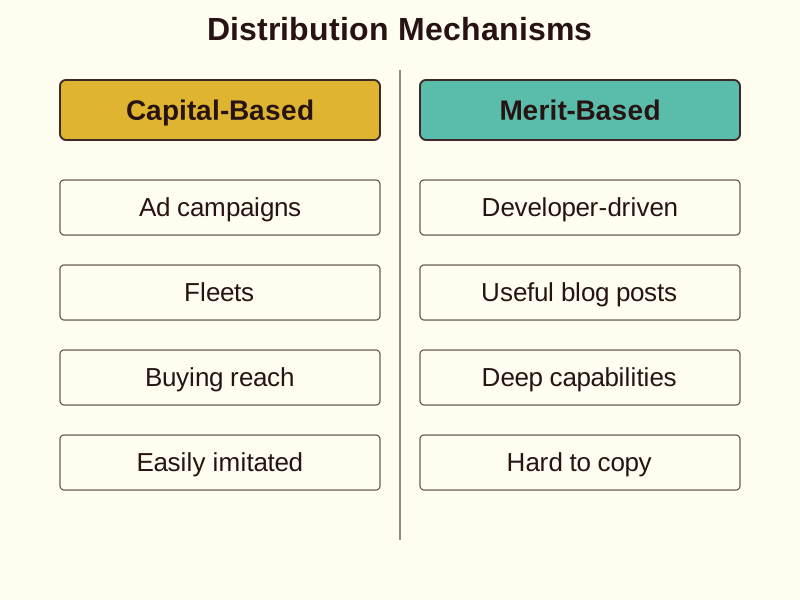
Stripe relied on useful blog posts and a product that developers would naturally discuss. This forced them to build a development culture that incumbents cannot easily copy.
Diagnosing Growth Problems
If growth is weak, do not assume you need more marketing. The product itself might lack the merit required for organic spread.
Founders often rebrand low traction as a distribution problem. In reality, the product may not be strong enough to earn honest recommendations.
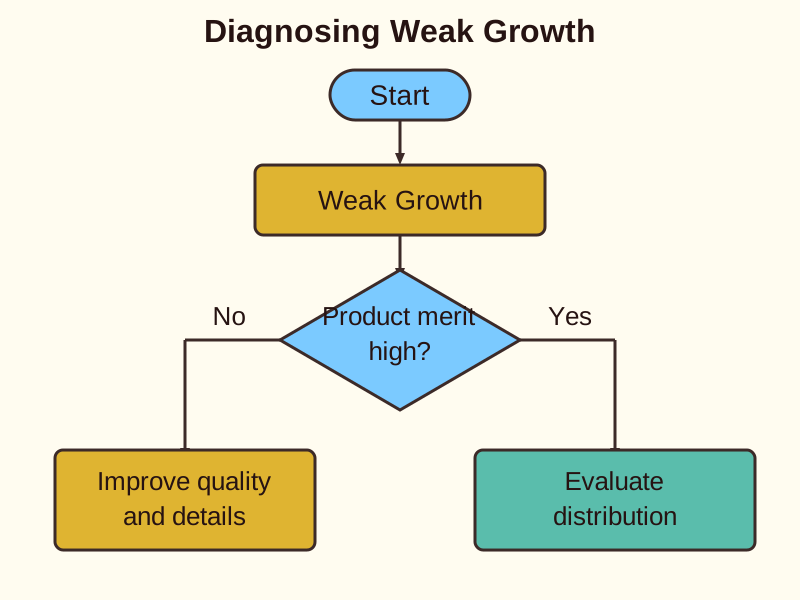
Before spending on ads, evaluate your quality investments. Does the detail change a user decision? If not, it is premature optimization.
Putting It All Together
- Diagnose Problem: Determine if the constraint is organic adoption or awareness.
- Assess Craft Value: Check if the detail changes user behavior and trust.
- Build Merit: Prioritize deep product capabilities over capital-intensive shortcuts.
Check yourself
Strategic craft is primarily about satisfying the _____.
- business goals
- maker's taste
Answer: business goals
Strategic craft is a tool to change user behavior or build trust, not a way to satisfy the maker's personal taste or aesthetic preferences.
To evaluate a detail, ask if it affects _____ or reliability; if it only makes the team feel sophisticated, it is _____.
Answer: To evaluate a detail, ask if it affects comprehension or reliability; if it only makes the team feel sophisticated, it is waste.
Strategic craft must have a functional impact on how users understand or trust the product. Without that impact, it is just indulgent perfectionism.
A founder notices that developer sign-ups are low despite heavy spending on ads. What is the most likely 'merit-based' diagnosis?
- The product lacks the quality needed to earn organic trust.
- The marketing budget is still too small to reach the audience.
- The visual branding is not polished enough for a professional look.
Answer: The product lacks the quality needed to earn organic trust.
If paid distribution (ads) isn't working, the product may lack the 'merit' (quality/utility) required for developers to trust it and recommend it to others.
Keep going
This is lesson 1 of 7 in Collison on Craft and Ambition. Next up:
- The API Is Product
- Durability Has a Price
- Progress Is Organized
- Ambition Needs Calibration
- Read for Questions
Wondering turns any topic into short lessons you can read, watch, or listen to, with practice questions and an AI tutor.