Free sample lesson · Chinese Porcelain Treasure Hunting
Porcelain Basics
Why does real porcelain glow when you hold it up to the light?
Lesson 1 of the Wondering course Chinese Porcelain Treasure Hunting
Three Families of Ceramics
Why does real porcelain glow when you hold it up to the light? The answer starts with how it is made.
Chinese ceramics fall into three broad families: earthenware (also called pottery), stoneware and porcelain.
- Chinese ceramics
- Earthenware: Also called pottery.
- Stoneware
- Porcelain: The one that glows in light.
The big difference is heat. The hotter the firing, the more the clay fuses into a dense, glassy body.
Learn to tell these families apart, and you can skip most of the wrong pieces at a market in seconds.
Earthenware: Low Heat, Porous Body
Earthenware is fired at relatively low temperatures, roughly 900–1,100°C.
At that heat the clay body stays porous, full of tiny holes. It absorbs water, and unglazed spots feel gritty or chalky.
It looks opaque even when thin, so light cannot pass through. Tap it and you hear a dull sound.
The exposed clay is often red, brown or buff.
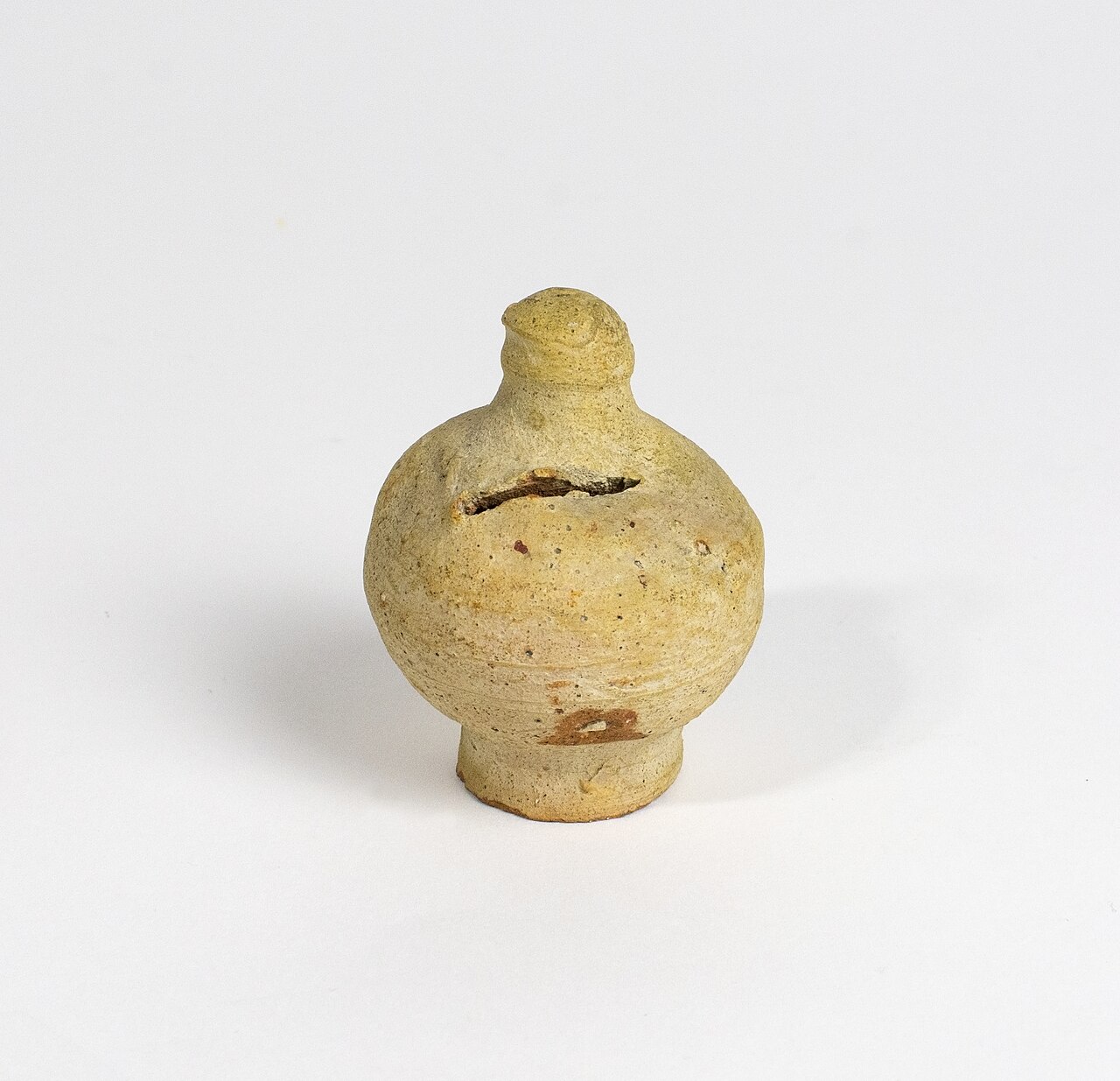
Unglazed Earthernware money-box · Public Domain Mark 1.0 · Wikimedia Commons

Stoneware: Dense but Opaque
Stoneware is fired hotter, about 1,150–1,300°C, until the body partly vitrifies, meaning it starts to turn glassy.
The result is dense and waterproof, so it does not soak up water like earthenware does.
But stoneware stays opaque. Light does not glow through it, and the foot is usually grey, brown or buff.
That is the trap: it feels solid and hard, yet it fails the light test.
- Earthenware
- Stoneware
Porcelain: Why It Glows
True porcelain is made mainly from kaolin (china clay) mixed with petuntse (porcelain stone).
It is fired at about 1,250–1,400°C. The body fuses into a glassy, non-porous mass all the way through.
So porcelain is typically white, and thin areas are translucent. That is why it glows in front of a lamp or flashlight.
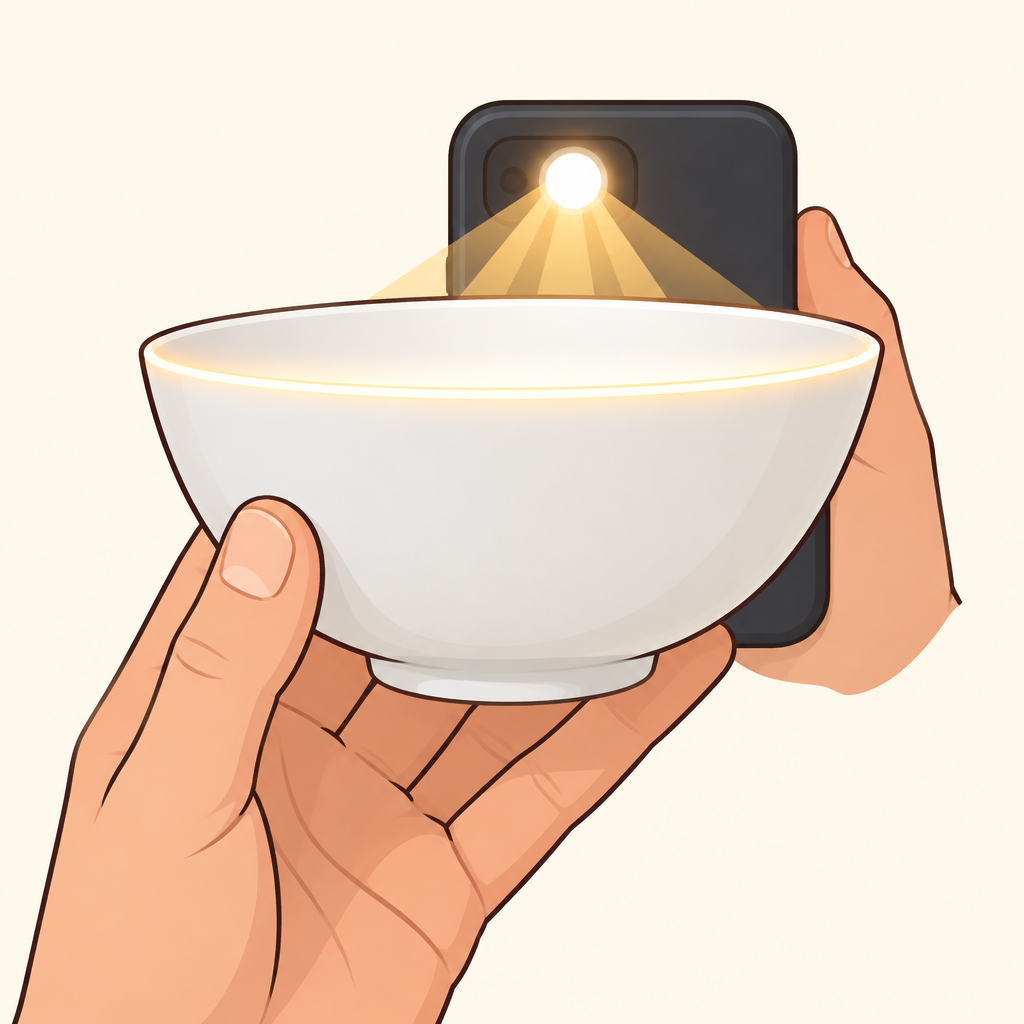
Notice the warm glow where the rim is thin: the glassy porcelain body lets light pass through.
Tap it lightly and it rings with a clear, lasting note.
Three Quick Field Checks
You do not need a lab. Three checks use only a light, a fingernail and your eyes.
Shine a light behind a thin edge, tap the rim, then inspect the unglazed base, called the foot ring.
- Light test: Shine a light behind a thin edge and look for a glow.
- Tap test: Tap the rim gently and listen for a ring, not a thud.
- Foot ring: Inspect the unglazed base for colour, grain and porosity.
Use the checks together. Thick porcelain may not glow, and a crack can deaden the ring.
So never judge a piece on one check alone.
Imagine: Two Bowls in Brussels
Imagine a beginner at a Brussels flea market. Two blue-and-white bowls both say 'Chinese', each at a hypothetical €40.
They have one minute and a phone flashlight.
- Bowl A
- Bowl B
Light: Bowl A glows warmly through its thin rim. Bowl B blocks the light completely.
Sound: a fingernail flick gives A a clear ring. B makes a dull thud.
Foot ring: A shows fine, smooth white clay. B shows coarse, reddish clay that soaks up saliva.
Verdict: B is earthenware. Only A deserves a closer look.
Your Porcelain Cheat Sheet
Each family gives itself away through light, clay colour and how it handles water.
Porcelain glows when thin and shows fine white or off-white foot clay that does not absorb moisture.
Stoneware is waterproof but opaque, with grey, brown or buff clay. Earthenware is opaque and absorbs water, often red, brown or buff.
Pass all three checks? Look closer. Fail them? Move on and save your time.
Check yourself
A small jar feels heavy and dense, and its unglazed base does not soak up water. A flashlight behind its thin rim shows no glow, and the bare clay on the base is grey. This jar is most likely _____
- stoneware
- porcelain
Answer: stoneware
Stoneware is dense and waterproof like porcelain, but it stays opaque and its clay is usually grey, brown or buff. Porcelain shows white or off-white clay at the foot, and thin areas let light through.
Complete the branches showing the three families of Chinese ceramics.
Answer: Stoneware, Porcelain
Chinese ceramics are grouped into three broad families: earthenware, stoneware, and porcelain. Kaolin is a raw clay material used to create porcelain, not a ceramic family itself.
Porcelain is made mainly from _____ clay. Earthenware is fired at a lower heat, so its body stays _____ and soaks up water. When tapped lightly, porcelain gives a clear ring, while earthenware gives a dull _____.
Answer: Porcelain is made mainly from kaolin clay. Earthenware is fired at a lower heat, so its body stays porous and soaks up water. When tapped lightly, porcelain gives a clear ring, while earthenware gives a dull thud.
Porcelain's main ingredient is kaolin (china clay). Earthenware is fired at lower heat, so it stays porous and absorbs moisture. Tapping it gives a dull thud, not porcelain's clear ring.
Keep going
This is lesson 1 of 12 in Chinese Porcelain Treasure Hunting. Next up:
- Dynasty Timeline
- Export Ware
- Reading Marks
- Glazes & Colours
- Spotting Fakes
Wondering turns any topic into short lessons you can read, watch, or listen to, with practice questions and an AI tutor.