Free sample lesson · Calm Shared Bedtime Routine
Staying Calm
What triggers that urge to snap when bedtime drags on?
Lesson 1 of the Wondering course Calm Shared Bedtime Routine
Calm Starts With You
Your 2-year-old wants to keep nursing. Your 4-year-old wants one more book. Then both get silly and keep each other awake.
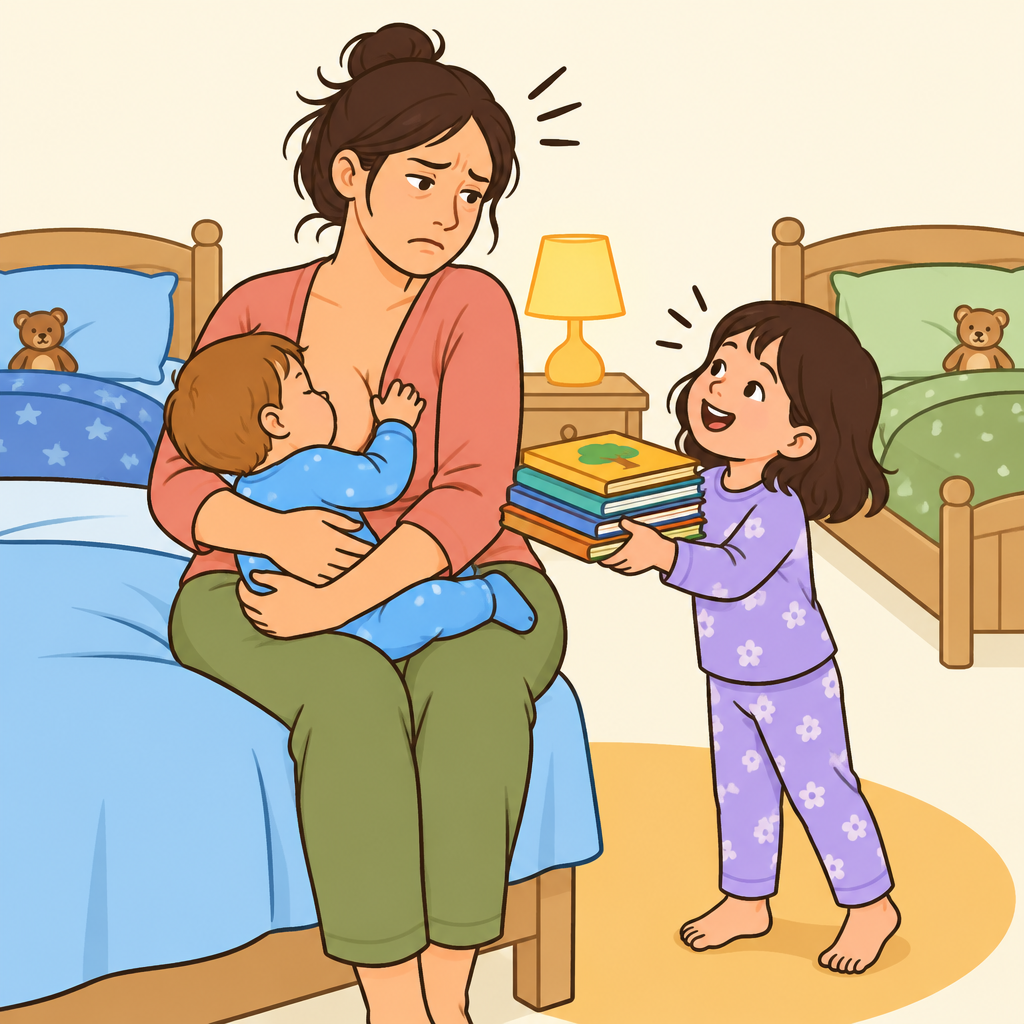
Notice how many demands land on one parent at once: nursing, books, and silly siblings all pull at the same time.
In that moment, the urge to snap can feel automatic.
A calm shared bedtime begins with your nervous system, the part of you that reacts to stress. When you stay steady, the room can follow.
This lesson teaches one skill: pause before responding.
Name What Sets You Off
Snapping rarely comes out of nowhere. It usually follows a familiar stall.
In a shared room, common triggers include nursing that drags on, requests for more books, children leaving bed, and siblings keeping each other awake.
These moments can leave you feeling rushed, frustrated, or defeated.
- Triggers
- Nursing drags on
- Requests for more books
- Children leaving bed
- Siblings keeping each other awake
- Feelings
- Rushed
- Frustrated
- Defeated
Spot the feeling and you have found your moment to pause.
Noticing that feeling is the first step. Once you can name it, you have a moment to choose your next move.
One Slow Breath
When you notice stress rising, do not react right away.
Take one slow breath. It does not need to be long or perfect.
As you breathe, remind yourself: bedtime resistance is common. Your children are doing something very normal.
That short pause gives you space to answer calmly instead of snapping.
- Notice stress: Catch the rushed, frustrated, or defeated feeling.
- Breathe once: Take one slow breath before you speak.
- Remind yourself: Bedtime resistance is common.
- Respond calmly: Use a quiet voice and a few words.
Few Words, Same Limit
After the breath, your response should be quiet and brief.
Use the same simple limit every time: "It is bedtime. I will help you get back to bed."
Skip the lectures, and do not add new deals. You do not need to solve every protest.
A calm, brief response keeps bedtime moving. Snapping or bargaining can turn a small stall into a bedtime battle.
- Calm, brief
- Snapping or bargaining
When They Stall Again
Your 4-year-old climbs out of bed. Or your 2-year-old giggles and wakes their sibling.
Run the same steps each time: notice your stress, breathe once, say the limit, and help them back to bed.
- Child stalls: Leaves bed or keeps sibling awake.
- Notice your stress
- One slow breath
- Say the limit: It is bedtime. I will help you get back to bed.
- Help back to bed
- Up again?
- Settling down
If they get up again, repeat it. Same breath, same words, same quiet voice.
Repetition is the point. A limit that sounds the same every time is easier to follow.
Why Your Calm Helps Them
Children read the adult in the room.
Your calm presence helps both children feel safer. When they feel safe, limits become easier to follow.

Notice the parent's relaxed posture and quiet closeness: one steady adult gives both children the same calm signal.
This matters in a shared room, where silly children keep each other awake. A steady parent gives both of them one calm signal.
Your tone can do more work than your words.
Steady, Not Perfect
You may have tried consistent routines, staggered bedtimes, and sticker charts. When those fail, frustration builds fast.
This skill does not depend on a new system. It depends on you staying steady.
You will still lose your cool sometimes. Aim for steady, not perfect.
Use this quick script tonight, then come back to the breath whenever you slip.
Check yourself
Your 4-year-old asks for a fifth book after lights out. You feel frustrated. A good first move is to _____
- take one slow breath before you answer.
- explain clearly why bedtime rules matter.
Answer: take one slow breath before you answer.
Pausing for one slow breath lets you notice your stress before reacting. Explaining the rules at length adds words and invites more negotiation.
When siblings stall at bedtime, use a quiet _____, few _____, and the same simple _____ each time.
Answer: When siblings stall at bedtime, use a quiet voice, few words, and the same simple limit each time.
A calm response is quiet in tone, short, and predictable. Repeating the same limit, such as "It is bedtime. I will help you get back to bed," makes it easier for both children to follow.
Your 2-year-old wants to keep nursing, and your 4-year-old is out of bed again. Which response best fits a calm, brief approach?
- "It is bedtime. I will help you get back to bed."
- "If you stay in bed, you can earn a sticker tomorrow."
- "This is the third time! Get back in bed right now!"
- "Let me explain again why sleep helps you grow."
Answer: "It is bedtime. I will help you get back to bed."
A short, quiet, repeated limit keeps you steady and clear. Offering deals, firm warnings, or long explanations adds new negotiations or tension, and the children may test those even more.
Keep going
This is lesson 1 of 8 in Calm Shared Bedtime Routine. Next up:
- Quick Resets
- Nursing Transitions
- Fading Presence
- Book Boundaries
- Halting Stalling
Wondering turns any topic into short lessons you can read, watch, or listen to, with practice questions and an AI tutor.