Free sample lesson · B2B Startup Ideation
Start With Problems
Why does applying AI first often produce fake problems?
Lesson 1 of the Wondering course B2B Startup Ideation
Start With Problems: Overview
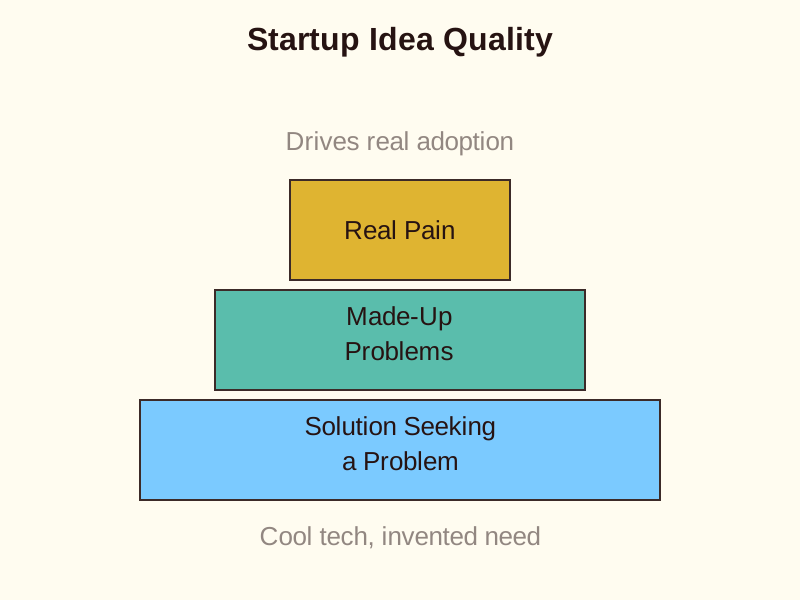
Starting with the problem keeps founders from building polished solutions that users do not care about.
The Trap of Exciting Technology
Many founders start with a technology they love and then hunt for a way to use it. Jared Friedman calls this a Solution in Search of a Problem (SISP).
- Solution in Search of a Problem
- Problem-First Approach
This approach is dangerous. It often leads you to build a polished product that nobody actually needs.
While the technology might be impressive, it does not guarantee that users will care enough to change their behavior.
Spotting a Made-Up Problem
A common mistake is asking what you can apply AI to. This forces you to invent a problem that sounds plausible but lacks real urgency.
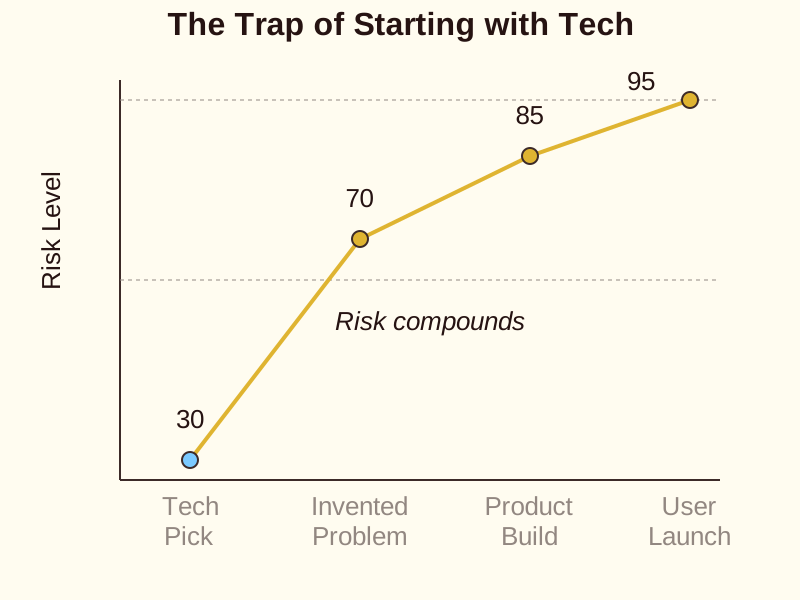
Founders often assume that exciting tech compensates for weak user demand. This is a misconception.
If you start with the solution, you might find a superficial problem. However, you will likely miss the deep pain points that drive adoption.
- Start with AI: You ask what you can apply AI to instead of asking what hurts users.
- Invent problem: You invent a problem that sounds plausible but lacks real urgency.
- Trust the tech: You assume exciting tech compensates for weak user demand, which is a misconception.
- Miss real pain: You settle on a superficial problem and miss the deep pain points that drive adoption.
Defining High-Quality Problems
A high-quality startup idea begins with a problem that is both specific and tractable.
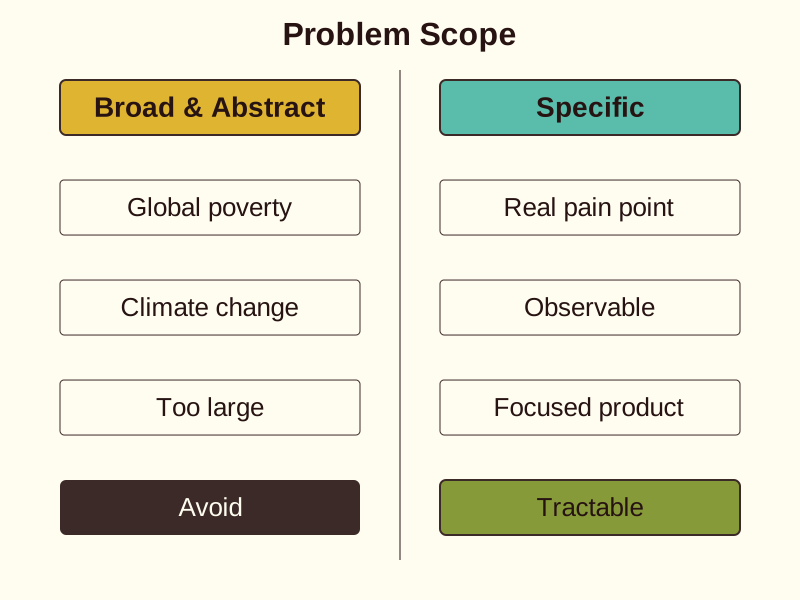
Avoid broad, abstract issues like global poverty. While these are important, they are often too large for a small startup to attack effectively.
Instead, look for a concrete pain point. A good problem is one you can observe in the real world and solve with a focused product.
- Broad abstract issue
- Concrete pain point
The Problem-First Workflow
To build a successful startup, you must reverse your thinking. Observe a real painful need before choosing a technology.
Verify that the pain is specific. Only then should you decide if AI or another tool is the right way to fix it.
- Observe Pain: Spot a real, painful need in the world before choosing any technology.
- Verify Need: Check that the pain is specific, urgent, and experienced by real users.
- Choose Tool: Select AI or another appropriate tool only after confirming the problem matters.
Falling in love with the problem ensures you build something people want. This sequence keeps you from wasting time on solutions that do not matter.
Putting It All Together
- Identify Origin: Check if the idea started with cool tech (SISP) or a real observed pain point.
- Filter Scope: Ensure the problem is specific and tractable rather than an abstract global issue.
- Verify Demand: Confirm users care enough to change their behavior before writing any code.
Check yourself
A founder asks, “What can we apply AI to?” before identifying a painful user need. Is this a Solution in Search of a Problem (SISP)?
- Yes
- No
Answer: Yes
Yes. A SISP begins with a favored technology and searches for a problem afterward, which can produce weak or made-up demand.
Which existing startup idea best follows a problem-first approach?
- An AI wrapper for pet grooming, created before speaking with groomers
- A virtual-reality platform looking for any entertaining use
- A tool that reduces invoicing mistakes for independent bakery owners
- A platform designed to solve global poverty through many unrelated features
Answer: A tool that reduces invoicing mistakes for independent bakery owners
The bakery invoicing idea starts with a specific user pain and identifies a group that experiences it. The other ideas begin with exciting technology or address an overly broad issue.
“Reduce global poverty” is a stronger startup starting problem than “reduce invoice errors for independent bakery owners.”
- True
- False
Answer: False
No. Global poverty is important but broad and abstract. Invoice errors for a specific user group are more specific and tractable for a focused startup.
Keep going
This is lesson 1 of 14 in B2B Startup Ideation. Next up:
- Detect Tar Pits
- Choose Morphable Starts
- Match Team to Market
- Size Timing Acuity
- Read Competition and Proxies
Wondering turns any topic into short lessons you can read, watch, or listen to, with practice questions and an AI tutor.