Free sample lesson · Atomic Habits
Compound Effect
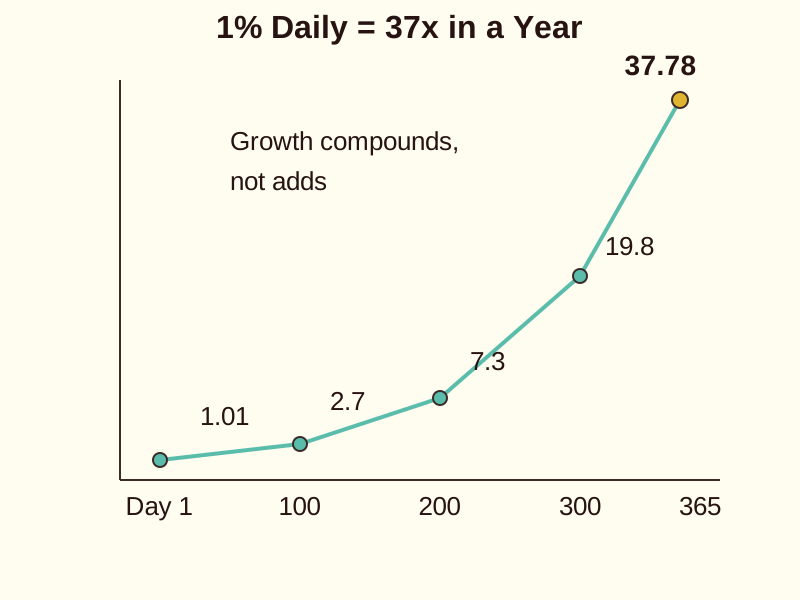
If you improve by 1% daily for a year, you'll be 37 times better—not 365% better.
Lesson 1 of the Wondering course Atomic Habits
What You Will Learn
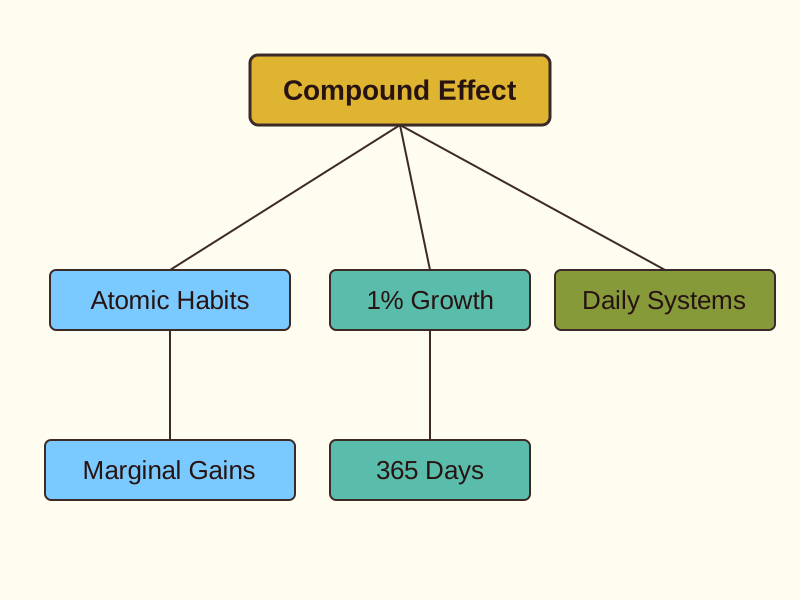
Success isn't about massive transformations but about tiny, consistent improvements that multiply over time through compound growth.
The Power of Small Habits
Success is often the result of tiny, consistent improvements. These small changes are called atomic habits.
On any single day, a small habit does not seem to make a big difference. However, the impact grows over months and years.
Habits are the compound interest of self-improvement. Just as money multiplies through interest, your efforts multiply as you repeat them.
- Tiny Habit: Start with a small, consistent daily improvement.
- Daily Repetition: Repeat the habit without expecting immediate results.
- Compound Growth: Watch your efforts multiply over months and years like interest.
The Math of 1 Percent
Small gains lead to massive results over time. If you improve by just 1 percent every day for a year, you will end up 37 times better.
This growth is non-linear. It is not a simple addition of 365 percent. Instead, each 1 percent gain builds upon the previous one.
Day 1: 1.01. Day 365: 37.78. This demonstrates how tiny shifts create a huge gap between who you are and who you could be.
Aggregation of Marginal Gains
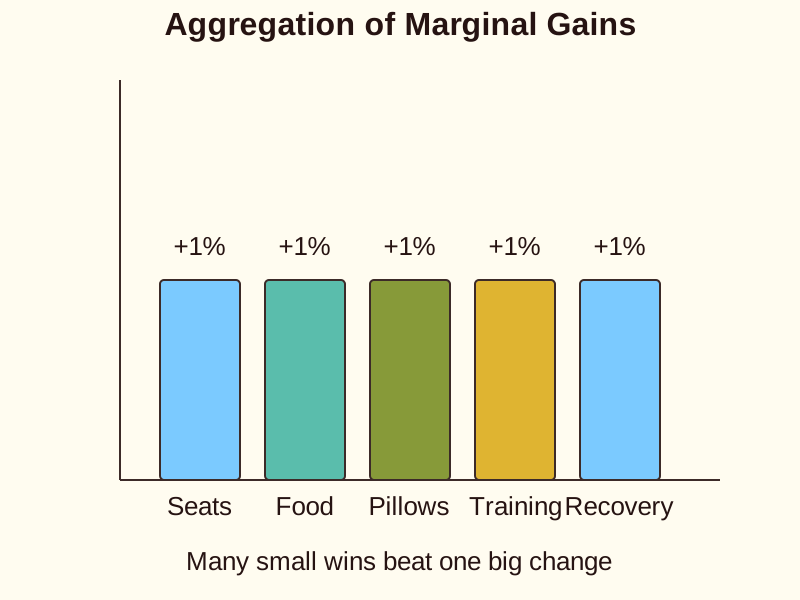
Dave Brailsford transformed British Cycling using a strategy called the aggregation of marginal gains.
He searched for tiny 1 percent improvements in every area of the sport. This included everything from bike seats to the pillows athletes used for sleep.
By 2008, just five years after starting this approach, his team dominated the Olympics. They proved that success comes from many small wins rather than one dramatic change.
Focus on the Long Term
The compound effect requires patience. You will not see a transformation overnight because the results are delayed.
Focus on your daily systems instead of big goals. Small, repeatable actions create a trajectory toward success.
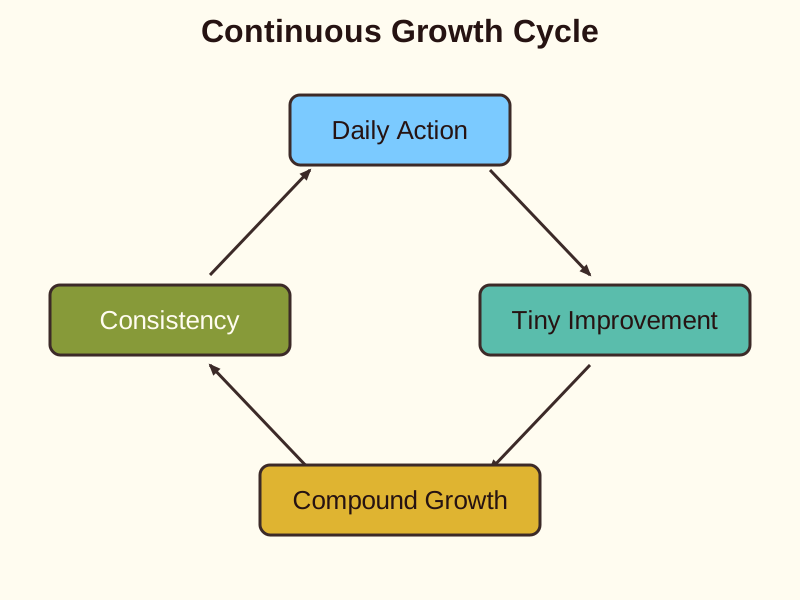
Consistency is the key. When you stick with 1 percent improvements, you harness a force that turns small habits into life-changing results.
Putting It All Together
- Identify 1% Gain: Find a tiny area to improve each day.
- Trust the Process: Maintain consistency even when early results are invisible.
- Harvest Compound Growth: Observe the exponential payoff after months and years.
Check yourself
The compound effect suggests that small habits produce _____ results in the short term.
- invisible
- massive
Answer: invisible
Small habits don't seem to make much difference on any given day; their impact is only visible over months and years.
The strategy of _____ involves finding tiny 1% improvements, while _____ are the small, consistent actions that act as the compound interest of self-improvement.
Answer: The strategy of marginal gains involves finding tiny 1% improvements, while atomic habits are the small, consistent actions that act as the compound interest of self-improvement.
Marginal gains focus on the aggregation of small wins across many areas, while atomic habits are the individual building blocks of that growth.
Why is the growth from a 1% daily improvement considered non-linear?
- Because each gain builds on the previous one
- Because it adds exactly 1% of the starting value each day
- Because the results are seen immediately every day
- Because it requires one dramatic change to start
Answer: Because each gain builds on the previous one
Compounding means each 1% gain builds upon the previous total, not just the original starting point, leading to exponential growth (37x) rather than simple addition.
Keep going
This is lesson 1 of 25 in Atomic Habits. Next up:
- Trajectory Over Position
- Breakthrough Through Patience
- Systems Over Goals
- Identity-Based Habits
- Habit Loop
Wondering turns any topic into short lessons you can read, watch, or listen to, with practice questions and an AI tutor.