Free sample lesson · Applied Learning Mastery
Intelligence is Developed
What if your belief about talent determines whether you succeed or fail?
Lesson 1 of the Wondering course Applied Learning Mastery
What You Will Learn
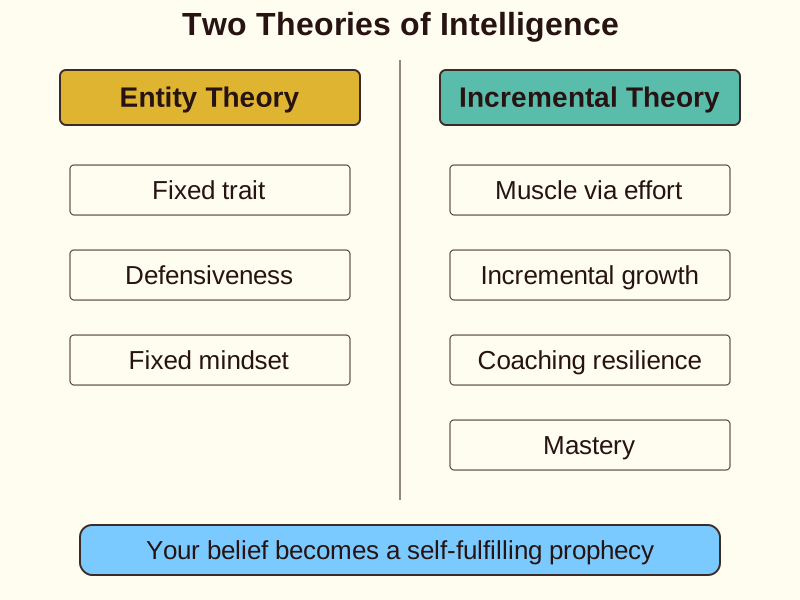
Your theory of intelligence—whether you believe abilities are fixed or developable—becomes a self-fulfilling prophecy that shapes your entire learning journey.
Two Ways to View Intelligence
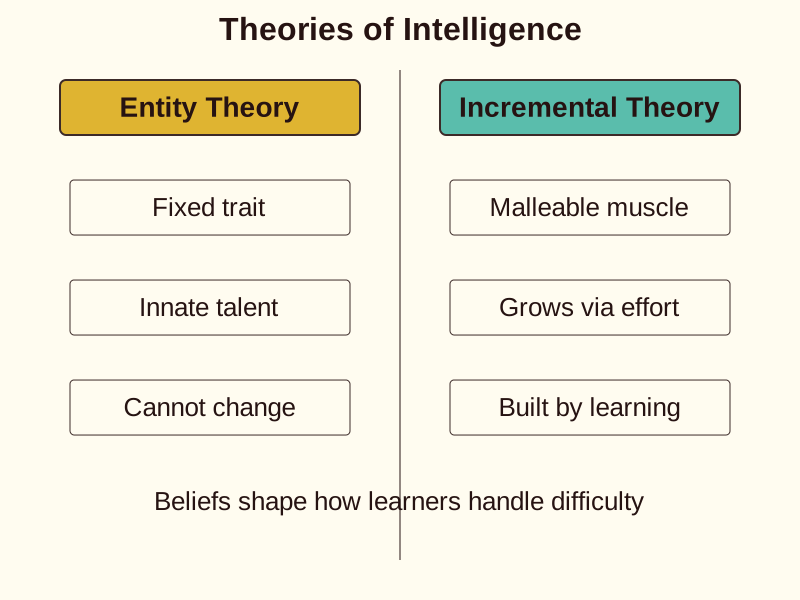
Every learner operates under a specific theory of intelligence. This belief dictates how they handle difficulty and success.
Entity theory suggests that intelligence is a fixed trait. You are born with a set amount of talent that cannot change.
Incremental theory suggests that intelligence is a muscle. It grows through effort, strategy, and consistent learning.
The Trap of Fixed Mindsets
Entity theorists often feel the need to prove themselves. They view every task as a test of their permanent worth.
When these learners face a challenge, they often become defensive. They might avoid difficult tasks to protect their self-image.
This creates a brittle relationship with learning. If they fail, they believe it is because they are not smart enough.
- Prove Worth: Entity theorists view every task as a test of their permanent worth.
- Defensiveness: Learners become defensive and avoid difficult tasks to protect self-image.
- Brittle Failure: Failure is interpreted as proof of lacking intelligence.
The Power of Incremental Growth
Incremental theorists focus on the process rather than the result. They believe that hard work leads to mastery.
These learners embrace challenges. They do not see a difficult problem as a threat to their identity.
Instead, they view obstacles as necessary steps for development. This mindset fosters the resilience required for long-term excellence.
- Focus on Process: Incremental theorists prioritize the learning process over the immediate result.
- Embrace Challenge: Difficult problems are welcomed rather than viewed as threats.
- Build Resilience: Obstacles are treated as necessary steps for long-term excellence.
Coaching for Resilience
As an educator, your feedback shapes which theory a student adopts. You can help them shift toward an incremental view.
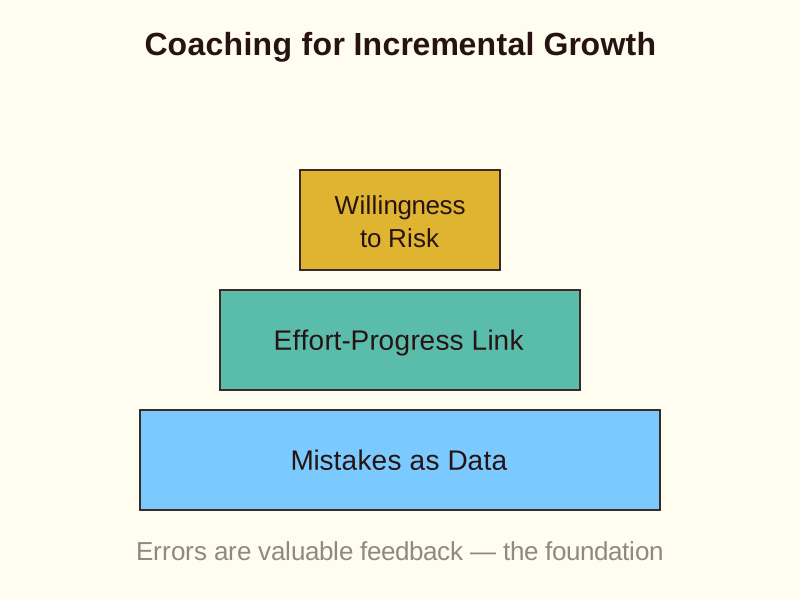
Encourage students to view mistakes as valuable data points. Highlight the connection between their effort and their progress.
When a student understands that ability is developed, they become more willing to take risks. This shift is the foundation of effective skill acquisition.
How to Apply It in Real Life
- Reframe Failure: Help the student see mistakes as informative data points rather than personal flaws.
- Connect Effort: Explicitly link the student's strategy and persistence to their gradual progress.
- Encourage Risk: Reward experimentation and tackling harder problems to build long-term resilience.
Check yourself
A learner who believes intelligence is a fixed trait they are born with holds an _____ theory of intelligence.
- entity
- incremental
Answer: entity
Entity theory views intelligence as a fixed 'entity,' while incremental theory views it as something that can grow.
In the face of difficulty, _____ theorists often avoid challenges to protect their image, while _____ theorists embrace them as opportunities for growth.
Answer: In the face of difficulty, entity theorists often avoid challenges to protect their image, while incremental theorists embrace them as opportunities for growth.
Entity theorists see failure as a threat to their identity, whereas incremental theorists see it as a necessary part of the learning process.
Why does an incremental theory of intelligence foster long-term resilience in students?
- It encourages them to focus on the process and view obstacles as necessary steps.
- It ensures they never experience failure or mistakes during the learning process.
- It teaches them that talent is the only requirement for achieving mastery.
- It helps them prove their permanent worth to others through high scores.
Answer: It encourages them to focus on the process and view obstacles as necessary steps.
By focusing on the process and effort rather than innate talent, students view setbacks as data for improvement rather than a lack of worth.
Keep going
This is lesson 1 of 41 in Applied Learning Mastery. Next up:
- Growth Mindset in Action
- Fixed Beliefs Limit Growth
- Surrender Ego to Learn
- Seek Strong Opponents
- Condense Techniques
Wondering turns any topic into short lessons you can read, watch, or listen to, with practice questions and an AI tutor.