Free sample lesson · AI Architecture for Visual Designers
Inside LLMs
What actually happens under the hood when a model generates a response?
Lesson 1 of the Wondering course AI Architecture for Visual Designers
A Library, Not a Calculator
An LLM is closer to a vast library of relationships than a calculator.
Its anatomy has three parts: an input layer, hidden layers of neural weights, and an output layer.
- Input layer: Where the prompt enters the model.
- Hidden layers: Neural weights that shape the signal.
- Output layer: Where the prediction emerges.
Each layer passes signal inward toward the output
Information enters, gets weighted across many hidden connections, and leaves as a prediction.
That layered flow is the frame for everything else in this lesson.
Attention as Layout Priority
Inside LLMs, the relevant structure is the Transformer architecture.
Transformers use attention mechanisms to weigh the importance of different parts of a prompt.
This works much like a designer prioritizing elements in a layout. Some words carry visual hierarchy; others recede.
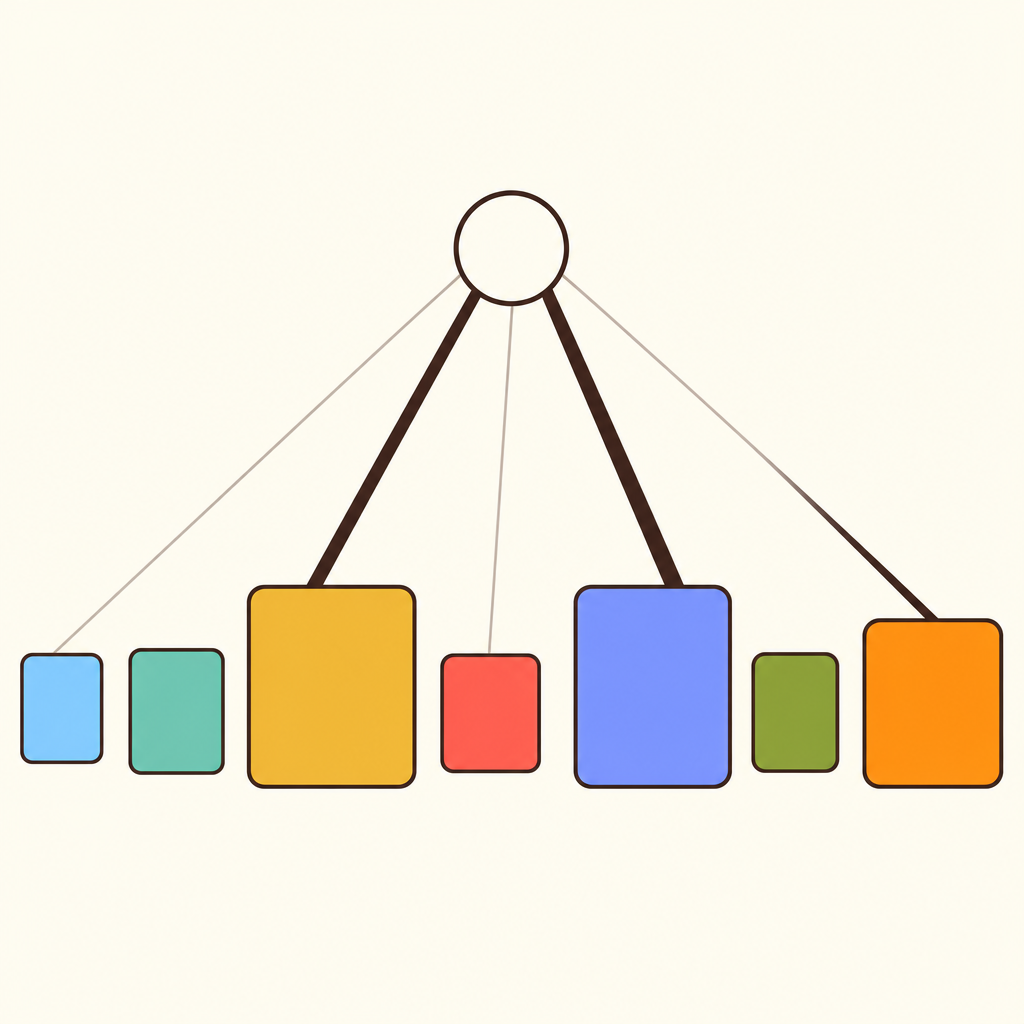
Notice that the model does not treat every word equally: heavier weighting behaves like dominant elements in a layout hierarchy.
Attention decides what dominates the composition of the answer.
Words Become Vectors
The model does not think in words.
It breaks the prompt into tokens, then processes those tokens as numerical vectors inside a latent space.
- Words
- Vectors
So a prompt is never read as language. It is placed as coordinates.
This single move is what makes the rest of the behaviour possible.
Latent Space as a Map
Latent space is a multi-dimensional map of relationships.
Similar concepts sit near each other spatially. Unrelated ones sit far apart.
Think of it as a vast, multi-dimensional library of visual relationships, where position carries meaning rather than a shelf label.
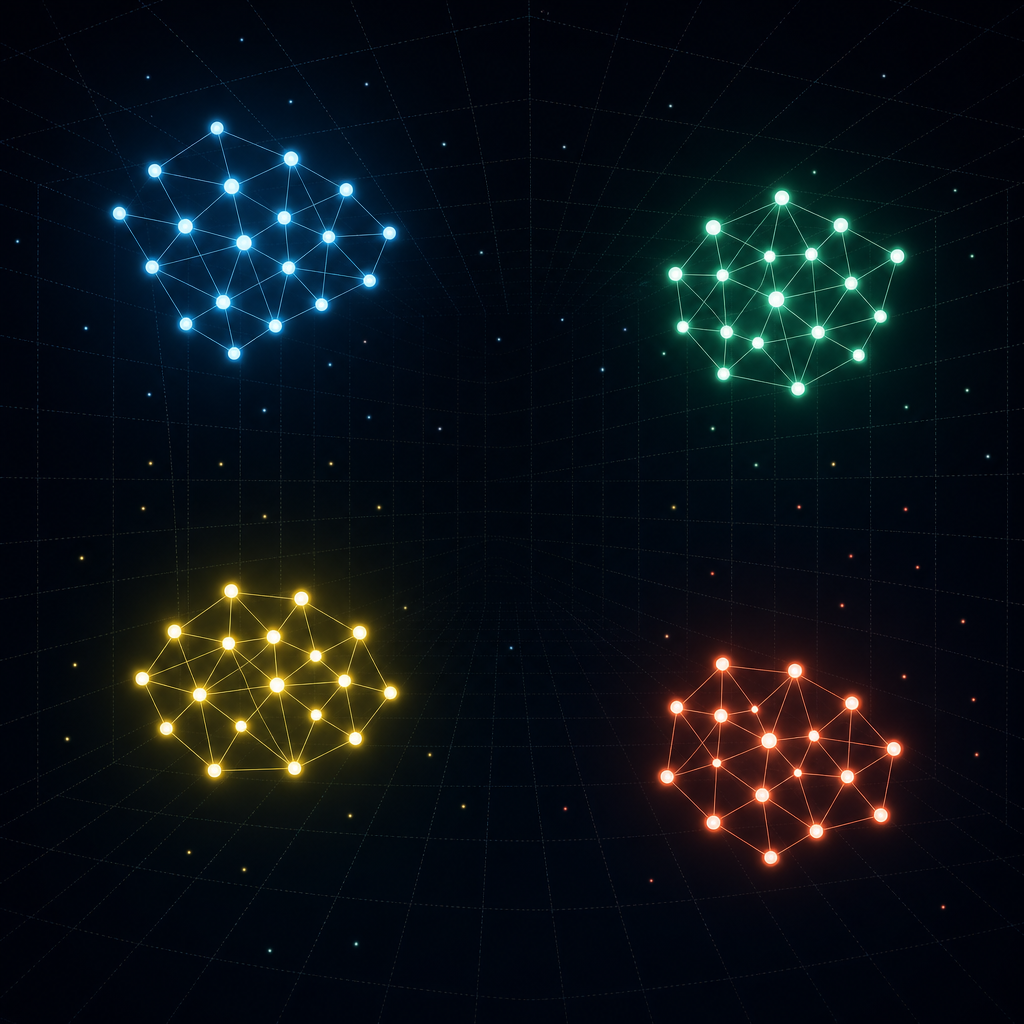
Watch how tightly grouped points read as related concepts while distant clusters read as unrelated, so position itself carries the meaning.
Distance is the model's version of similarity.
From Prompt to Output
The flow inside the model is traceable end to end.
Tokenization splits the prompt. Vectors place it in latent space. Attention weights what matters. A probability distribution selects the output.
- Tokenization: The prompt is split into tokens.
- Vectors: Tokens become numerical vectors in latent space.
- Attention: Attention weighs which parts of the prompt matter most.
- Probability: A final probability distribution selects the output.
Seen as interconnected nodes and weighted paths, a text prompt becomes a complex creative output.
Nothing here is magic. It is navigation.
Where Models Excel or Fail
Understanding this flow has a practical payoff.
It lets designers architect better prompts and anticipate where the AI might hallucinate or excel in creative tasks.
Regions of latent space that are densely mapped tend to support strong creative output. Sparse or unfamiliar territory is where invention creeps in.
Prompting is really a way of steering position on that map.
Carrying the Model With You
Hold three ideas together.
The architecture is layered: input, hidden weights, output. Attention prioritizes parts of a prompt. Latent space maps meaning as position.
- Layered architecture: Input layer, hidden weights, output layer.
- Attention: Prioritizes parts of a prompt.
- Latent space: Maps meaning as position.
- Tokens as vectors: Numerical coordinates rather than words.
- Prompt design: Prompts written as coordinates, not commands.
Every output is the end of a navigation through that map.
Design your prompts as coordinates, not commands.
Check yourself
An LLM's hidden layers contain neural weights that transform information between the input and output layers.
- True
- False
Answer: True
This is correct. An LLM has an input layer, hidden layers containing neural weights, and an output layer that produces a prediction.
A prompt is split into _____, represented as numerical _____, and processed within _____.
Answer: A prompt is split into tokens, represented as numerical vectors, and processed within latent space.
Tokenization breaks the prompt into tokens. The model represents those tokens as vectors and processes their relationships in latent space.
A visual designer gives an LLM a prompt containing a subject, color palette, and composition constraints. Which Transformer function helps the model prioritize the most relevant parts?
- Attention mechanisms
- The output layer
- Tokenization alone
- A calculator operation
Answer: Attention mechanisms
Attention mechanisms weigh different parts of a prompt, similar to how a designer gives visual hierarchy to important layout elements.
Keep going
This is lesson 1 of 7 in AI Architecture for Visual Designers. Next up:
- Token Flows
- Understanding RAG
- Building Real-World Projects with RAG
- Vector Spaces
- Autonomous Agents
Wondering turns any topic into short lessons you can read, watch, or listen to, with practice questions and an AI tutor.