Free sample lesson · African Cattle Silage Agribusiness Strategy
Crop Selection
Which local African crops offer the best energy return for your investment?
Lesson 1 of the Wondering course African Cattle Silage Agribusiness Strategy
The Foundation of Cattle Profit
Selecting the right crop for silage is the first step toward a profitable cattle enterprise in Africa.
Your choice determines the nutritional ceiling of your entire supply chain. It is a balance between input costs and output value.
Successful agribusiness professionals evaluate local crops based on biomass yield and fermentable sugar content. This ensures the best energy return for your investment.
Maize: The Gold Standard
Maize is the preferred choice for silage due to its high energy content and ease of fermentation.
It provides excellent nutrition for milk and meat production. However, it is a demanding crop.
Maize requires reliable rainfall or consistent irrigation to thrive. Without these, the risk of crop failure increases significantly. It is best suited for regions with stable water access.
Drought-Tolerant Alternatives
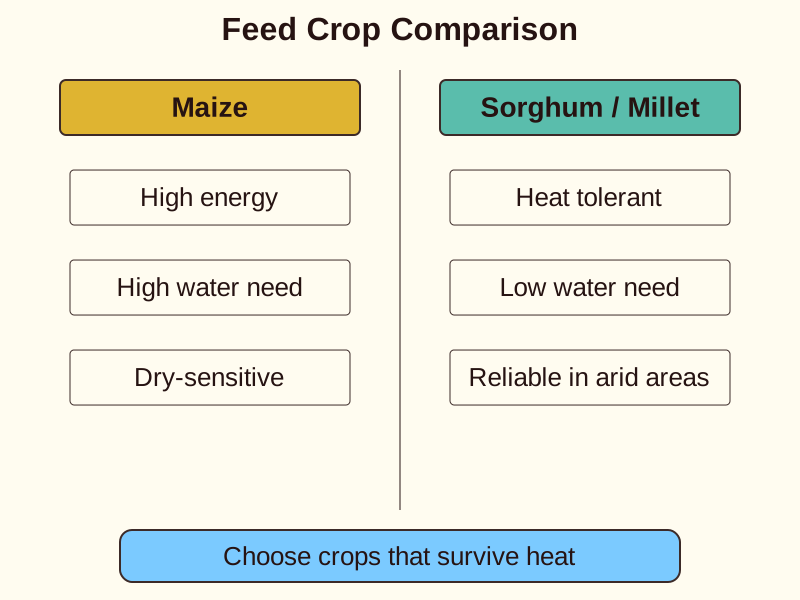
In arid regions, farmers must choose crops that survive heat stress. Sorghum and pearl millet are excellent alternatives.
These crops maintain their nutritional value even in dry conditions. They offer a reliable feed source when maize cannot grow.
Consider these options for your supply chain:
Maize: High energy, requires high water. Sorghum: Heat tolerant, moderate water. Pearl Millet: Very drought tolerant, low water.
Perennial Grasses for Volume
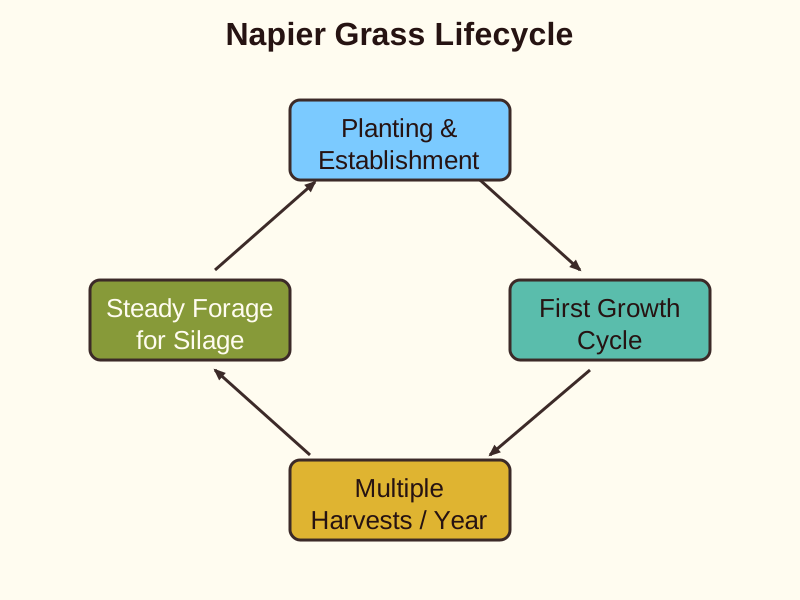
Napier grass is a popular perennial choice across East and West Africa. It is known for its resilience and high biomass.
One major advantage is that it provides multiple harvests per year. This creates a steady supply of forage for your silage pits.
While it may have different sugar levels than maize, its consistent availability makes it a staple for many local farmers.
Strategic Selection Factors
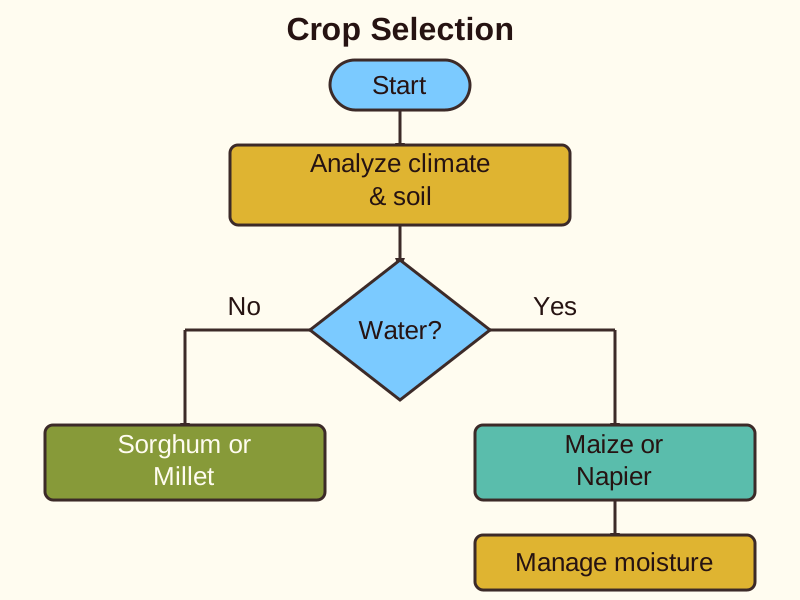
To maximize your investment, you must analyze your specific micro-climate and soil quality.
Harvesting at the correct moisture level is critical. If the crop is too dry or too wet, the fermentation process will fail.
Always weigh the cost of seeds and fertilizers against the expected yield. The goal is to reach optimal maturity for the highest quality feed.
How to Evaluate and Select Forage Crops
- Assess Climate: Determine local water availability and soil quality to filter viable crop options.
- Calculate Economics: Weigh input costs like seeds and fertilizer against expected biomass yield and fermentable sugar.
- Monitor Maturity: Track moisture levels closely to ensure successful ensiling and fermentation.
Check yourself
Napier grass provides a steady supply of forage primarily because it produces _____ each year.
- multiple harvests
- a single yield
Answer: multiple harvests
Napier grass is a perennial crop known for providing multiple harvests per year, ensuring a continuous supply of biomass for silage pits.
When matching crops to water availability, _____ requires high water access, _____ needs moderate water and handles heat stress, and _____ thrives in very dry conditions with low water.
Answer: When matching crops to water availability, Maize requires high water access, Sorghum needs moderate water and handles heat stress, and Pearl Millet thrives in very dry conditions with low water.
Maize delivers maximum energy but needs steady rainfall or irrigation. Sorghum and pearl millet serve as reliable drought-tolerant alternatives under lower water conditions.
An agribusiness enterprise in an arid region lacks consistent irrigation and faces extreme heat stress. Which crop strategy best minimizes crop failure risk while maintaining nutritional feed value?
- Plant maize with heavy fertilizer to maximize energy return.
- Plant sorghum or pearl millet to ensure heat tolerance and feed reliability.
- Rely exclusively on Napier grass for maximum energy and fermentable sugar content.
- Harvest young crops prematurely regardless of water availability.
Answer: Plant sorghum or pearl millet to ensure heat tolerance and feed reliability.
In dry, high-heat environments without reliable irrigation, maize carries a high risk of crop failure. Sorghum and pearl millet are drought-tolerant alternatives that maintain their nutritional value despite drought stress.
Keep going
This is lesson 1 of 7 in African Cattle Silage Agribusiness Strategy. Next up:
- Fermentation Science
- Commercial Sorghum Bag Silage for Smallholders
- Management Audit
- Quality Testing
- Cost Analysis
Wondering turns any topic into short lessons you can read, watch, or listen to, with practice questions and an AI tutor.