Free sample lesson · Adaptive Morning Wellness for Chronic Pain
Retinal Activation
Can photons actually recalibrate your nervous system's pain threshold?
Lesson 1 of the Wondering course Adaptive Morning Wellness for Chronic Pain
What You Will Learn
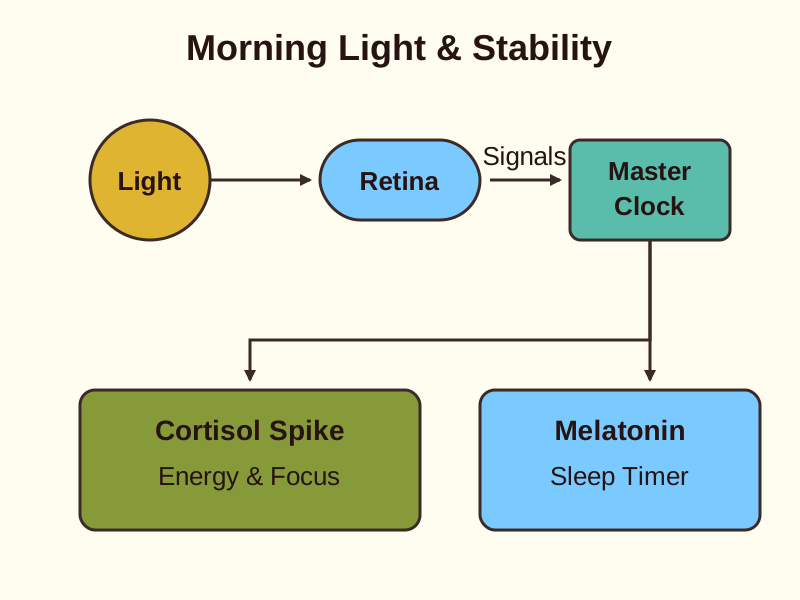
Early sunlight exposure regulates cortisol and melatonin production for systemic stability.
The Power of Morning Light
Can photons recalibrate your nervous system? For those managing fibromyalgia or dysautonomia, light is more than just visibility. It is a biological signal.
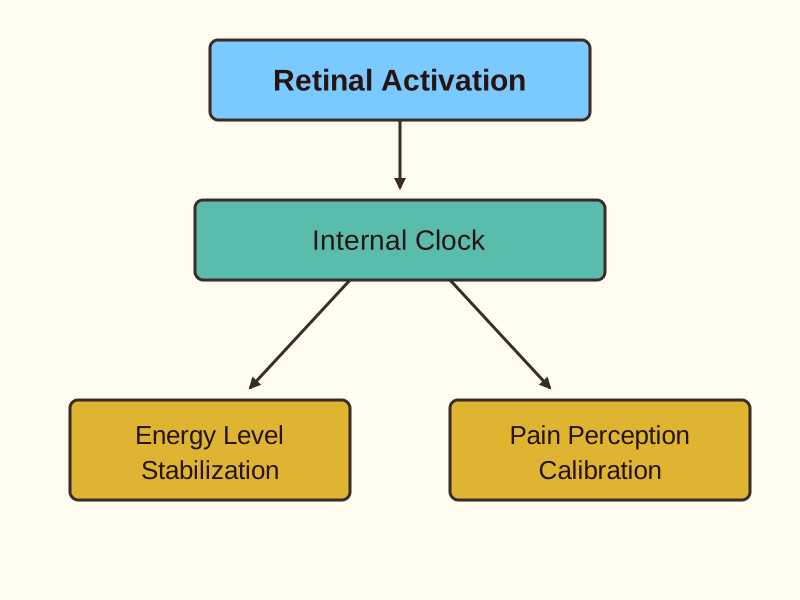
Retinal activation occurs when light hits specific cells in your eyes. This process tells your brain that the day has officially begun.
This simple interaction sets your internal clock. It helps regulate everything from your energy levels to how you perceive pain.
How Your Brain Receives the Signal
When light enters your eyes, it hits retinal ganglion cells. These cells contain a protein called melanopsin.
These cells send a direct message to the hypothalamus. This area of the brain acts as the master clock for your entire body.
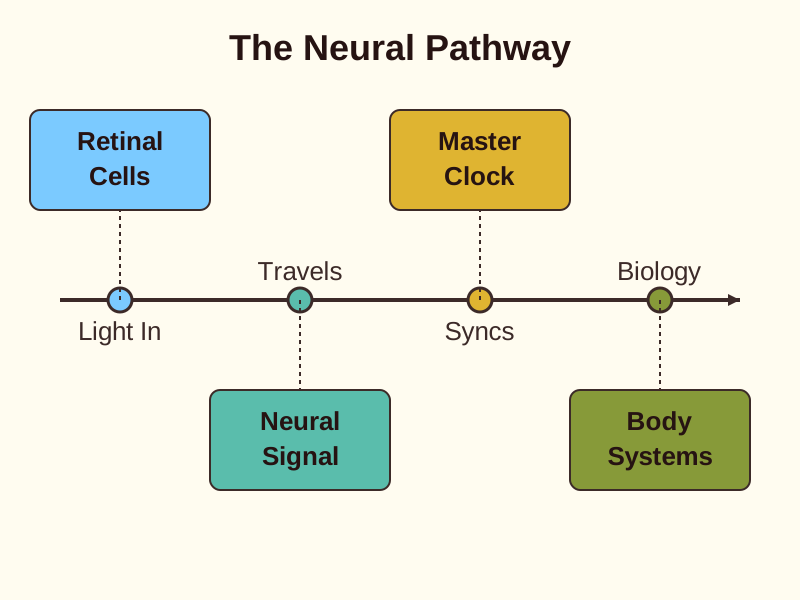
This connection is a low-friction way to influence your biology. You do not need intense willpower to start this process. You only need a few minutes of exposure.
Natural Pain Management
Morning light triggers a natural cortisol spike. While we often associate cortisol with stress, this morning peak is actually beneficial.
It provides a natural anti-inflammatory effect. This helps reduce the intensity of morning pain flares and clears brain fog.
By signaling the brain early, you also set a timer for melatonin. This ensures your body is ready for restorative sleep later tonight.
- Morning Cortisol
- Evening Melatonin
A Low-Friction Morning Routine
You do not need direct sunlight for this to work. Even on cloudy days, natural outdoor light is powerful enough to activate your system.
Try to spend five to ten minutes outdoors shortly after waking up. This small habit helps stabilize your nervous system.
Consistency is key for chronic health management. This routine builds a foundation for systemic stability without requiring high-energy physical activity.
How to Apply It in Real Life
- Wake & Hydrate: Gently wake your system before moving.
- Seek Light: Get natural light into your eyes within 30 minutes of waking.
- Observe & Breathe: Use the time for low-effort mindfulness.
- Consistent Close: Return inside to begin your day.
Check yourself
Does natural light on a cloudy day provide enough signal to activate the internal clock?
- Yes
- No
Answer: Yes
Even on cloudy days, outdoor light is significantly more powerful than indoor lighting for signaling the brain.
Morning light signals the _____ to act as the master clock, which triggers a _____ spike to reduce inflammation.
Answer: Morning light signals the hypothalamus to act as the master clock, which triggers a cortisol spike to reduce inflammation.
The hypothalamus receives the light signal and initiates a beneficial hormone peak that helps manage morning pain.
How does morning light exposure help you fall asleep later at night?
- It sets a timer for melatonin release
- It drains all your energy by noon
- It prevents the brain from resting
Answer: It sets a timer for melatonin release
The morning light signal acts as a biological 'start button' that sets a timer for melatonin release roughly 12-14 hours later.
Keep going
This is lesson 1 of 11 in Adaptive Morning Wellness for Chronic Pain. Next up:
- Circadian Recovery: Managing Low-Light Mornings
- Outdoor Immersion
- Atmospheric Grounding
- ADHD-Proofing Your Morning Routine
- Proprioceptive Awakening
Wondering turns any topic into short lessons you can read, watch, or listen to, with practice questions and an AI tutor.