Free sample lesson · 7 Habits in Practice
Paradigms Before Techniques
Why does fixing Maria's calendar fail when her assumptions stay unchanged?
Lesson 1 of the Wondering course 7 Habits in Practice
What You Will Learn
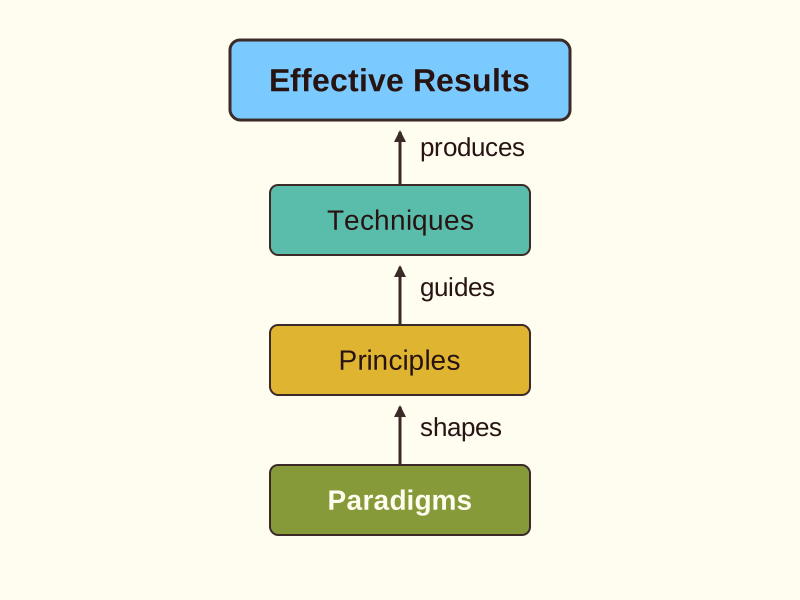
Paradigms matter because better tactics cannot reliably fix choices built on a distorted mental map.
The Map is Not the Territory
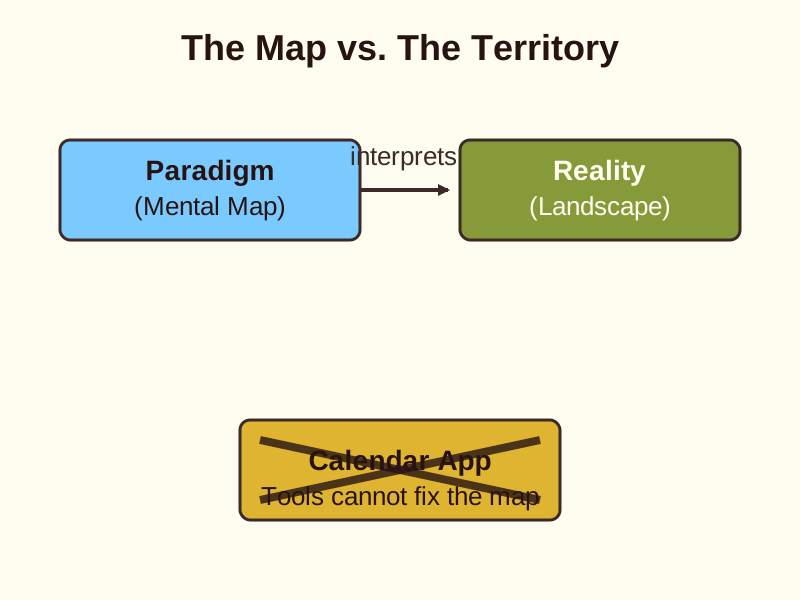
A paradigm is the mental map you use to interpret the world. It shapes what you notice and how you value your time.
Think of Maria. She uses a new calendar app to manage her stress. However, she still believes her worth depends on being busy.
Because her internal map is distorted, the new tool cannot fix her overcommitment. She is working hard using the wrong map.
Techniques Versus Paradigms
Many people try to fix their lives by changing surface behaviors. They look for productivity hacks or communication tricks.
Changing a technique without examining your paradigm often leaves the same old patterns in place.
True change is an inside-out process. It starts with how you see a situation, not just how you react to it. You must fix the map before the tools can work.
- Surface Change
- Inside-Out Change
Leading with Principles
Effectiveness grows when you align your actions with durable principles. These include fairness, integrity, and human dignity.
Consider a manager facing a difficult promotion. A technique-focused manager might use charm to avoid conflict.
A principle-centered manager explains the criteria clearly based on fairness. They choose a response based on values rather than social pressure or temporary moods.
Practicing Inside-Out Change
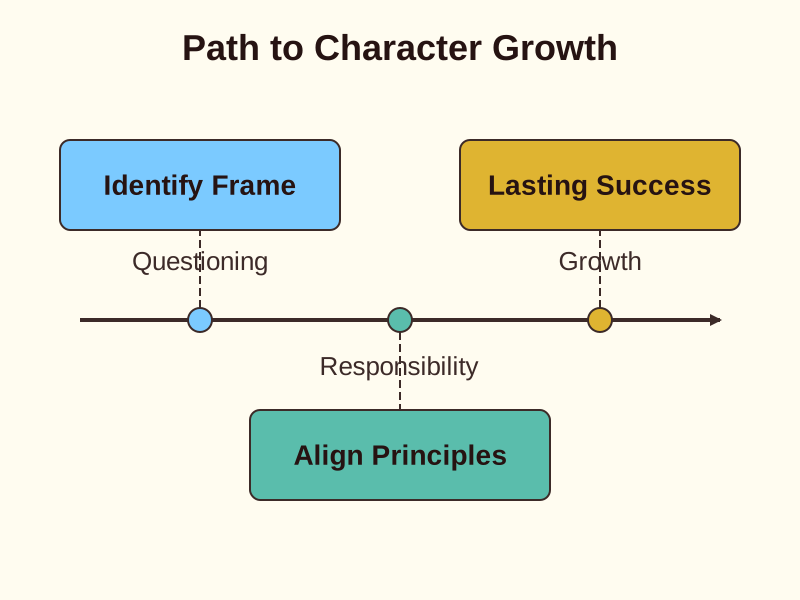
To improve your results, identify the interpreting frame behind your problem. Ask if you need a new tactic or a new way of seeing.
Principles are not abstract ideals. They are practical guides for daily decisions.
When you base choices on responsibility and respect, you create sustainable success. You move beyond image management toward lasting character growth.
Bringing It Into Daily Practice
- Check the Map: Identify the underlying belief or paradigm causing the frustration.
- Align with Principles: Choose a durable principle like integrity or effectiveness to guide you.
- Adjust the Tactic: Apply a technique that supports the new principle-centered paradigm.
Check yourself
A _____ is the mental map you use to interpret and see the world.
- paradigm
- technique
Answer: paradigm
A paradigm acts as a map; it is the internal frame through which you view every situation.
To achieve lasting change, first check your _____, then align with a _____, and finally adjust your _____.
Answer: To achieve lasting change, first check your paradigm, then align with a principle, and finally adjust your tactic.
This 'inside-out' sequence ensures your tools (tactics) work on a correct mental map guided by durable values.
A manager needs to deny a promotion. Which response is 'principle-centered' rather than 'technique-focused'?
- Using charm and humor to make the employee feel better and avoid a conflict.
- Explaining the decision clearly based on pre-set, fair criteria.
- Delaying the conversation until the manager is in a better mood.
Answer: Explaining the decision clearly based on pre-set, fair criteria.
Principle-centeredness relies on durable values like fairness and transparency rather than social 'tricks' like charm to manage impressions.
Keep going
This is lesson 1 of 9 in 7 Habits in Practice. Next up:
- Circle of Influence
- Personal Mission First
- Big Rocks First
- Trust Deposits
- Win-Win Agreements
Wondering turns any topic into short lessons you can read, watch, or listen to, with practice questions and an AI tutor.